
Listen to this Post
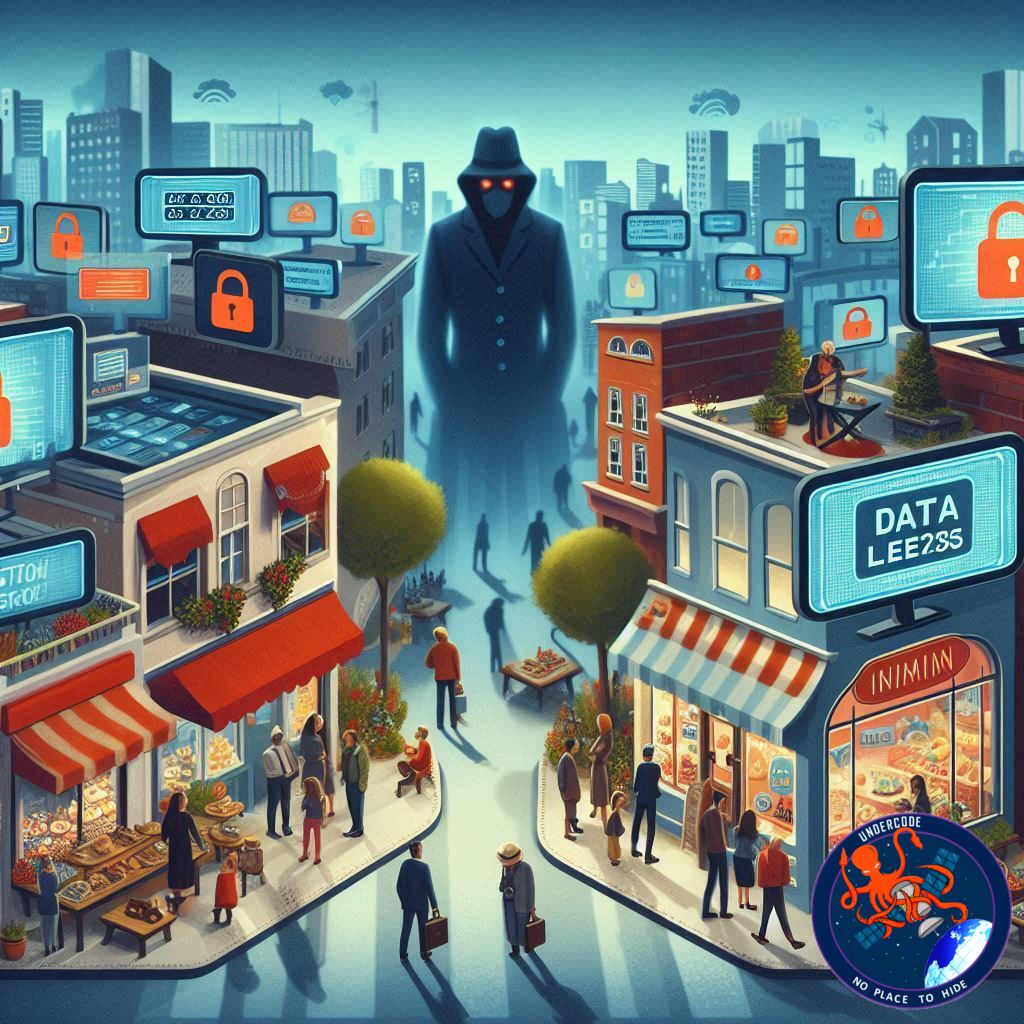
Introduction: A Quiet Crisis Turning Catastrophic
The digital economy promised speed, efficiency, and global reach. What it quietly delivered in 2025 is something far darker for small and medium-sized businesses. While global attention often focuses on headline-grabbing cyberattacks against governments and tech giants, a quieter war has been unfolding beneath the surface. Small businesses, once considered too insignificant to target, have become the preferred prey for cybercriminals. The result is a growing trail of exposed customer data, compromised financial records, and reputational collapse that many companies may never recover from.
This article explores how more than 70% of data breaches in 2025 have targeted SMBs, why companies like Tracelo and PhoneMondo became cautionary examples, and what this shift means for the future of cybersecurity. It also examines how phishing, dark web marketplaces, and operational blind spots are fueling a crisis that is no longer avoidable.
The Scale of the 2025 Data Breach Surge
The year 2025 marked a turning point in cybercrime strategy. Attackers no longer chased only massive corporations with hardened defenses. Instead, they turned toward businesses with fewer resources, thinner security teams, and limited incident response planning. Over 70% of reported breaches now involve SMBs, exposing personal data, financial records, and internal communications at an alarming rate.
This shift is not accidental. Smaller companies often store valuable customer data but lack enterprise-grade monitoring tools. That imbalance makes them attractive, profitable, and relatively low-risk targets for cybercriminals operating at scale.
Why Small Businesses Became the Primary Target
Cybercriminals follow efficiency. In 2025, exploiting small and medium-sized enterprises became more profitable than attacking heavily fortified corporations. SMBs frequently reuse passwords, delay software updates, and rely on third-party vendors with weak security practices.
Attackers understand that compromising one small vendor can open access to hundreds of downstream clients. This interconnected exposure has turned supply chains into attack highways, where one breach can cascade into dozens of others without immediate detection.
The Tracelo and PhoneMondo Wake-Up Call
The breaches involving Tracelo and PhoneMondo were not just isolated incidents. They represented a broader pattern of attackers exploiting weak authentication systems and poorly monitored databases. Customer contact details, billing information, and internal credentials were reportedly exposed, placing thousands at risk of identity theft and financial fraud.
What made these cases especially alarming was how long the breaches went unnoticed. By the time alerts surfaced, data had already circulated across dark web marketplaces, making containment nearly impossible.
Dark Web Marketplaces as Breach Multipliers
The dark web plays a critical role in accelerating damage after a breach. Stolen data is no longer held for ransom alone. It is packaged, categorized, and sold to multiple buyers within hours. This creates a multiplier effect where one breach fuels dozens of future crimes.
For SMBs, this means reputational damage does not end when systems are restored. The data continues to live, trade, and resurface long after public disclosure, often resurfacing in phishing campaigns months later.
Phishing as the Primary Entry Point
Phishing remains the most effective entry method in 2025. Attackers use AI-generated messages that mimic internal communication styles, vendor invoices, and customer requests with near-perfect accuracy. Employees, overwhelmed by workload and constant digital noise, are increasingly vulnerable.
Once credentials are captured, attackers move laterally through systems, harvesting data silently. By the time anomalies are detected, the damage is already extensive.
Why Detection Comes Too Late
Many small businesses still rely on outdated security models that focus on perimeter defense rather than behavior monitoring. This creates blind spots where attackers operate undetected for weeks or months. Without continuous monitoring or anomaly detection, breaches only come to light after customers report fraud or data appears for sale online.
This delay significantly increases legal exposure, regulatory scrutiny, and long-term trust erosion.
Regulatory Pressure and Legal Exposure
Governments are tightening data protection frameworks, and SMBs are no longer exempt from accountability. Failure to protect customer data now results in regulatory fines, lawsuits, and forced disclosure requirements.
For many small businesses, the financial aftermath of a breach can be more devastating than the breach itself. Legal fees, customer churn, and operational downtime create a perfect storm that few survive intact.
The Psychological Cost on Business Owners
Beyond financial loss, there is a human cost often ignored. Business owners report anxiety, burnout, and loss of confidence after breaches. Many describe a sense of betrayal, knowing that trust built over years vanished overnight due to a single vulnerability.
Cybercrime is no longer a technical issue alone. It is an emotional and psychological crisis that reshapes leadership decisions and risk tolerance.
The Illusion of “Being Too Small to Hack”
One of the most dangerous misconceptions in cybersecurity is the belief that small companies are invisible. Attackers use automated scanning tools that do not discriminate by size. If a vulnerability exists, it will be found.
This false sense of security continues to expose businesses that underestimate their digital footprint and overestimate their obscurity.
The Role of Third-Party Vendors
Many breaches originate from trusted service providers. Accounting tools, CRM platforms, and cloud services often serve as gateways into multiple organizations simultaneously. When one vendor fails, dozens of clients inherit the risk.
This interconnected dependency requires stronger vendor vetting, contract-level security requirements, and continuous monitoring beyond internal systems.
A Growing Underground Economy
The underground economy thrives on stolen data. Credentials, session tokens, and personal records are bundled and resold at scale. These marketplaces operate with customer support, pricing tiers, and even refund policies.
This professionalization of cybercrime makes it increasingly difficult for small businesses to compete defensively without structured security strategies.
The Cultural Shift Toward Security Awareness
Despite the bleak outlook, awareness is improving. Businesses are beginning to understand that cybersecurity is not an IT issue but a core operational responsibility. Training, internal audits, and leadership involvement are slowly becoming standard practice.
However, awareness alone is not enough. Execution remains the critical gap.
The Financial Reality of Prevention
Preventative security often appears expensive until compared with the cost of a breach. Insurance premiums rise, customer trust erodes, and recovery costs spiral. Preventative investment, while uncomfortable upfront, is consistently cheaper than post-breach remediation.
This realization is slowly reshaping budget priorities across industries.
The Human Factor Remains Central
Technology alone cannot solve this crisis. Human behavior remains the most unpredictable variable in cybersecurity. Training, accountability, and clear communication must evolve alongside technical defenses.
Employees are not the weakest link by nature; they are often the least supported.
the Original Report
The original report highlights a sharp increase in data breaches targeting small and medium-sized businesses throughout 2025. Over 70% of incidents involved SMBs, with companies like Tracelo and PhoneMondo experiencing exposure of customer and financial data. The report emphasizes the role of phishing attacks and dark web data leaks as primary threat vectors. It underscores the urgent need for stronger cybersecurity measures, particularly for organizations lacking mature defenses. The message is clear: small businesses are no longer secondary targets but primary victims in a rapidly evolving threat landscape.
What Undercode Say:
The data confirms a shift that cybersecurity professionals have warned about for years. Attackers no longer measure success by scale alone but by efficiency and repeatability. Small businesses offer both.
What stands out is not just the volume of breaches, but the predictability of them. Weak authentication, outdated systems, and human fatigue create an ecosystem where compromise is almost inevitable without intervention.
The industry has spent too long framing cybersecurity as a technical upgrade rather than a business survival strategy. This mindset delay is now costing companies their reputations and, in many cases, their existence.
Another critical issue is the normalization of breaches. When incidents become frequent, urgency fades. This normalization benefits attackers and numbs organizations into reactive rather than proactive behavior.
What is most concerning is that many of these breaches were preventable with basic controls: multifactor authentication, employee awareness training, and real-time monitoring. These are not luxury tools. They are foundational.
The narrative must shift from fear-based reaction to resilience-driven planning. Security should be woven into daily operations, leadership decisions, and vendor relationships.
If 2025 has proven anything, it is that cybersecurity maturity is no longer defined by company size. It is defined by intent, discipline, and awareness.
Fact Checker Results
✅ Data breaches increasingly target SMBs, accounting for over 70% of incidents in 2025.
✅ Phishing and dark web data trading remain the primary attack vectors.
❌ Many SMBs still underestimate their exposure despite growing evidence.
Prediction
🔮 Cybercriminals will increasingly automate attacks against SMBs using AI-driven reconnaissance.
🔮 Regulatory pressure will expand, forcing even micro-businesses to adopt formal security frameworks.
🔮 Companies that treat cybersecurity as a cultural priority rather than a technical expense will outlast competitors.
🕵️📝✔️Let’s dive deep and fact‑check.
References:
Reported By: x.com
Extra Source Hub (Possible Sources for article):
https://www.medium.com
Wikipedia
OpenAi & Undercode AI
Image Source:
Unsplash
Undercode AI DI v2
Bing
🔐JOIN OUR CYBER WORLD [ CVE News • HackMonitor • UndercodeNews ]
📢 Follow UndercodeNews & Stay Tuned:
𝕏 formerly Twitter 🐦 | @ Threads | 🔗 Linkedin | 🦋BlueSky | 🐘Mastodon


