
Listen to this Post
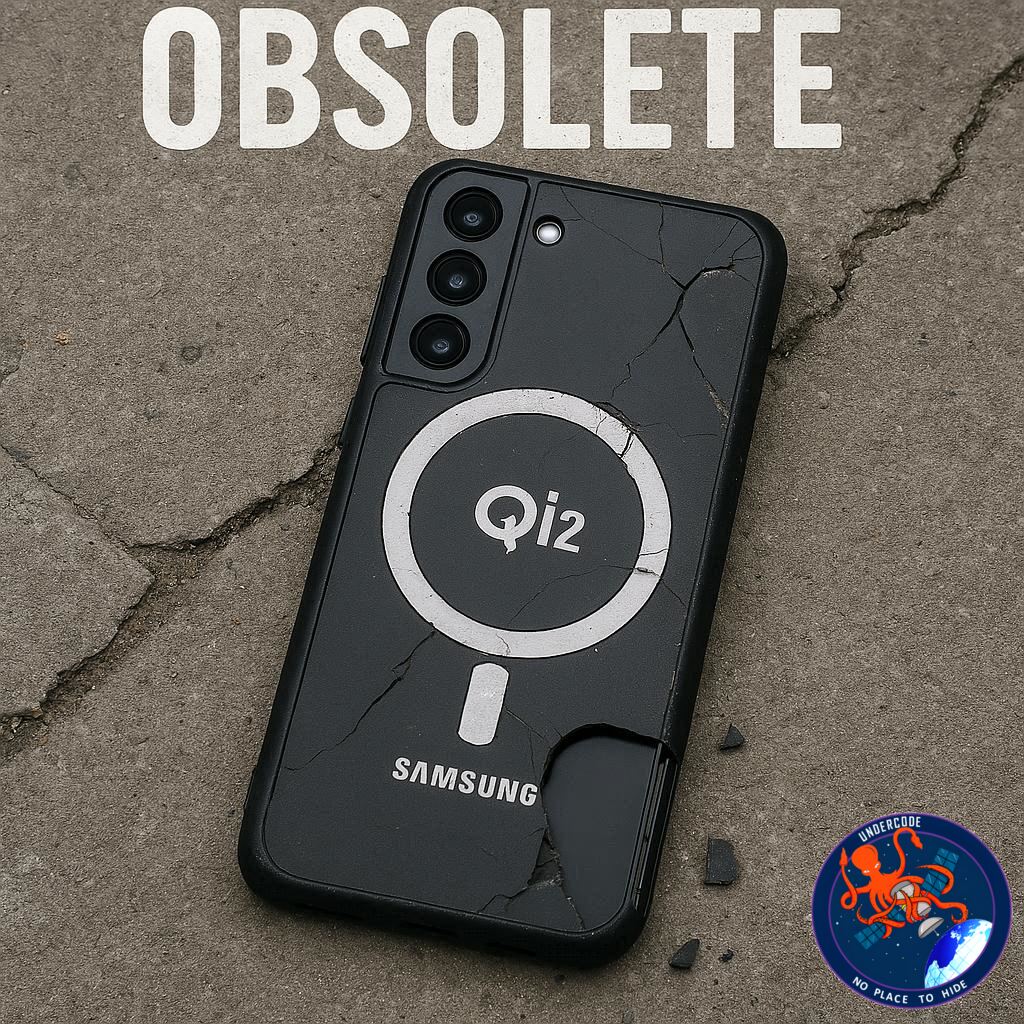
Samsung is once again pushing the boundaries of wireless charging technology, but with a twist that might surprise some users. The tech giant’s latest flagship devices—including the Galaxy S25 Ultra, S25 FE, and Fold 7—support the new Qi2 wireless charging standard. Yet, there’s a catch: to harness this feature fully, users still need to buy a compatible magnetic case. True, accessory-free Qi2 charging isn’t here yet. However, whispers about the Galaxy S26 series hint at a future where magnetic cases may no longer be necessary, signaling a major convenience upgrade for Samsung enthusiasts.
In the United States, Samsung has rolled out two Qi2-enabled wireless chargers: a compact single wireless charger for home use and a car charger designed for on-the-go convenience. The single wireless charger is puck-shaped, just 58mm in diameter, and delivers 25W fast charging when paired with a compatible power adapter (sold separately) for $34.99. On the other hand, the Car Wireless Charger is priced at $84.99 and includes a 12V adapter, a USB-C to USB-C cable, and a 360-degree rotating mount—perfect for following Google Maps while driving.
These chargers are compatible with all of Samsung’s 2025 flagship devices, including foldable models, though users still need a separate magnetic case due to the lack of integrated magnets in the phones themselves. The release of these chargers may hint at Samsung’s intent to equip the upcoming Galaxy S26 series with the hardware to support true Qi2 charging without the need for additional accessories. Such a development would simplify wireless charging and reduce costs for consumers eager to embrace the standard.
Samsung’s move to adopt Qi2 wireless charging reflects a growing trend in the tech world: the push toward faster, more efficient, and more universal wireless charging solutions. While the current implementation still leans on magnetic cases, the company’s investment in chargers that support Qi2 sets the stage for a more seamless charging experience in the near future. For tech enthusiasts and Samsung fans, this marks an exciting step forward, even if it’s a small one for now.
The Galaxy S26 series could be a turning point. True Qi2 wireless charging without accessories would eliminate the friction users currently face when switching between charging methods or when relying on multiple cases. Moreover, Samsung’s expansion into car chargers and compact home chargers indicates an understanding that convenience matters as much as speed. After all, a fast charge is only useful if it’s easy to use wherever you are.
For the home charger, the small puck design makes it easy to place on desks or bedside tables without cluttering the space. In contrast, the car charger addresses a real-world problem: navigating apps while keeping your phone powered. Together, these products reinforce Samsung’s commitment to making Qi2 more accessible, even if it’s not fully built into the devices yet.
Samsung’s approach is also strategic from a business perspective. Requiring a magnetic case for current devices creates a supplementary revenue stream, while still signaling progress in wireless technology. Meanwhile, consumers get to test Qi2 standards in preparation for next-generation devices. By introducing these chargers now, Samsung subtly primes the market for the Galaxy S26, potentially smoothing the transition to true accessory-free Qi2 wireless charging.
What Undercode Say:
Samsung’s incremental approach to Qi2 wireless charging is both clever and consumer-friendly, though it walks a fine line between innovation and accessory dependency. While some might see the need for magnetic cases as a minor inconvenience, it serves a dual purpose: educating consumers about Qi2 and driving accessory sales.
The introduction of chargers that work seamlessly with current devices is an important move. It reflects Samsung’s understanding of user habits: charging isn’t just about speed, it’s about accessibility, convenience, and adaptability. A compact home charger reduces clutter, while a swiveling car charger solves practical mobility issues. Both innovations indicate that Samsung is prioritizing real-world usability alongside technological advancement.
Looking forward, the Galaxy S26 series could very well redefine wireless charging norms. If true Qi2 support without cases is introduced, it would make wireless charging frictionless, bringing Samsung in line with the growing expectation for universal charging standards. This could push competitors to accelerate their own wireless solutions, potentially benefiting the broader ecosystem of devices and chargers.
Samsung’s current strategy also cleverly mitigates risk. By releasing chargers compatible with existing models, the company ensures early adoption of Qi2 technology, gathers user feedback, and maintains revenue streams. This is a textbook case of “future-proofing” both hardware and consumer habits.
Moreover, the focus on Qi2 illustrates a broader industry trend: moving away from proprietary limitations and toward a more standardized, universal approach. For tech enthusiasts, it suggests that we may soon see seamless interoperability between devices, making wireless charging a truly effortless daily routine.
Samsung’s marketing strategy around these chargers is subtle yet effective. By selling them as optional accessories, the company manages to satisfy early adopters while creating anticipation for future devices. Consumers become accustomed to the Qi2 ecosystem, which makes the eventual launch of accessory-free charging not just convenient but expected.
Ultimately, Samsung is walking a tightrope between technological innovation, user convenience, and revenue strategy. By gradually rolling out Qi2 chargers and teasing future device capabilities, it ensures that both tech enthusiasts and casual consumers remain engaged and invested in its wireless charging future.
The two new chargers also reveal how Samsung values ergonomic design and practical functionality. For instance, the car charger’s 360-degree rotating mount is more than a gimmick—it directly addresses common pain points like in-car navigation. The puck-shaped home charger, compact yet powerful, signals Samsung’s commitment to blending minimalism with high performance.
As we anticipate the Galaxy S26 series, it’s clear that the company’s long-term vision is to make wireless charging as intuitive and universal as plugging in a cable. While the current reliance on magnetic cases is a temporary limitation, Samsung’s ecosystem-first approach ensures that users are already prepared to transition seamlessly when true Qi2 becomes standard.
In short, Samsung is setting the stage for a wireless charging revolution, one accessory at a time. The current chargers might not deliver full accessory-free functionality, but they are a clear step toward a future where charging is effortless, universal, and integrated directly into devices.
Fact Checker Results:
✅ Samsung’s new chargers support Qi2 wireless charging.
❌ Current devices require magnetic cases for full Qi2 functionality.
✅ Chargers are compatible with Galaxy S25, S26 series, and foldables.
Prediction:
Samsung will likely introduce true Qi2 wireless charging without the need for magnetic cases in the Galaxy S26 series. ⚡ Home and car chargers will remain complementary, with ergonomic, compact designs becoming standard for future Qi2-compatible accessories.
🕵️📝✔️Let’s dive deep and fact‑check.
References:
Reported By: www.sammobile.com
Extra Source Hub (Possible Sources for article):
https://www.quora.com
Wikipedia
OpenAi & Undercode AI
Image Source:
Unsplash
Undercode AI DI v2
Bing
🔐JOIN OUR CYBER WORLD [ CVE News • HackMonitor • UndercodeNews ]
📢 Follow UndercodeNews & Stay Tuned:
𝕏 formerly Twitter 🐦 | @ Threads | 🔗 Linkedin | 🦋BlueSky | 🐘Mastodon


