
Listen to this Post
Introduction
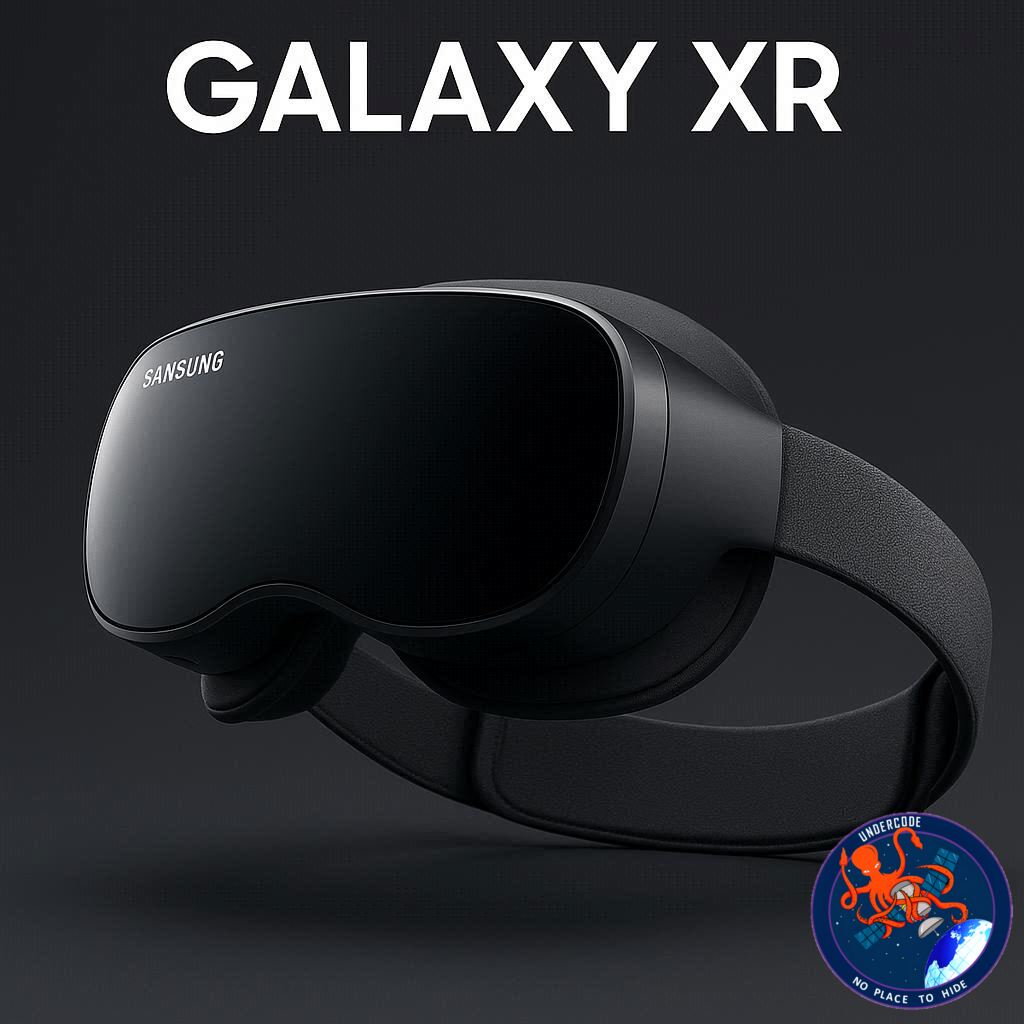
After years of anticipation, Samsung has officially unveiled its highly awaited Galaxy XR headset—a device that promises to make immersive reality more accessible than ever. In an industry dominated by high price tags and niche audiences, this new release marks a bold step toward merging AI, extended reality, and Android innovation into one sleek product. The surprise? It’s actually affordable—at least compared to its biggest rival, Apple’s Vision Pro.
Samsung’s Galaxy XR: The Headset Everyone’s Been Waiting For
Samsung’s new XR (eXtended Reality) headset finally broke cover, combining artificial intelligence and Android XR technology to create what could be the next evolution of wearable experiences. It costs $1,799, a shockingly modest price when compared to Apple’s Vision Pro, which starts at $3,499 for the same 256GB storage capacity.
Early adopters who pre-registered for the Galaxy XR are getting an even sweeter deal—a $100 discount, bringing the entry price down to $1,699. Samsung also throws in over $1,000 worth of bonuses, including premium subscriptions to Google AI Pro, YouTube Premium, and Google Play Pass.
So, what’s missing that makes this device cheaper than Apple’s? Unlike the Vision Pro, the Galaxy XR doesn’t feature the forward-facing external display that shows the wearer’s eyes. Instead, Samsung, in partnership with Google and Qualcomm, focused on the core XR experience, emphasizing gesture recognition, voice commands through Gemini, and seamless integration with AI features.
For users who prefer physical interaction, Samsung offers motion controllers—sold separately for $250, though currently discounted by 30%. The Galaxy XR can handle both gesture-based navigation and controller-based gameplay, giving users the flexibility to tailor their experience.
The XR market has struggled for years due to high costs and limited consumer adoption. But Samsung might be changing that narrative. The Galaxy XR is still a premium product, yet it’s cheaper than the Galaxy Z Fold 7, and that makes it feel within reach for a much wider audience.
It’s not just a new gadget—it’s a statement. Samsung’s message is clear: immersive reality doesn’t need to be reserved for the elite. Whether this move will push Apple to release a more affordable Vision Pro, or simply ignite broader interest in XR and VR, remains uncertain. But one thing’s undeniable—Samsung just disrupted the game.
At launch, the headset is available through the Samsung e-shop in the USA and Korea, and it might just mark the beginning of a new era for wearable computing.
What Undercode Say:
Samsung’s Galaxy XR represents a strategic pivot in the XR market, one that mirrors the company’s broader pattern of democratizing advanced technology. By undercutting Apple’s Vision Pro by nearly half, Samsung isn’t just offering a cheaper product—it’s redefining what consumers expect from immersive devices.
From a market standpoint, this is a calculated offensive. Apple’s Vision Pro was meant to set a new standard for mixed reality, but its $3,499 price tag made it more of a developer or luxury product. Samsung’s pricing, on the other hand, lands in the “aspirational but attainable” zone—a space that historically fuels mainstream adoption.
Technically, Samsung has made smart trade-offs. Skipping the external display (used by Apple to simulate eye contact) isn’t a flaw—it’s a decision rooted in practicality. That single feature likely costs hundreds to integrate, and its absence doesn’t harm user experience for most applications. By prioritizing gesture control, Gemini voice integration, and ecosystem connectivity, Samsung is focusing on function rather than flash.
The collaboration with Google and Qualcomm also speaks volumes. It means Samsung is not isolated in its innovation. Instead, it’s building on open Android XR infrastructure, ensuring compatibility and future updates across devices. This could accelerate the growth of XR software ecosystems, similar to how Android revolutionized smartphones.
Moreover, Samsung’s inclusion of $1,000 worth of AI and media subscriptions is a genius marketing maneuver. It creates perceived value far beyond hardware and nudges users into Google’s content and AI ecosystem, effectively strengthening the entire Android-XR alliance.
But the deeper question is whether price reduction alone can drive mass adoption. Historically, VR and AR have failed not because of price, but because of limited utility. Samsung must now prove that the Galaxy XR is more than a novelty. It must deliver daily usefulness, whether in productivity, entertainment, or communication.
If Samsung succeeds, this could trigger a chain reaction: developers will prioritize XR app creation, software ecosystems will expand, and user engagement will skyrocket. If it fails, however, it risks becoming another short-lived gadget in a long line of futuristic experiments.
Still, the signs are promising. Samsung’s track record with wearables—like the Galaxy Watch and Buds—shows the company understands how to refine early technology into lifestyle essentials. The Galaxy XR could follow that same path, evolving from a tech enthusiast’s dream into a household device.
In essence, Samsung isn’t just releasing a headset. It’s launching a movement toward accessible extended reality, and perhaps nudging Apple into a long-overdue price war.
Fact Checker Results:
✅ The Galaxy XR officially costs $1,799, cheaper than Apple’s $3,499 Vision Pro.
✅ It includes 256GB of storage and $1,000 in subscriptions to Google services.
❌ The headset does not feature Apple’s “eye-display” design, prioritizing affordability instead.
Prediction:
🚀 Within the next 12 months, Samsung’s Galaxy XR could become the most popular XR device in the mainstream market, setting a new benchmark for affordability in immersive tech.
💡 Apple may respond by launching a Vision Air or Vision Lite, aiming to capture mid-range consumers.
🌍 If Samsung continues this trajectory, XR could finally break into everyday digital life—from gaming and design to virtual meetings and AI-assisted learning.
🕵️📝✔️Let’s dive deep and fact‑check.
References:
Reported By: www.sammobile.com
Extra Source Hub (Possible Sources for article):
https://www.quora.com
Wikipedia
OpenAi & Undercode AI
Image Source:
Unsplash
Undercode AI DI v2
Bing
🔐JOIN OUR CYBER WORLD [ CVE News • HackMonitor • UndercodeNews ]
📢 Follow UndercodeNews & Stay Tuned:
𝕏 formerly Twitter 🐦 | @ Threads | 🔗 Linkedin | 🦋BlueSky | 🐘Mastodon


