
Listen to this Post
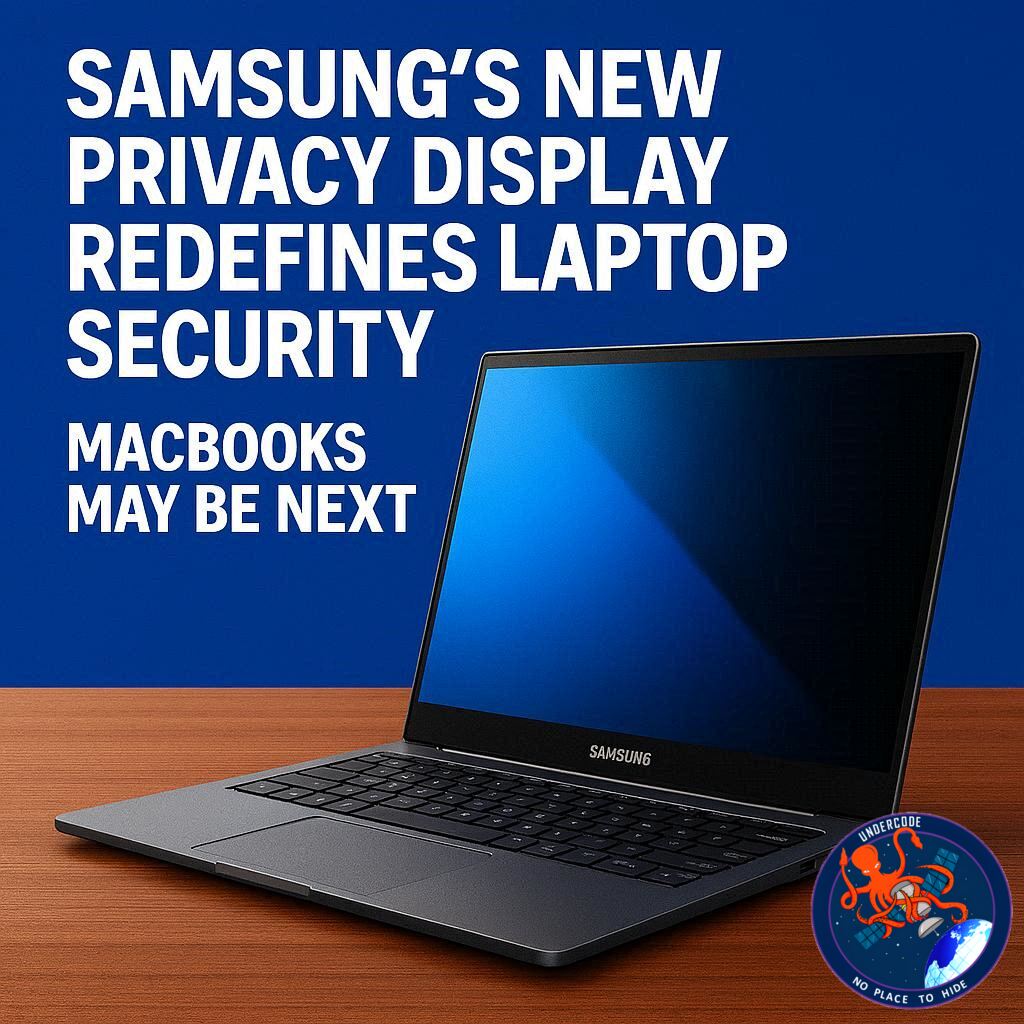
Introduction: When Screen Clarity Becomes a Privacy Risk
For years, display technology has focused on one thing: making screens brighter, sharper, and visible from almost any angle. That progress solved one major usability issue—but quietly created another. As smartphones and laptops became easier to view from the side, they also became easier to spy on. Now, Samsung claims to have found a smarter balance with a new Privacy Display debuting on the Galaxy S26 Ultra, and reports suggest this same technology could eventually appear on Apple laptops. If that happens, it would mark a full-circle moment in display evolution.
the Original
Early laptop screens were notoriously unforgiving. Unless you were sitting directly in front of the display, the image would darken, wash out, or disappear entirely. Sharing content with someone sitting beside you was awkward, and collaborative work suffered as a result. Apple helped change that landscape by adopting wide-angle display technology early on, making MacBook screens easily viewable from almost any position. Over time, this became the industry standard, and today’s laptops and smartphones pride themselves on consistent visibility across wide angles.
However, what once felt like a breakthrough has turned into a privacy concern. In public spaces such as cafés, airplanes, or co-working areas, wide viewing angles allow strangers to see sensitive emails, documents, or passwords with little effort. To counter this, many users rely on third-party privacy screen overlays that intentionally reduce viewing angles—essentially reintroducing the very limitation display makers worked to eliminate.
Samsung’s new Privacy Display aims to avoid that compromise. Instead of permanently narrowing viewing angles, the feature allows dynamic control. By default, the screen remains wide and vibrant, but users can selectively enable narrow-angle visibility for specific apps, sensitive inputs like passwords, or even notification previews. The system is customizable, letting users decide when and where privacy matters most, and can be adjusted or disabled entirely rather than applied as a blunt, always-on filter.
According to well-known leaker Ice Universe, market research firm Omdia expects similar privacy display technology to reach MacBooks by 2029. The delay is attributed to Apple’s ongoing transition to OLED displays and the technical challenge of scaling this technology from smartphones to much larger laptop panels. If these hurdles are cleared, MacBooks could eventually gain a built-in privacy solution without sacrificing screen quality.
What Undercode Say:
Samsung’s Privacy Display is less about novelty and more about acknowledging how people actually use their devices in 2026. Work has become mobile by default. Sensitive information is no longer confined to private offices; it’s accessed in airports, rideshares, cafés, and shared living spaces. In that reality, “everyone can see your screen” is no longer a harmless side effect—it’s a security flaw.
What makes Samsung’s approach compelling is its granularity. Traditional privacy screens are binary: on or off, privacy or usability. Samsung reframes privacy as contextual. A spreadsheet might be fine for public viewing, while a password manager or banking app clearly isn’t. Giving users control at the app and content level feels like a natural evolution, especially as operating systems already manage permissions for cameras, microphones, and location in similar ways.
If Apple adopts this technology for MacBooks, the irony is hard to ignore. Apple once led the charge toward wide-angle displays, marketing them as a premium feature. Bringing back controlled viewing limitations—this time intentionally and intelligently—would signal a shift in priorities from pure visual excellence to situational security. That aligns closely with Apple’s broader messaging around privacy as a core product value.
The 2029 timeline also hints at deeper industry realities. OLED adoption across MacBooks is a prerequisite, and scaling privacy-layer technology to 14- or 16-inch panels is not trivial. Power efficiency, brightness consistency, and color accuracy all become harder to manage at that size. Still, the fact that analysts expect it at all suggests confidence that these challenges are solvable.
Long term, privacy-aware displays could become as standard as Face ID or fingerprint sensors. As AI-driven on-device processing increases and screens display more personal, contextual data, controlling who can physically see that data will matter just as much as encrypting it digitally. Samsung is positioning itself early in that future—and Apple may not want to be late again.
Fact Checker Results
Samsung has officially teased a Privacy Display feature for the Galaxy S26 Ultra, focused on selective visibility control.
Wide viewing angles did originate as a solution to early laptop display limitations, particularly on pre-2010 devices.
The 2029 MacBook timeline remains speculative, based on industry analysis rather than an official Apple announcement.
Prediction
Privacy displays will move from niche to necessity within the next five years. As OLED becomes standard across laptops and tablets, dynamic viewing-angle control will likely be integrated at the OS level. By the end of the decade, third-party privacy screen accessories may become obsolete, replaced by software-driven, context-aware display security built directly into premium devices.
🕵️📝✔️Let’s dive deep and fact‑check.
References:
Reported By: 9to5mac.com
Extra Source Hub (Possible Sources for article):
https://www.facebook.com
Wikipedia
OpenAi & Undercode AI
Image Source:
Unsplash
Undercode AI DI v2
Bing
🔐JOIN OUR CYBER WORLD [ CVE News • HackMonitor • UndercodeNews ]
📢 Follow UndercodeNews & Stay Tuned:
𝕏 formerly Twitter 🐦 | @ Threads | 🔗 Linkedin | 🦋BlueSky | 🐘Mastodon


