
Listen to this Post
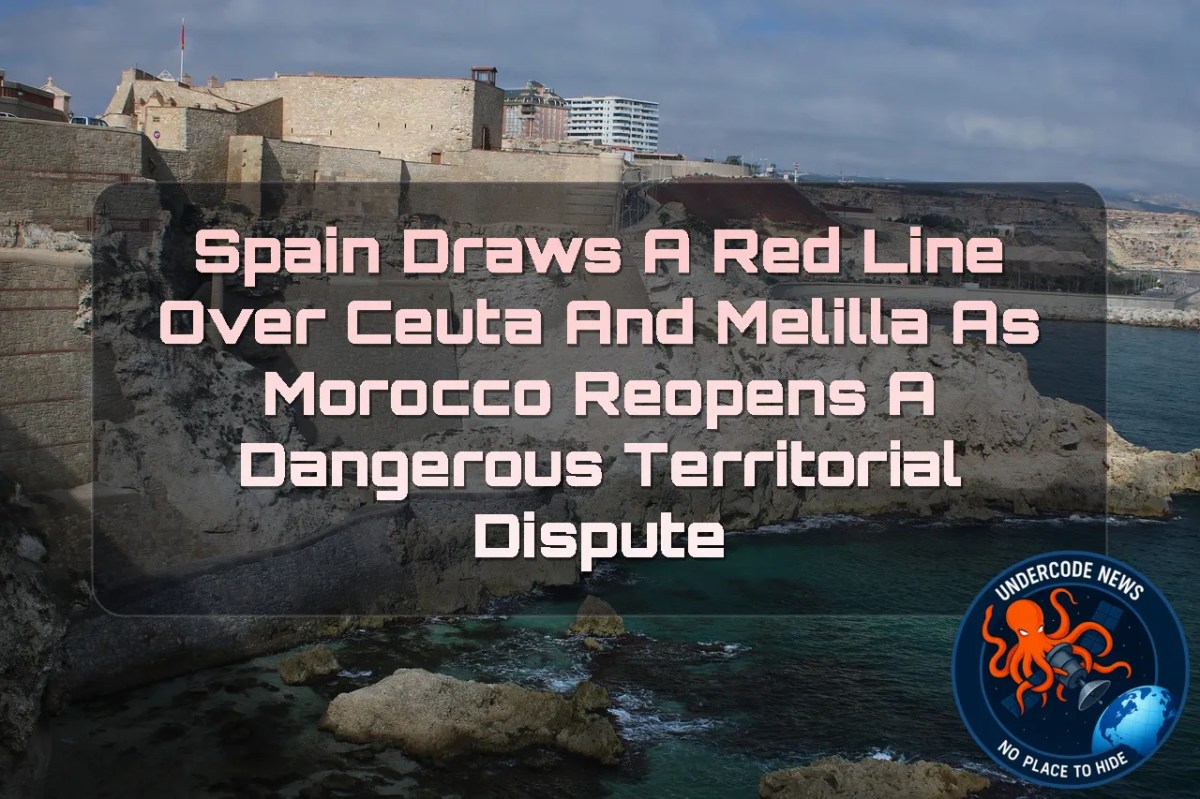
A Diplomatic Crisis Is Gathering Momentum
The dispute over Ceuta and Melilla has once again moved from the background of Spanish-Moroccan relations to the center of a rapidly developing political confrontation. What makes the latest escalation particularly sensitive is the timing. Spain is still dealing with the consequences of a major migration crisis around Ceuta, while Moroccan officials are simultaneously raising the unresolved question of sovereignty over the two Spanish autonomous cities in North Africa.
Spanish diplomatic officials have responded with unusually direct language, making clear that Madrid considers the sovereignty of Ceuta and Melilla non-negotiable. At the same time, Morocco’s Justice Minister Abdellatif Ouahbi has publicly described the status of the two cities as an issue that remains open in discussions between Madrid and Rabat.
The result is a familiar but dangerous pattern. Migration, territorial sovereignty, border security and bilateral diplomacy are becoming intertwined, creating a situation in which a humanitarian crisis can quickly become a strategic confrontation.
Spain Says Ceuta and Melilla Are Non-Negotiable
Spanish diplomatic sources have delivered an unequivocal message: Madrid does not consider the sovereignty of Ceuta and Melilla to be a subject open for negotiation.
According to the remarks reported by Euronews, Spanish officials emphasized that the two autonomous cities form part of Spain’s territorial integrity and that their status will not be placed on the negotiating table.
This position reflects
The disagreement is therefore not simply about migration management or border administration. Beneath the immediate crisis lies a longstanding territorial dispute with potentially serious consequences for relations between two strategically important neighbors.
Madrid Sends a Message Beyond the Border
Spain’s diplomatic response has been reinforced by Defence Minister Margarita Robles, who has repeatedly visited Ceuta and publicly reassured residents that the Spanish Armed Forces will remain present.
Her message has been deliberately firm. Ceuta and Melilla, she stressed, are Spanish and should not be treated as bargaining chips.
The deployment of Spanish military personnel also carries a psychological dimension. It reassures residents who have watched an extraordinary migration crisis unfold at their doorstep, while simultaneously demonstrating to Morocco that Spain is prepared to protect the territory.
This is important because military presence does not necessarily mean Madrid is preparing for armed confrontation. In this context, it is also a form of deterrence.
Spain wants to prevent uncertainty from becoming panic.
The Shadow of the Recent Migration Crisis
The diplomatic confrontation cannot be separated from the migration crisis that recently overwhelmed Ceuta.
The events of the 30th created enormous pressure on Spanish authorities and generated fears that another large-scale attempt to enter the territory could follow.
Spanish officials therefore face two different challenges at once.
The first is operational: preventing another mass border crossing while protecting civilians and migrants from potentially deadly situations.
The second is strategic: preventing the migration issue from becoming permanently linked to questions of territorial sovereignty.
That distinction matters.
If migration becomes perceived as a mechanism through which political pressure can be applied, every future border incident could acquire a much larger geopolitical meaning.
Morocco Keeps the Territorial Question Alive
Abdellatif Ouahbi has now publicly placed Ceuta and Melilla back into the diplomatic spotlight.
In an interview with Saudi broadcaster Asharq News, the Moroccan justice minister described the question of the two cities as a pending issue and said it remains on the table during discussions between representatives of Morocco and Spain.
His remarks are significant because they were made publicly rather than being confined to private diplomatic channels.
Morocco has long maintained territorial claims over Ceuta and Melilla. However, the timing of the renewed comments makes them particularly sensitive because they follow a severe migration confrontation and a period of heightened political tension.
The message from Rabat is therefore being interpreted in Madrid through the wider context of border security and bilateral relations.
Morocco Rejects the Idea of Using Migration as Pressure
Ouahbi also rejected accusations that Morocco has deliberately used migration as a political instrument against Spain.
He argued that Morocco continues to defend its territorial position while seeking to resolve the dispute through dialogue, but denied that migration has been used as a tool of pressure.
That distinction is politically important.
A government can insist that two issues are separate, while events on the ground can cause observers to connect them anyway.
The challenge for both governments is therefore not only what they officially say, but how their actions are interpreted by the public, neighboring countries and international institutions.
The Question of Moroccan Minors
Another major issue complicating the relationship is the presence of Moroccan minors in Ceuta following the migration crisis.
Ouahbi has called for the children to be returned to Morocco and reunited with their families. His argument is that Morocco has a responsibility toward its citizens and does not want Moroccan children to remain separated from their families in Spain.
The issue is considerably more complicated from a legal and humanitarian perspective.
Any return process involving minors must take account of individual circumstances, family relationships, child protection standards and applicable legal procedures.
This means the issue cannot be solved simply through political declarations.
It requires coordination between Spanish and Moroccan authorities, as well as institutions responsible for protecting children.
A Larger Argument About Migration
The dispute also exposes a broader disagreement between Madrid and Rabat over responsibility for irregular migration.
Ouahbi criticized Spain for accepting and regularizing migrants who reach Spanish territory irregularly, while Morocco argues that it is working to prevent people from leaving the country in the first place.
Spain, meanwhile, has to balance border enforcement with European and international obligations concerning asylum, humanitarian protection and the treatment of vulnerable people.
Neither side can solve the problem independently.
Ceuta sits directly at the intersection of African migration routes and Europe’s external border, making it extraordinarily vulnerable to sudden movements of people.
Why Ceuta Matters So Much
Ceuta is geographically small but strategically enormous.
Located on the North African coast, it sits directly across the Strait of Gibraltar from mainland Spain and occupies a position with military, commercial and political importance.
Melilla has a similar strategic significance farther east along Morocco’s Mediterranean coast.
Both cities therefore represent much more than ordinary municipal territories.
For Spain, they are sovereign territory and important components of national territorial integrity.
For Morocco, their continued Spanish status is viewed as an unresolved legacy of the colonial era.
That fundamental disagreement has survived decades of changing governments.
A Territorial Dispute With Deep Historical Roots
The argument over Ceuta and Melilla did not begin with the latest migration crisis.
Both territories have been under Spanish control for centuries, long before modern Morocco emerged as an independent state.
Morocco’s position is based largely on geographical proximity and historical arguments concerning the territories’ place within the broader Moroccan nation.
Spain’s position is based on its longstanding sovereignty and the constitutional and political status of the cities within the Spanish state.
That means neither government sees the issue as a temporary disagreement.
It is a structural dispute.
The Most Dangerous Development Would Be Escalation
The biggest concern is not necessarily that Spain and Morocco are heading toward a military conflict.
The more immediate danger is political escalation.
A migration incident could trigger accusations.
Accusations could produce diplomatic retaliation.
Diplomatic retaliation could affect border cooperation, extradition arrangements, trade and security coordination.
And once those mechanisms begin deteriorating, rebuilding trust becomes significantly harder.
That is why the language coming from both capitals deserves close attention.
Spain’s Military Presence Is Also a Deterrent
Robles’ reassurance to Ceuta residents carries a second message that extends beyond the civilian population.
When a defence minister publicly emphasizes that the Armed Forces will remain alongside residents, she is communicating that Madrid regards the security of the territory as a national responsibility.
This is deterrence without necessarily being escalation.
Spain is effectively saying that uncertainty about its commitment to Ceuta will not be allowed to develop.
That could reduce the possibility of miscalculation.
Morocco Faces Its Own Political Pressure
Rabat is also navigating a complicated political environment.
The Moroccan government must defend its longstanding position on Ceuta and Melilla while maintaining cooperation with Spain on migration, trade, security and regional stability.
Those goals can collide.
Strong rhetoric over territorial sovereignty can satisfy domestic political expectations, but excessive escalation could damage practical cooperation with Spain.
That is the central dilemma.
Morocco needs Spain.
Spain also needs Morocco.
The relationship is therefore unlikely to be defined by confrontation alone.
The Migration-Sovereignty Connection
The most important development may be the growing connection between migration and sovereignty.
If large-scale migration movements repeatedly occur around Ceuta or Melilla during periods of diplomatic disagreement, political leaders will inevitably face questions about whether the two issues are connected.
Even without definitive evidence of deliberate coordination, perception itself can become strategically important.
Governments respond not only to what happens, but to what their populations believe is happening.
That is why information warfare and social media narratives could become increasingly important in future crises.
Information Can Move Faster Than Diplomacy
The recent crisis also demonstrates how quickly rumors can transform a border situation.
False or misleading information about Spanish immigration procedures, border openings or legal status can encourage vulnerable people to undertake extremely dangerous journeys.
Once thousands of people act on the same rumor, authorities may have very little time to respond.
The result can be chaos before governments even understand what triggered it.
This creates a new layer of security challenge.
Border management is no longer only about fences, patrols and surveillance.
It is also about controlling the information environment.
The Role of Social Media
Social platforms can amplify migration rumors at extraordinary speed.
A single misleading video or fabricated message can be copied thousands of times before authorities issue a correction.
That creates a dangerous asymmetry.
Governments operate through official statements and diplomatic channels.
Online networks operate through speed, emotion and repetition.
In a crisis, the second system often moves first.
For Spain and Morocco, this means future border security will increasingly require monitoring not just physical movements but digital narratives that may influence them.
The Human Cost Cannot Be Ignored
Behind the diplomatic language are real people.
Migrants who attempt dangerous crossings can face drowning, injury, exploitation and detention.
Residents of Ceuta can experience fear and disruption when thousands of people suddenly arrive.
Spanish security personnel can be placed under enormous pressure.
Moroccan families can also suffer when children or relatives become caught in a cross-border political crisis.
The humanitarian dimension should therefore remain central even when governments use increasingly forceful geopolitical language.
The Extradition Issue Adds Another Layer
Ouahbi has also previously discussed the possibility of Morocco suspending its extradition agreement with Spain.
Such a move would have implications beyond migration.
Spain and Morocco cooperate on security matters involving criminal investigations, fugitives, terrorism and organized crime.
Any significant reduction in judicial cooperation could make other security challenges more difficult to manage.
This is one reason why diplomatic disputes between Madrid and Rabat can have consequences far beyond Ceuta and Melilla.
Why Europe Is Watching Closely
The dispute is also important for the European Union.
Spain’s North African territories sit directly on one of Europe’s most sensitive migration routes.
Any prolonged crisis could place pressure on EU institutions to provide political, financial or operational assistance.
Other European governments may also become involved if migration flows expand or if border controls are disrupted.
The situation could therefore evolve from a bilateral Spanish-Moroccan dispute into a wider European policy issue.
Ceuta Is a Test of European Border Policy
The crisis also raises difficult questions for Europe.
How should the EU respond when a sudden migration movement overwhelms a small territory?
How should humanitarian obligations be balanced against border security?
How should member states respond when an external partner is simultaneously a security partner and a country with a territorial dispute involving EU territory?
There are no simple answers.
But Ceuta demonstrates that European migration policy cannot be separated from North African geopolitics.
What Undercode Say:
The Real Battlefield Is Bigger Than the Border
The latest confrontation should not be interpreted as a simple argument about a fence.
Ceuta and Melilla represent strategic pressure points between Europe and North Africa.
The territorial question has existed for decades.
The migration crisis gives that old dispute a new mechanism for escalation.
Spain’s strongest response has been consistency.
Madrid is refusing to create ambiguity over sovereignty.
That reduces the possibility that its position could be misunderstood.
Morocco’s public insistence that the territorial question remains unresolved serves a different political purpose.
It keeps the issue alive without necessarily demanding immediate confrontation.
That distinction is crucial.
Diplomatic pressure does not automatically mean preparation for war.
The migration crisis is potentially more dangerous than the territorial rhetoric itself.
Large population movements can overwhelm local infrastructure within hours.
They can create humanitarian emergencies.
They can produce political accusations before evidence is established.
They can also generate enormous online misinformation.
That makes information security a genuine part of border security.
The Spanish military deployment should therefore be understood primarily as a stabilizing and deterrent measure.
Its purpose is to demonstrate that Madrid will not abandon Ceuta during a crisis.
The Moroccan government has equally strong incentives to avoid a complete breakdown in relations.
Spain is one of
Trade depends on stability.
Security cooperation depends on communication.
Migration management depends on coordination.
Judicial cooperation also depends on trust.
A prolonged confrontation would damage both sides.
The unresolved territorial dispute therefore creates a paradox.
Both governments can maintain their opposing positions while continuing to cooperate.
That is probably the most realistic long-term model.
The real danger appears when cooperation mechanisms become hostages to political disputes.
If extradition cooperation is suspended, criminal investigations could become harder.
If migration cooperation deteriorates, border pressure could increase.
If diplomatic communication weakens, misunderstandings become more likely.
If social media misinformation accelerates, another humanitarian crisis could emerge rapidly.
The next stage should therefore be watched through several indicators.
The first is whether Morocco continues publicly raising the territorial issue.
The second is whether Spain increases or reduces military deployments.
The third is whether migration movements around Ceuta or Melilla intensify.
The fourth is whether Madrid and Rabat maintain judicial cooperation.
The fifth is whether both governments continue direct diplomatic communication.
The sixth is whether misinformation campaigns begin targeting migrants with promises of easy entry.
The seventh is whether the EU becomes directly involved.
The eighth is whether domestic political actors in either country demand stronger action.
None of these indicators alone proves escalation.
Together, however, they can reveal whether the relationship is stabilizing or deteriorating.
The most important lesson is that Ceuta and Melilla should not be treated as isolated border problems.
They are strategic pressure points.
They connect migration policy, territorial sovereignty, military deterrence, organized crime, information warfare and European security.
That combination makes every incident more consequential.
For Spain, the priority will remain protecting territorial integrity.
For Morocco, the territorial question will remain politically significant.
For Europe, the priority will be preventing another uncontrolled migration emergency.
For ordinary people on both sides of the border, the priority should be preventing a political confrontation from becoming a human catastrophe.
Deep Analysis: Monitoring the Crisis With Linux
Network Intelligence
Analysts monitoring online activity around the crisis can begin with basic network and DNS visibility.
dig +short example-domain.com
DNS Changes
Repeated DNS changes can be monitored when tracking websites or infrastructure associated with rapidly developing information campaigns.
dig example-domain.com ANY
Network Connections
On a controlled investigation system, active network connections can be reviewed with:
ss -tulpen
Log Analysis
System administrators can search authentication and service logs for unusual activity during periods of elevated cyber risk.
journalctl --since "24 hours ago"
Web Indicators
Investigators can search locally collected web logs for repeated requests to known monitoring targets.
grep -Ei "ceuta|melilla|morocco|spain" access.log
File Integrity
Organizations maintaining crisis-related intelligence systems can monitor important files for unexpected modification.
sha256sum /path/to/file
Process Monitoring
Suspicious background processes can be identified with standard Linux process inspection.
ps aux --sort=-%cpu | head
Traffic Monitoring
Authorized network defenders can inspect traffic patterns during suspected information operations.
sudo tcpdump -i any
Timeline Reconstruction
The most valuable technical approach is not looking for one dramatic indicator.
It is reconstructing a timeline.
A sudden increase in automated requests can be compared with social media activity.
New domains can be compared with newly published narratives.
Traffic spikes can be compared with breaking news.
Changes in infrastructure can then be mapped against the chronology of political events.
This approach helps distinguish ordinary online attention from coordinated digital activity.
Why Cybersecurity Belongs in the Conversation
A geopolitical crisis does not have to involve a conventional cyberattack to create cybersecurity risks.
Government websites can become targets of denial-of-service attacks.
Journalists can face phishing campaigns.
Officials can become targets for credential theft.
Fake government announcements can spread rapidly.
Migrants can be targeted with fraudulent information.
Political organizations can face influence operations.
This means the information environment surrounding Ceuta and Melilla should be treated as part of the broader security picture.
✅ Spain’s Position Is Clear
Spain officially treats Ceuta and Melilla as Spanish territory, and Spanish officials have repeatedly rejected the idea that their sovereignty is negotiable.
✅ Morocco Has Long Maintained Territorial Claims
Morocco’s position that Ceuta and Melilla should be Moroccan territories is longstanding, making Ouahbi’s remarks consistent with the broader dispute.
❌ Territorial Disagreement Does Not Automatically Mean Military Conflict
The existence of competing sovereignty claims does not by itself demonstrate that Spain and Morocco are preparing for war. The more immediate issue is diplomatic and border-management tension.
Prediction
(+1) Diplomatic Channels Will Probably Remain Open
Spain and Morocco have too many economic, security and migration interests in common for a complete diplomatic breakdown to be the most likely outcome.
(+1) Ceuta and Melilla Will Receive Increased Security Attention
Spain is likely to maintain heightened surveillance and security measures around both autonomous cities following the recent migration crisis.
(+1) Migration Will Remain a Central Pressure Point
Future disagreements between Madrid and Rabat are likely to be closely watched for their effects on migration cooperation.
(+1) The Territorial Dispute Will Continue Without Immediate Resolution
The sovereignty question is unlikely to disappear. Both governments have strong political reasons to maintain their respective positions.
(-1) A Rapid Territorial Settlement Appears Unlikely
Neither side has an obvious incentive to compromise quickly on an issue carrying such deep historical and political significance.
(-1) Another Major Migration Crisis Could Produce Severe Political Fallout
If another mass movement occurs, the resulting pressure on Spain, Morocco and the EU could be substantially greater than the previous confrontation.
The Bigger Picture
The latest exchange between Madrid and Rabat is about far more than two cities.
It is about sovereignty, borders, migration, national identity and the fragile balance between two countries that need each other while disagreeing over some of the most sensitive territory in the western Mediterranean.
Spain’s message is unmistakable: Ceuta and Melilla are not bargaining chips.
Morocco’s message is equally clear: its territorial position has not disappeared.
Between those two positions lies the difficult work of diplomacy.
The safest outcome is not for either side to abandon its core position overnight. It is for both governments to prevent disagreement from destroying the practical cooperation that keeps the border functioning.
Because the most dangerous moment may not come when politicians disagree.
It comes when communication stops.
▶️ Related Video (76% Match):
🕵️📝Let’s dive deep and fact‑check.
🎓 Live Courses & Certifications:
Join Undercode Academy for Verified Certifications
🚀 Request a Custom Project:
Secure, high-velocity infrastructure and disruptive technological engineering. Contact our engineering team for high-tier development and proprietary systems:
[email protected]
💎 Smart Architecture | 🛡️ Secure by Design | ⭐ Trusted by Thousands
References:
Reported By: www.euronews.com
Extra Source Hub (Possible Sources for article):
https://www.twitter.com
Wikipedia
OpenAi & Undercode AI
Image Source:
Unsplash
Undercode AI DI v2
🔐JOIN OUR CYBER WORLD [ CVE News • HackMonitor • UndercodeNews ]
📢 Follow UndercodeNews & Stay Tuned:
𝕏 formerly Twitter 🐦 | @ Threads | 🔗 Linkedin | 🦋BlueSky | 🐘Mastodon | 📺Youtube


