
Listen to this Post
Introduction
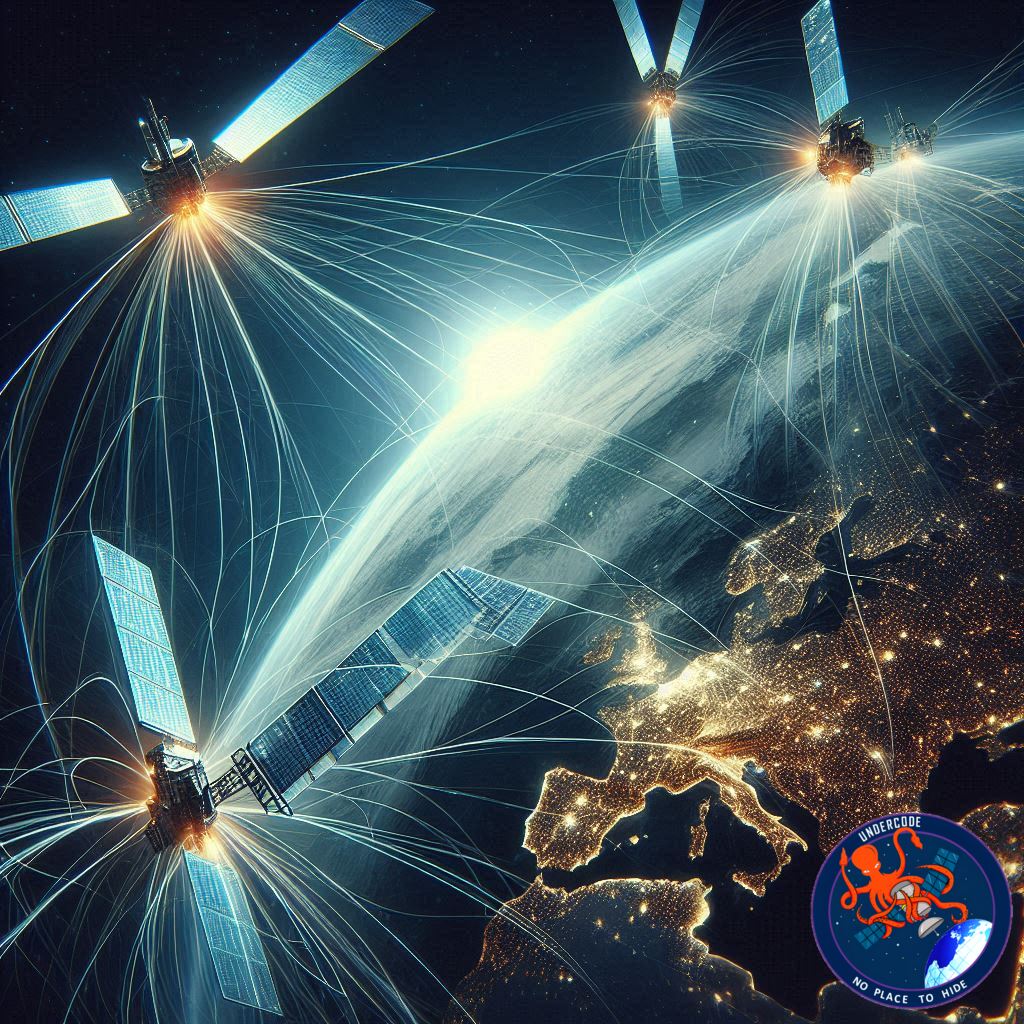
Tension has been building across the global security landscape, driven by a rapid transformation of warfare into a domain where satellites, constellations, and digital communication links shape the outcome of conflicts. China’s latest research into jamming satellite networks reveals a stark reality. Modern war is no longer confined to land, sea, or air. It stretches into orbit, where communications can be severed, redirected, or drowned beneath waves of interference. The following article explores China’s expanding interest in satellite disruption, the geopolitical stakes surrounding Taiwan, and the shifting balance of power as nations prepare for a future where orbital infrastructure becomes the first battlefield.
Global Significance of Satellite-Based Warfare
Breaking cybersecurity news and geopolitical analysis show a world increasingly reliant on low orbit networks. With a focus on the Middle East, Africa, and Asia Pacific, the rise of mega-constellations such as Starlink has reshaped how militaries and civilians stay connected during crises.
China’s Strategic Study of Satellite Disruption
While constellations are resilient, new Chinese research suggests that between 1,000 and 2,000 drones could effectively jam communications across an area the size of Taiwan. The findings, published in an academic journal, underline a broader pattern of China observing battlefield trends, especially the reliance on satellites during Russia’s invasion of Ukraine.
Lessons Drawn From the Ukraine Conflict
Since the invasion began nearly four years ago, Ukraine has depended heavily on satellite systems to maintain Internet access and military coordination. This real-world example demonstrated how orbital connectivity can sustain a nation even under severe assault.
China’s Preparations for Future Conflicts
China has taken notice of these developments. Analysts believe the country is preparing for potential conflict scenarios involving Taiwan, where disabling satellite communications could be one of the earliest tactical moves.
Expert Warnings for Global Operators
Clémence Poirier of ETH Zürich stresses that government agencies and private space firms must revise their threat models. Segregating military and civilian networks and closely monitoring satellite behavior has become essential.
Expanding Role of Satellites Worldwide
Satellites now deliver high-speed, low-cost connectivity to remote regions and conflict zones. This increasing dependence makes them high-value targets for cyberattacks, jamming campaigns, and even criminal exploitation.
Rise of Cyber and Electronic Warfare
Experts note that electronic warfare provides a strategic advantage without provoking the dangerous escalation associated with kinetic attacks. Jamming and spoofing remain frequent, subtle tools used in the grey zone between peace and war.
Fast-Moving Constellations and Resilience
Mega systems such as Starlink, composed of nearly 9,000 satellites in low-earth orbit, are inherently resistant to interference. Taiwan has already partnered with Eutelsat OneWeb, adding redundancy to its emergency communication plans.
China’s Technical Simulation Research
A recent Chinese peer-reviewed paper simulated distributed jamming against satellite downlinks. It reflects an ongoing trend: China has been crafting detailed counter-space strategies that align with its multidomain precision warfare doctrine.
Satellites as Critical Military Infrastructure
Poirier emphasizes that space now supports every modern military operation. Taking down satellites or their ground links disrupts navigation, surveillance, communications, and early-warning systems.
Evolving Anti-Satellite Capabilities
The United States, China, and Russia all maintain substantial anti-satellite weapons programs. However, the shift toward distributed constellations has weakened the strategic effect of knocking out a single orbital asset.
Beyond Missiles: A New Phase of Space Warfare
According to aerospace strategist Sam Wilson, adversaries are moving away from direct-ascent missiles. Cyber intrusions and electronic warfare offer more practical pathways to degrading constellation performance.
China’s Dual Strategy: Offense and Defense
China is not only researching methods to disable enemy networks but also accelerating efforts to build its own constellation technologies, a parallel to Western systems.
Implications for U.S. Defense Planning
CSIS analysts argue that the United States must prepare for the possibility of denying China access to its future constellations during any military confrontation.
Escalation of Global Testing
Reports show that since 2015, Russia has carried out 13 anti-satellite tests, China six, and India two. These tests reveal a rapidly weaponizing space domain.
International Expansion of Space Operations
Other nations are joining the contest. France is developing nano-defense satellites, India is experimenting with orbital docking, and China continues its practice of performing close-proximity maneuvers often described as “satellite dogfighting.”
Controlled Demonstrations of Lethal Capability
Until now, no nation has fired an anti-satellite missile at an adversary’s spacecraft. Tests have been restricted to their own outdated satellites, signaling capability but avoiding escalation.
What Undercode Say:
The Strategic Vulnerability of Constellations
Satellite constellations have transformed warfare by providing instant, resilient connectivity. But resilience does not equal invulnerability. China’s drone-jamming model demonstrates how scale becomes both strength and weakness.
Tactical Priorities in Indo-Pacific Conflicts
In a Taiwan conflict scenario, the first minutes of engagement may revolve around severing orbital communication links. Control of information flow shapes battlefield tempo, political perception, and military coordination.
Why Jamming Appeals to State Actors
Electronic warfare offers plausible deniability. It creates disruption without producing debris or visible destruction. This makes jamming a strategic tool for countries seeking advantage without triggering open war.
Cyber Risks Beyond Physical Jamming
The next major threat is not only signal interference but direct cyber manipulation of satellites. Orientation control, positional spoofing, and command intrusion could damage or disable constellations silently.
Economic Pressure on Satellite Operators
As space becomes a contested domain, commercial operators face escalating security demands. Threat modeling, segmentation, hardened communication paths, and anomaly detection must become standard.
Western Advances and China’s Countermoves
The U.S. is expanding its own distributed networks precisely to complicate adversarial attacks. China’s rapid research reflects an understanding that future dominance hinges on conquering orbital communications.
Propaganda, Politics, and Information Warfare
Satellite interference during conflict would have political impact. Cutting connectivity can shape public opinion, obstruct media, and isolate populations.
The New Arms Race Above Earth
Every nation investing in satellite countermeasures contributes to a growing arms race in orbit. From nano-satellites to ASAT missiles, the escalation continues beneath the radar of global awareness.
The Reality of Future Battlefields
Wars will no longer begin with tanks crossing borders. They may begin with signals fading, navigation drifting, or communications collapsing. This silent battlefield in space may dictate outcomes before the physical conflict unfolds.
🔍 Fact Checker Results
Satellite jamming research by Chinese institutions is reported accurately. ✅
Numbers referencing drone requirements originate from academic simulations, not operational deployments. ✅
No confirmed case of a nation using an anti-satellite missile against an adversary’s spacecraft. ✅
📊 Prediction
Satellite jamming will become the preferred first-strike tactic in future conflicts.
Nations will race to deploy autonomous defensive satellites capable of counter-jamming.
Commercial satellite operators will adopt military-grade cybersecurity measures at unprecedented scale.
🕵️📝✔️Let’s dive deep and fact‑check.
References:
Reported By: www.darkreading.com
Extra Source Hub (Possible Sources for article):
https://www.digitaltrends.com
Wikipedia
OpenAi & Undercode AI
Image Source:
Unsplash
Undercode AI DI v2
Bing
🔐JOIN OUR CYBER WORLD [ CVE News • HackMonitor • UndercodeNews ]
📢 Follow UndercodeNews & Stay Tuned:
𝕏 formerly Twitter 🐦 | @ Threads | 🔗 Linkedin | 🦋BlueSky | 🐘Mastodon


