
Listen to this Post
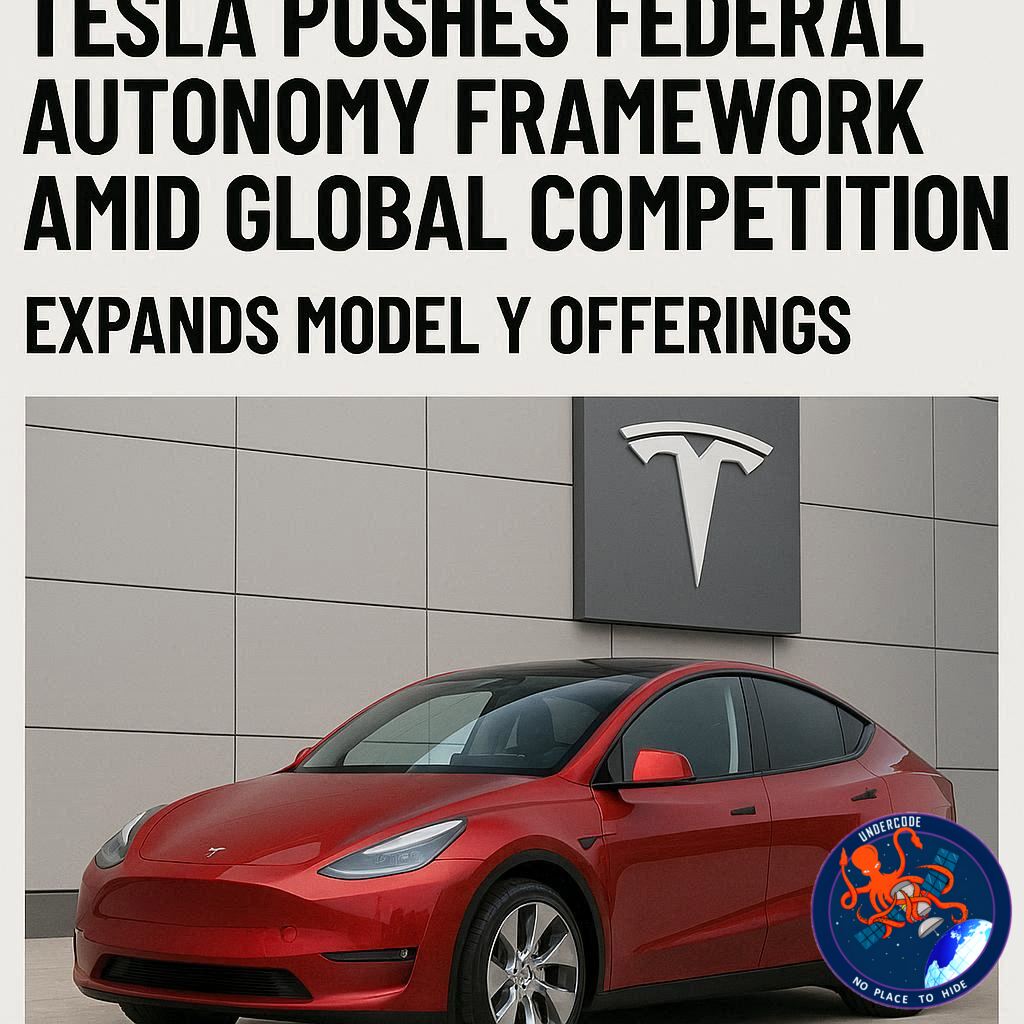
Tesla is accelerating its push into the future of autonomous vehicles, urging U.S. lawmakers to modernize self-driving regulations while simultaneously navigating challenges in vehicle lineup strategy and international sales. The automaker is balancing its ambitions for full autonomy, including Elon Musk’s vision for humanoid robotics, with consumer demands and market realities in China and the U.S.
Tesla Executive Calls for National Autonomy Standards
Tesla’s Vice President of Vehicle Engineering, Lars Moravy, testified before the U.S. Senate Commerce Committee, emphasizing the urgent need for a federal framework for autonomous vehicles. Currently, a patchwork of state-by-state regulations slows innovation and forces companies into local legislative battles. Moravy argued that a unified federal standard would not only boost innovation but also help the U.S. compete with global rivals like China.
Moravy highlighted Tesla’s Full Self-Driving (FSD) platform as an example of progress, noting that vehicles with FSD engaged average 5.1 million miles before a major collision—far surpassing the human driver average of 699,000 miles. He stressed that autonomous vehicles could drastically reduce fatalities since roughly 94% of crashes are caused by human error. Addressing cybersecurity concerns, Moravy reassured the committee that Tesla vehicles have never been taken over remotely thanks to a core-embedded security layer and dual cryptographic signatures.
He also emphasized Tesla’s mission for inclusive mobility through future products like Robotaxis, which could provide accessible transportation to disabled, elderly, and visually impaired individuals, showcasing a societal benefit beyond the U.S. market.
Expanding Model Y Lineup Signals Strategic Tension
Tesla recently introduced a new Model Y configuration in the U.S., including a lower entry point for all-wheel-drive vehicles. While this expands options, it may leave some customers wanting more, particularly those seeking larger SUVs for families. With the Model X being phased out, the Model Y’s compact form factor may not meet the space needs of larger households.
Tesla CEO Elon Musk has hinted at a longer-wheelbase Model Y L, which could eventually offer more seating and cargo space, but the release in the U.S. is not guaranteed. The current strategy prioritizes vehicles compatible with Tesla’s autonomous ride-hailing vision rather than catering directly to traditional SUV demands. Minor adjustments to the Model Y may not address core consumer needs for space, performance, or variety.
Musk Reiterates Ambitious Optimus Vision
Elon Musk recently reiterated that Tesla’s humanoid robot, Optimus, could become the first real-world Von Neumann machine—capable of self-replication and autonomous construction in extraterrestrial environments. Musk has framed Optimus as Tesla’s “biggest product ever,” suggesting it could play a critical role in space exploration and industrial automation beyond Earth. This futuristic vision positions Tesla’s robotics as potentially integral to an interplanetary ecosystem, linking the company’s automotive, AI, and aerospace ambitions.
Tesla China Sales Show Resilience
Tesla China reported wholesale sales of 69,129 vehicles in January, marking a 9.3% year-over-year increase despite seasonal market slowdowns and rising costs. While the number represents a decline from December, Tesla’s growth contrasts with competitors like BYD, which saw year-over-year declines. To counter weaker demand, Tesla launched long-term financing programs and reinstated insurance subsidies, strategies later adopted by other Chinese EV makers.
What Undercode Says: Tesla’s Strategic Crossroads
Federal Regulation as a Global Competitive Lever
Tesla’s push for a national autonomy framework reflects an acute awareness of the geopolitical stakes in EV and AV innovation. With China aggressively developing autonomous technology, a fragmented regulatory landscape in the U.S. risks slowing domestic leadership. A federal framework could streamline testing, certification, and deployment, fostering safer and faster innovation while reducing bureaucratic friction.
Model Y Expansion vs. Consumer Expectations
Tesla’s incremental updates to the Model Y may satisfy existing owners but fail to capture new buyers seeking larger SUVs. The potential Model Y L could fill some gaps, yet Tesla’s focus on autonomy may limit its willingness to fully cater to traditional family needs. There’s a strategic trade-off between maximizing the current platform’s potential and introducing entirely new designs to retain market dominance.
Optimus and Long-Term Technological Vision
Musk’s comments on Optimus highlight Tesla’s broader ambition: creating scalable, autonomous systems that extend beyond terrestrial transport. By positioning Optimus as a Von Neumann machine, Tesla signals a long-term focus on robotics as an enabler of interplanetary infrastructure, blending automotive, AI, and aerospace innovation in a unified vision. While speculative, this approach could redefine Tesla’s identity from EV manufacturer to autonomous systems leader.
China Market Adaptability
Tesla China’s ability to grow sales amid headwinds underscores the company’s strategic agility. Financing incentives, insurance subsidies, and local production give Tesla a competitive edge over rivals struggling with regulatory uncertainty and market fluctuations. Maintaining momentum in China is critical, as it represents both a revenue engine and a testing ground for scalable autonomous technologies.
Core Challenges Ahead
Tesla faces a convergence of regulatory, consumer, and technological challenges. Success hinges on harmonizing federal policy advocacy, aligning product offerings with market demand, and maintaining credibility in autonomous vehicle safety and robotics. Missteps in any area could hinder adoption, damage brand perception, or allow competitors to gain ground.
🔍 Fact Checker Results
✅ Tesla FSD vehicles average 5.1 million miles between major collisions compared to 699,000 miles for human drivers.
✅ Approximately 94% of crashes are attributed to human error, supporting Tesla’s safety arguments.
❌ Optimus as a fully functional Von Neumann machine remains speculative and unproven.
📊 Prediction
Tesla’s advocacy for a federal AV framework is likely to gain traction in Congress within the next 12–18 months, accelerating autonomous deployment in the U.S. The Model Y L, if released domestically, could temporarily mitigate demand for larger SUVs but may not fully satisfy family-focused buyers, leaving space for competitors to capitalize. Meanwhile, Tesla China will continue leveraging financing and local incentives to maintain growth, potentially solidifying Tesla’s dominance in the world’s largest EV market. On the long-term horizon, Optimus may remain a high-profile research project, signaling Tesla’s ambition but with commercial impacts only gradually realized over the next decade.
🕵️📝✔️Let’s dive deep and fact‑check.
References:
Reported By: www.teslarati.com
Extra Source Hub (Possible Sources for article):
https://www.linkedin.com
Wikipedia
OpenAi & Undercode AI
Image Source:
Unsplash
Undercode AI DI v2
Bing
🔐JOIN OUR CYBER WORLD [ CVE News • HackMonitor • UndercodeNews ]
📢 Follow UndercodeNews & Stay Tuned:
𝕏 formerly Twitter 🐦 | @ Threads | 🔗 Linkedin | 🦋BlueSky | 🐘Mastodon


