
Listen to this Post
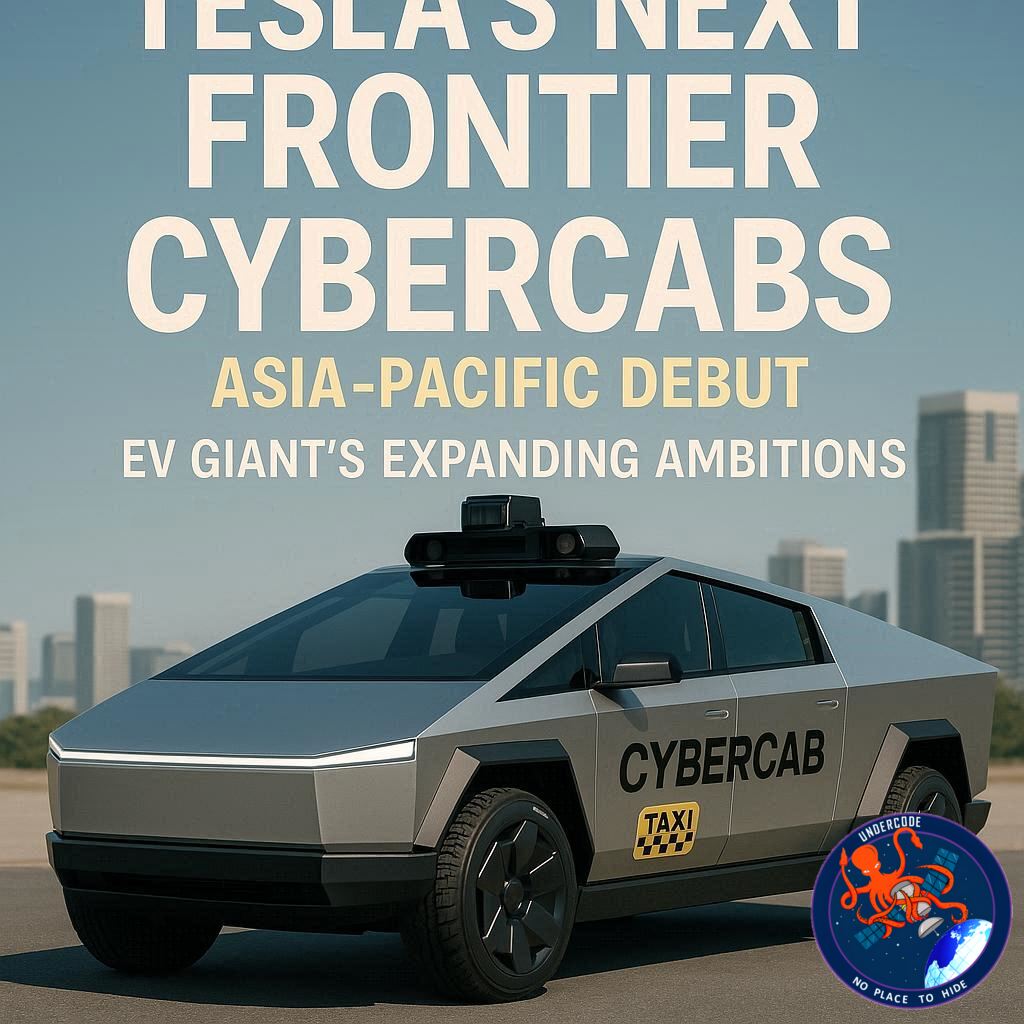
Tesla is gearing up for a spectacular return to the China International Import Expo (CIIE) this November, signaling a renewed push into the world’s most competitive electric vehicle (EV) market. The company will showcase its highly anticipated Cybercab, a fully autonomous two-seater Robotaxi, marking its Asia-Pacific debut. This event, scheduled from November 5–10 at Shanghai’s National Exhibition and Convention Center, promises a glimpse into Tesla’s ambitious roadmap, including its advanced AI-driven transportation solutions and other innovations like Optimus robots and Megapack batteries.
Tesla Cybercab Makes Its China Debut
After a one-year hiatus, Tesla is returning to the CIIE, a move that underscores the company’s strategic focus on China. Tesla confirmed its participation on Weibo, revealing it will occupy Booth A3-03 in Hall 2.1. The Cybercab’s debut at the expo signals Tesla’s potential intention to introduce autonomous ride-hailing services in China. Although China already hosts numerous autonomous ride-hailing providers, Tesla’s pure vision approach, relying solely on cameras and artificial intelligence, differentiates it from existing competitors. To date, Tesla’s autonomous ride-hailing operations have been limited to Austin, Texas, and the Bay Area in California, making this Asia-Pacific introduction particularly significant.
Tesla Semi Factory Nears Completion
Simultaneously, Tesla’s Semi factory in Nevada is progressing rapidly. Drone images and on-site observations indicate that the facility’s exterior is nearly complete, with interior equipment installation likely the current focus. Tesla aims to start producing its Class 8 all-electric truck by 2026, with a target of 50,000 units annually. The Semi is designed to transform the U.S. transport sector by offering sustainable alternatives to diesel-powered freight trucks. Recent shipments of massive production equipment highlight the scale and seriousness of Tesla’s manufacturing ambitions.
Cybertruck in Law Enforcement
Tesla continues to diversify the applications of its vehicles, with the Cybertruck now entering police service. The Las Vegas Metro Police Department has integrated specially outfitted Cybertrucks into its fleet, funded by donations from philanthropists Ben and Felicia Horowitz. These vehicles are equipped with law enforcement-specific modifications, including laptops, siren controls, ballistic glass partitions, and reinforced interiors. This adaptation demonstrates Tesla’s commitment to versatile vehicle use, from civilian transport to public safety.
Cybercab Testing Hits Public Roads
The Cybercab has been spotted on public roads near Tesla’s Los Altos Engineering Headquarters, signaling a crucial development stage. While the vehicle currently includes side mirrors and a driver for regulatory compliance, it is expected to operate fully autonomously once Tesla’s Full Self-Driving (FSD) technology is perfected. The company plans to begin volume production in Q2 of the coming year, potentially introducing a manual-control-free ride experience. Job postings and testing at multiple Tesla facilities indicate that production and scaling are actively underway.
What Undercode Say:
Tesla’s participation in the CIIE and the Asia-Pacific debut of the Cybercab reflects a calculated move to cement its presence in China, a market both lucrative and fiercely competitive. While the global EV race is dominated by Chinese firms like NIO and XPeng, Tesla’s approach—leveraging AI for fully autonomous ride-hailing—positions it as a distinct competitor. Unlike traditional autonomous vehicles relying on LIDAR and radar, Tesla’s pure vision model may allow more flexible software updates, faster deployment, and cost efficiencies.
The Cybercab’s strategic unveiling at an international expo is not merely a marketing stunt; it serves as a testbed for regulatory and consumer acceptance in foreign markets. Tesla’s cautious yet public road testing, with temporary manual controls, illustrates its commitment to safety and compliance while signaling confidence in its AI capabilities. If successfully deployed in China, Cybercab could catalyze a shift in how urban mobility is perceived, transforming private transport into on-demand, autonomous services.
Meanwhile, Tesla’s Semi factory near completion indicates a parallel focus on commercial vehicles, highlighting a two-pronged strategy: dominating urban autonomous mobility with the Cybercab while revolutionizing freight with the Semi. Tesla’s ability to execute across both consumer and commercial EV segments sets it apart from competitors who often focus on one niche. The Cybertruck’s integration into public safety fleets further underscores Tesla’s adaptability, showcasing how EVs can transition into specialized applications without losing their consumer appeal.
Tesla’s holistic approach—combining autonomous software, vehicle versatility, and global expansion—reinforces its long-term vision: to reshape transport ecosystems worldwide. Success in China could provide a template for further expansion across Asia-Pacific, leveraging Tesla’s software-centric advantage over hardware-heavy competitors. Moreover, achieving mass production of Cybercab with full autonomy would mark a significant milestone in AI-driven transport, potentially redefining regulatory frameworks and urban planning worldwide.
Tesla’s challenges remain substantial. Regulatory hurdles, market saturation, and stiff competition could slow adoption, but the company’s reputation for innovation and speed provides a unique advantage. By strategically blending product launches, market entry, and technological differentiation, Tesla is not merely selling vehicles—it is cultivating an ecosystem where AI, autonomy, and sustainability intersect.
Fact Checker Results:
✅ Tesla confirmed its Cybercab Asia-Pacific debut at the CIIE in November 2025.
✅ Tesla Semi factory in Nevada is nearing completion, targeting 2026 production.
❌ Cybercab has not yet been cleared for fully autonomous public deployment; manual controls remain in place for testing.
Prediction:
🚀 Tesla’s Cybercab could redefine urban mobility in Asia-Pacific by 2026, potentially sparking regulatory shifts and new autonomous ride-hailing standards.
🟢 The Semi’s production could disrupt U.S. freight logistics, with electric trucks gradually replacing diesel fleets.
⚡ Cybertruck adaptations may inspire wider adoption of EVs in public safety and specialized sectors, highlighting Tesla’s versatile vehicle strategy.
If you want, I can also make an even punchier, magazine-style version with a more emotional and storytelling-driven narrative that grabs casual readers while keeping all the technical detail. Do you want me to do that?
🕵️📝✔️Let’s dive deep and fact‑check.
References:
Reported By: www.teslarati.com
Extra Source Hub (Possible Sources for article):
https://www.reddit.com/r/AskReddit
Wikipedia
OpenAi & Undercode AI
Image Source:
Unsplash
Undercode AI DI v2
Bing
🔐JOIN OUR CYBER WORLD [ CVE News • HackMonitor • UndercodeNews ]
📢 Follow UndercodeNews & Stay Tuned:
𝕏 formerly Twitter 🐦 | @ Threads | 🔗 Linkedin | 🦋BlueSky | 🐘Mastodon


