
Listen to this Post
Introduction
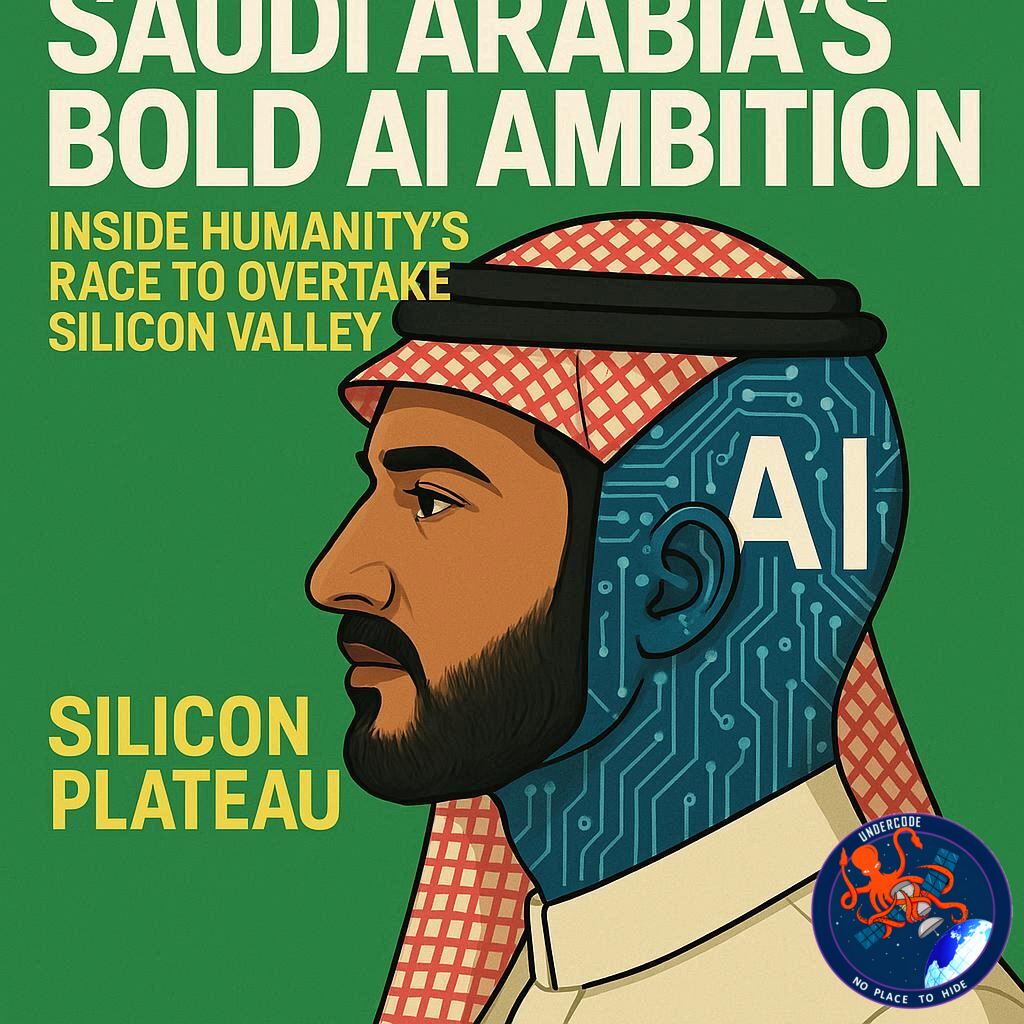
In a move that signals the next phase of technological power play, Saudi Arabia has launched a new frontrunner in the global artificial‑intelligence race: Humain. With the kingdom setting its sights on becoming the world’s third‑largest AI market behind only the U.S. and China, this isn’t just another startup—it’s a strategic wedge in the transformation of an entire economy. The stakes are high, the ambitions vivid, and the underlying question remains: Can a nation once defined by oil now redefine itself through data, chips and algorithms?
the article
Humain, founded in May 2025 under the auspices of the Public Investment Fund (PIF) of Saudi Arabia and chaired by Crown Prince Mohammed bin Salman, is launching with grand ambitions: build out full‑stack AI infrastructure, deliver an entirely new operating system based on spoken intent rather than icon clicking, and elevate Saudi Arabia to a position just behind the U.S. and China in global AI ranking.
humain.ai
+3
Wikipedia
+3
Reuters
+3
Key developments include Humain’s unveiling of “Humain One”, an AI‑driven operating system that abandons the traditional icon‑based interface of PCs in favour of voice and intent‑based interaction.
Reuters
+1
The company is already deploying this across government entities and pilot programs linked to the PIF.
Reuters
The infrastructure buildup is striking: Humain aims to build multiple gigawatts of data‑center capacity, harness chips and hardware from major U.S. firms (such as NVIDIA, AMD, Qualcomm), and draw in global talent and partnerships.
semafor.com
+2
humain.ai
+2
Notably, a strategic partnership with Aramco is underway: Aramco will take a significant minority stake in Humain while PIF retains majority ownership, aligning oil‑and‑energy know‑how with AI hardware scale‑up.
Aramco
Saudi Arabia views Humain as a linchpin of its broader Vision 2030 economic‑diversification programme—moving away from fossil‑fuel dependency and into being a data and computing powerhouse.
semafor.com
+1
In short: Humain aims to flip the narrative—from “Saudi = oil exporter” to “Saudi = AI infrastructure exporter” and global tech hub.
What Undercode Say:
The rise of Humain is one of those rare inflection moments in technology and geopolitics combined. Let’s dig into the significance, opportunities and headwinds.
Turning resource‑rich into compute‑rich
Saudi Arabia has long had abundant land, energy and capital. These assets now become part of a new formula for AI: cheap electricity, large‑scale data centres, proximity to emerging‑market growth, and a sovereign wealth fund ready to invest. Humain is leveraging these inputs to build the backbone—far more than simply writing code. The shift: build hardware + software + models.
Saudi isn’t just buying other people’s AI—it is building the full stack: infrastructure (data centres, power, chips), cloud + platforms, models (including Arabic LLMs) and applications.
humain.ai
+1
That gives Humain a strategic edge: instead of being a local spin‑out, it’s a national champion with global ambition.
Leap‑frogging the icons paradigm
The concept of Humain One—an operating system where you “speak your intent” rather than click icons—is more than marketing. It signals a desire to bypass legacy UI/UX lock‑in (Windows, macOS) and leapfrog into the next generation of human‑machine interaction. If they succeed, this becomes the kind of foundational shift that carries long‑tail implications.
Reuters
But it’s risky: giants like Microsoft, Apple and Google have massive ecosystems and entrenched user bases. For Humain to gain market share will require strong differentiation and adoption outside Saudi.
Global partnerships, but also vulnerabilities
Humain’s collaborations with industry heavyweights (e.g., Nvidia, Qualcomm, AMD) and mega deals (e.g., data‑centre campus partnerships with AirTrunk and Blackstone via Saudi) show serious momentum.
airtrunk.com
+1
But reliance on foreign tech and chips means exposure to export controls (especially US tech), supply‑chain friction, and geopolitical risk. The global context: AI hardware is a strategic choke point. Saudi’s success may hinge on securing long‑term chip supply and/or developing domestic fabrication capabilities.
Regional hub for AI, aiming global scale
Humain is using Saudi Arabia as its launchpad—but the aim is global. With government deployment underway domestically, they can build credibility, iterate products and then scale to regional or international markets. The timing is favourable: many countries are building out AI infrastructure and want partners or alternative hubs beyond Silicon Valley or China. But to become a global competitor, Humain must solve talent‑attraction, regulation, data‑governance, and demonstrate a viable business model (not just state‑funded hype).
Diversification vs. hydrocarbon dependence
Saudi Arabia’s push into AI through Humain and related initiatives (as analysed by the Financial Times) is part of a strategic bet: that when oil demand peaks, AI/data‑driven services will carry the next wave of growth.
Financial Times
The imagery is powerful: instead of exporting oil, exporting AI services, compute, data. Yet diversification is historically hard. Many oil‑rich states have tried to shift to knowledge economies with mixed results. Success will depend on execution, culture, and persistent investment—not simply branding.
The catch: execution and ecosystem
Ambition is one thing. Realising it is another. For Humain to succeed these things matter:
Talent: engineers, researchers, ops staff. Saudi must compete globally.
Ecosystem: startups, universities, venture funding, R&D.
Business model: commercial clients, global footprints, ROI, not just national deployment.
Regulation & ethics: as AI becomes central, governance frameworks, data privacy, regional sensitivities (especially in Arabic‑language models) matter.
If Humain can hit its numbers — multi‑gigawatt scale, global partnerships, viable software/hardware stack—it could become a serious global player. But if it remains domestically focused or purely government‑funded, it may struggle to scale.
Why this matters broadly
The evolution of Humain is emblematic of the broader structural shift in the global tech order: beyond the U.S. and China, new hubs are emerging—often with a state‑backed thrust, large capital, and infrastructure advantages. Saudi’s mix of capital + ambition + infrastructure gives it a shot. If Humain succeeds, it changes the narrative: global AI infrastructure isn’t just in Silicon Valley, Shenzhen or Bangalore—it could be in Riyadh.
Undercode’s verdict
Humain is a bold, high‑stakes bet. Saudi Arabia is effectively turning onto a new resource: compute power, data, models. With the cards lined up—capital, land, energy, ambition—it has the ingredients. But the test will be execution and global traction. If Humain becomes just another pipeline for state‑funded infrastructure, its global standing will be muted. But if it builds products, attracts clients, competes globally, it will mark a pivot point in how we think about AI hubs.
Fact Checker Results
✅ Humain was launched in May 2025 under the PIF of Saudi Arabia.
Wikipedia
+1
✅ Humain’s product “Humain One” is an AI‑based operating system focused on intent/voice rather than icons.
Reuters
+1
❌ Humain is not yet the third‑largest AI market globally; the ambition is to become that, but it is not there yet.
Prediction 🙂
Over the next 3‑5 years, I foresee a few likely scenarios:
Humain will secure major global data‑centre contracts — perhaps from hyperscalers or regional cloud players looking for alternative hubs beyond the U.S./China.
The operating system Humain One will initially find adoption in enterprise/government deployments (within Saudi Arabia and Gulf states) before consumer‑scale uptake.
If chip supply holds, Humain could become a significant player in the Middle East/North Africa corridor for AI compute services—attracting startups, regional cloud clients and compute traffic.
However, if talent gaps, global competition or regulatory/trade headwinds bite, Humain may remain domestically dominant but globally peripheral.
Ultimately, I expect Saudi Arabia via Humain will indeed become a recognised sub‑global AI hub (behind U.S. and China) but not yet equal; its ascent will be real but measured.
In short: Humain’s play is bold, the ingredients convincing—but the journey from ambition to global heavyweight will be filled with hurdles. The kingdom has thrown the dice; whether they land in the winner’s circle remains to be seen.
🕵️📝✔️Let’s dive deep and fact‑check.
References:
Reported By: edition.cnn.com
Extra Source Hub (Possible Sources for article):
https://www.stackexchange.com
Wikipedia
OpenAi & Undercode AI
Image Source:
Unsplash
Undercode AI DI v2
Bing
🔐JOIN OUR CYBER WORLD [ CVE News • HackMonitor • UndercodeNews ]
📢 Follow UndercodeNews & Stay Tuned:
𝕏 formerly Twitter 🐦 | @ Threads | 🔗 Linkedin | 🦋BlueSky | 🐘Mastodon


