
Listen to this Post
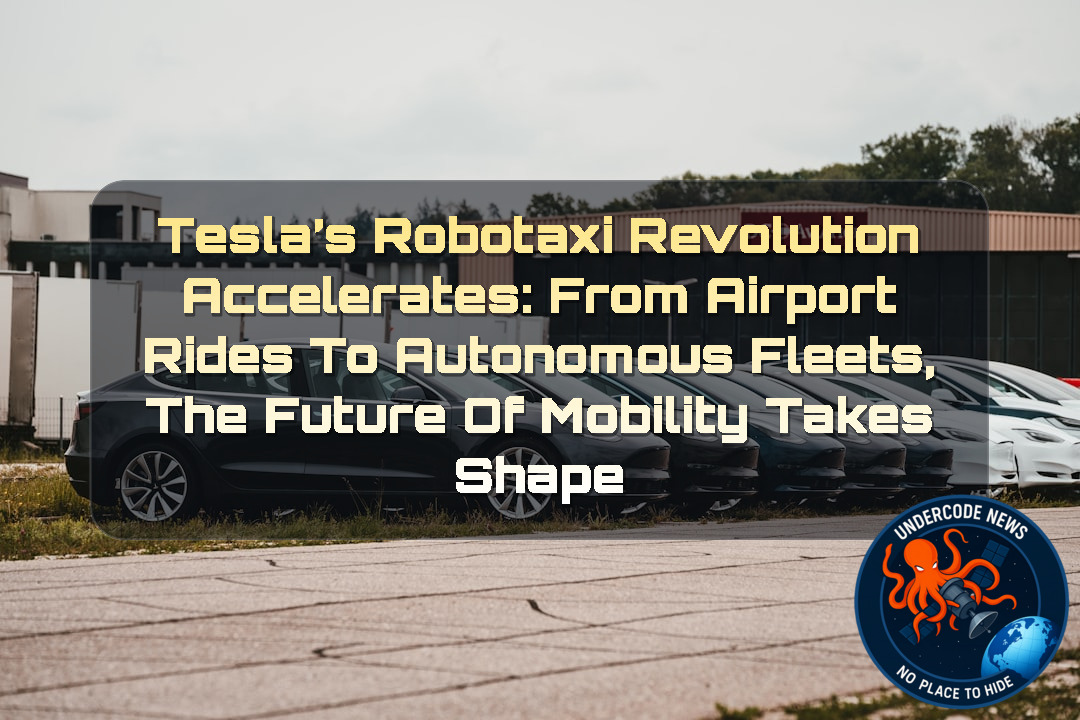 Introduction: Tesla Moves Closer Toward a New Era of Transportation
The future of transportation is no longer limited to electric vehicles sitting in garages. Tesla is pushing toward a world where cars become intelligent mobility platforms, capable of transporting passengers, managing themselves through artificial intelligence, and operating as part of a connected global network.
The company’s latest developments show a major expansion of this vision. Tesla has extended its California ride-hailing service to San Francisco International Airport, introduced a major 2026 Summer Software Update packed with navigation and AI improvements, revealed why Starlink connectivity will be integrated into Cybercab vehicles, and expanded its Robotaxi program into additional Florida cities.
Together, these updates reveal a company moving beyond traditional vehicle manufacturing. Tesla is increasingly positioning itself as a technology and transportation company competing in the future of autonomous mobility.
Tesla Expands Ride-Hailing Service to San Francisco International Airport
Tesla has officially expanded its California ride-hailing program by adding San Francisco International Airport (SFO) as a new pickup and drop-off destination. The move represents another step in Tesla’s plan to establish a large-scale transportation network powered by electric vehicles and artificial intelligence.
The airport expansion allows Tesla users throughout the Bay Area to request rides directly to and from one of California’s busiest transportation hubs. The service operates through Tesla’s dedicated ride-hailing application, where passengers can request vehicles, manage payments, and receive routing information.
This development follows Tesla receiving authorization to operate limousine services at SFO. Public records indicate that Tesla’s permit became active in March 2026 and remains valid until January 2027, allowing company vehicles to legally provide passenger transportation services.
Human Drivers Remain Part of Tesla’s California Ride Service
Although Tesla is heavily focused on autonomous driving technology, its California ride-hailing service is not yet completely driverless.
The company currently uses Model Y vehicles equipped with Full Self-Driving (Supervised) technology. Human safety drivers remain inside the vehicles because California regulations still require human oversight for these types of operations.
This approach represents a transitional phase between traditional ride-hailing and fully autonomous transportation.
Tesla is collecting operational data, improving its artificial intelligence systems, and building customer confidence while preparing for a future where vehicles can operate without human intervention.
Bay Area Expansion Strengthens Tesla’s Mobility Strategy
Tesla’s Bay Area ride-hailing network covers a large geographic area extending from northern San Francisco regions to southern areas near San Jose.
The company previously expanded transportation services to San Jose Mineta International Airport, demonstrating a strategy focused on connecting important transportation hubs.
Airports represent a critical opportunity because they provide consistent demand, high passenger volume, and predictable travel patterns. For Tesla, integrating airports into its ride network helps test vehicle performance in real-world commercial environments.
The company’s long-term goal appears to be creating a transportation ecosystem where Tesla vehicles are not only owned by customers but also operate as revenue-generating mobility services.
Tesla’s 2026 Summer Update Brings Major Software Improvements
Tesla has revealed its 2026 Summer Software Update, introducing several improvements designed to enhance navigation, artificial intelligence interaction, entertainment, and vehicle personalization.
Tesla’s seasonal updates have become an important part of its strategy because the company continues improving vehicles after purchase through software rather than relying only on hardware upgrades.
The update introduces around ten major features, including improved AI commands, navigation improvements, mobile app controls, and entertainment upgrades.
Grok AI Becomes More Integrated Into Tesla Vehicles
One of the biggest changes is the expansion of Grok voice capabilities.
Tesla owners will now be able to use voice commands for tasks such as:
Making phone calls
Searching and playing music
Adjusting climate settings
Opening the glovebox
Answering questions about the vehicle
This integration demonstrates Tesla’s broader move toward AI-powered vehicle assistants.
Instead of drivers interacting with separate applications, Tesla wants the car itself to become a conversational technology platform.
Self-Driving Statistics Arrive in Tesla Mobile App
Another important improvement allows Tesla owners to view and share self-driving statistics through the mobile application.
This feature gives users more visibility into how autonomous driving technology performs during daily usage.
For Tesla, transparency around autonomous driving performance is strategically important because public trust remains one of the biggest challenges facing self-driving technology.
Smarter Navigation Learns Driver Habits
Tesla’s Automatic Navigation system has received major improvements.
The vehicle can now recognize frequently visited locations beyond traditional destinations like home and work.
Examples include:
Regular school drop-off locations
Gyms
Frequently visited businesses
Common commuting routes
The system aims to make navigation more predictive by understanding user behavior instead of simply reacting to commands.
Tesla Adds Personalized Route Preferences
The update also introduces preferred route selection.
Vehicles can now prioritize roads and paths that drivers frequently use.
This creates a more personalized navigation experience, reducing dependence on generic route calculations.
Tesla’s approach highlights the importance of data-driven personalization in modern vehicles.
Mobile App Gains More Vehicle Controls
Tesla continues expanding smartphone integration.
The Summer Update allows users to:
Set desired battery arrival energy levels
Upload custom vehicle wraps directly from the mobile app
Manage additional vehicle settings remotely
These features show Tesla’s effort to make the smartphone a central control interface for vehicle ownership.
Cybercab Starlink Integration Is About Fleet Management, Not Entertainment
Tesla’s upcoming Cybercab has attracted significant attention because the vehicle is designed specifically for autonomous ride-hailing.
Many observers initially believed Starlink integration would allow passengers to stream content, work online, or enjoy high-speed internet during rides.
However, Tesla’s AI leadership explained that the primary purpose is not passenger entertainment.
The satellite connection is designed to help Tesla maintain communication with Robotaxi vehicles, manage fleets, troubleshoot problems, and support customers.
Connectivity Becomes a Safety Tool for Autonomous Vehicles
For autonomous transportation, reliable communication is a critical factor.
A Robotaxi network requires more than artificial intelligence driving capability. Companies must also manage unexpected situations, communicate with passengers, monitor vehicle performance, and provide remote support.
Tesla’s Starlink integration represents a safety and operational strategy.
The company wants Cybercab vehicles to remain connected even in areas where traditional cellular networks may be unreliable.
Tesla Expands Robotaxi Program Into Orlando and Tampa
Tesla has expanded its Robotaxi program into two additional Florida cities, Orlando and Tampa.
The expansion follows previous launches in cities including Austin, Dallas, Houston, Miami, and the San Francisco Bay Area.
Unlike Tesla’s California ride-hailing program, these Robotaxi operations are designed around autonomous operation without safety drivers inside the vehicle.
This marks a significant milestone for Tesla’s self-driving ambitions.
Orlando Robotaxi Deployment Targets Tourism and Urban Demand
Tesla’s Orlando Robotaxi zone focuses on important areas near transportation corridors, residential communities, commercial districts, and tourism-related locations.
Orlando represents a strategic market because millions of visitors travel through the city every year.
A successful autonomous taxi service in a tourism-heavy environment could demonstrate Tesla’s ability to handle diverse passenger demand.
Tampa Robotaxi Expansion Focuses on Urban Mobility
Tesla’s Tampa rollout covers central areas including major neighborhoods and commercial zones.
The city provides a different testing environment compared with Orlando, offering urban streets, residential areas, and business districts.
Tesla’s expansion strategy appears focused on gradually increasing geographic coverage while collecting more autonomous driving data.
Tesla’s Bigger Vision: Vehicles Become Intelligent Networks
Tesla’s latest announcements reveal a company moving toward a transportation model where vehicles are connected, intelligent, and constantly improving.
Traditional automakers sell cars.
Tesla wants to operate a mobility network.
The combination of AI software, autonomous driving, electric vehicles, Starlink connectivity, and ride-hailing creates a foundation for a future transportation ecosystem.
What Undercode Say:
Tesla’s latest moves reveal a clear transition from an electric vehicle manufacturer into an artificial intelligence mobility company.
The airport expansion is not simply about adding another destination.
It represents Tesla testing commercial transportation at scale.
Airports provide predictable routes, high passenger demand, and valuable operational data.
Every ride creates information that can improve Tesla’s autonomous driving systems.
The most important part of Tesla’s strategy is data collection.
Self-driving technology improves through millions of real-world scenarios.
Every turn, stop, pedestrian interaction, and unusual road situation becomes training material for artificial intelligence.
Tesla’s advantage comes from operating a massive connected vehicle fleet.
Traditional taxi companies must manually upgrade vehicles.
Tesla can improve millions of cars through software updates.
The 2026 Summer Update demonstrates this philosophy.
The company continues adding capabilities years after vehicles leave factories.
Features like smarter navigation, AI assistants, and mobile controls transform cars into continuously evolving platforms.
The Cybercab Starlink decision also reveals Tesla’s operational thinking.
A fully autonomous fleet cannot depend only on vehicle intelligence.
It requires communication systems, monitoring infrastructure, and customer support mechanisms.
Robotaxi success will depend as much on fleet management as driving ability.
Tesla understands that autonomous transportation is a complete ecosystem.
The vehicle is only one part of the solution.
Software, connectivity, artificial intelligence, and customer experience are equally important.
Florida expansion shows Tesla is moving toward broader geographic testing.
Each city provides different challenges.
Orlando tests tourism environments.
Tampa tests urban mobility.
San Francisco tests complex traffic conditions.
Austin tests large-scale autonomous deployment.
The company is effectively building a global transportation laboratory.
However, Tesla still faces major challenges.
Regulatory approval remains a significant obstacle.
Public trust must also be earned.
One major autonomous accident could slow industry progress.
Tesla must prove reliability, transparency, and safety.
Competition is also increasing.
Companies working on autonomous mobility are investing heavily in artificial intelligence, mapping technology, and fleet operations.
Tesla’s advantage is its integrated ecosystem, but maintaining leadership will require continuous innovation.
The future of transportation will likely not arrive through one single technology.
It will emerge from combining electric vehicles, AI systems, cloud computing, satellite connectivity, and smart infrastructure.
Tesla’s current strategy shows it is preparing for that future.
The company is no longer asking whether cars can drive themselves.
It is building the infrastructure needed for millions of autonomous journeys.
Deep Analysis: Monitoring Tesla Technology and Connected Vehicle Systems
Tesla’s expanding software ecosystem creates new areas for technical monitoring and cybersecurity research.
Security researchers can analyze vehicle communication patterns, application behavior, and network exposure.
Useful Linux commands for basic system investigation include:
uname -a
Check operating system information when analyzing connected platforms.
ip addr
Inspect network interfaces and connectivity.
netstat -tulnp
Review active network connections.
ss -tulpn
Analyze listening services.
journalctl -xe
Review system events and troubleshooting information.
tcpdump -i eth0
Capture network traffic for authorized security testing.
grep -R "tesla" /var/log/
Search system logs for Tesla-related entries.
systemctl status network-manager
Check network service status.
openssl s_client -connect example.com:443
Inspect encrypted communication certificates.
Future autonomous fleets will require stronger cybersecurity protections because vehicles will become connected computers operating in public environments.
Threat monitoring, encryption, authentication, and secure software updates will become essential components of transportation safety.
✅ Tesla expanded its California ride-hailing operations to include San Francisco International Airport access.
✅ Tesla’s Robotaxi strategy includes autonomous vehicle testing, software improvements, and fleet management technologies.
❌ The Cybercab Starlink integration is not primarily designed as passenger entertainment, according to Tesla’s explanation. It focuses on fleet connectivity and management.
Prediction
(+1) Positive Outlook: Tesla is likely to continue expanding Robotaxi operations into additional cities as regulatory approval and autonomous driving reliability improve.
Tesla’s software-driven vehicle strategy may create new transportation business models beyond traditional car ownership.
More airports and urban regions could become integrated into Tesla’s mobility network.
AI improvements may accelerate the transition from supervised autonomy toward broader driverless services.
Tesla will continue facing regulatory challenges, safety concerns, and competition from other autonomous mobility companies.
Public acceptance of fully autonomous transportation may develop slower than Tesla expects.
Cybersecurity risks will become a larger challenge as more vehicles become permanently connected to cloud systems.
▶️ Related Video (76% Match):
🕵️📝Let’s dive deep and fact‑check.
🎓 Live Courses & Certifications:
Join Undercode Academy for Verified Certifications
🚀 Request a Custom Project:
Secure, high-velocity infrastructure and disruptive technological engineering. Contact our engineering team for high-tier development and proprietary systems:
[email protected]
💎 Smart Architecture | 🛡️ Secure by Design | ⭐ Trusted by Thousands
References:
Reported By: www.teslarati.com
Extra Source Hub (Possible Sources for article):
https://www.reddit.com/r/AskReddit
Wikipedia
OpenAi & Undercode AI
Image Source:
Unsplash
Undercode AI DI v2
🔐JOIN OUR CYBER WORLD [ CVE News • HackMonitor • UndercodeNews ]
📢 Follow UndercodeNews & Stay Tuned:
𝕏 formerly Twitter 🐦 | @ Threads | 🔗 Linkedin | 🦋BlueSky | 🐘Mastodon | 📺Youtube


