
Listen to this Post
Introduction: A New Era of High-Performance Desk Charging
The modern workspace is no longer just about laptops and monitors; it has evolved into a dense ecosystem of devices that demand constant, efficient, and simultaneous charging. From professional creators to tech-heavy users managing cameras, tablets, and laptops, the need for powerful, centralized charging solutions has become unavoidable. Traditional desk chargers, typically capped at 140W or 200W, are starting to feel outdated in environments where multiple high-drain devices operate at once. This is where next-generation charging stations are stepping in, reshaping expectations for both performance and design. Among them, one product has recently drawn significant attention for pushing the boundaries further than most competitors: a 300W desktop charging station designed not just for power, but for intelligence, monitoring, and real-time energy management.
the Original
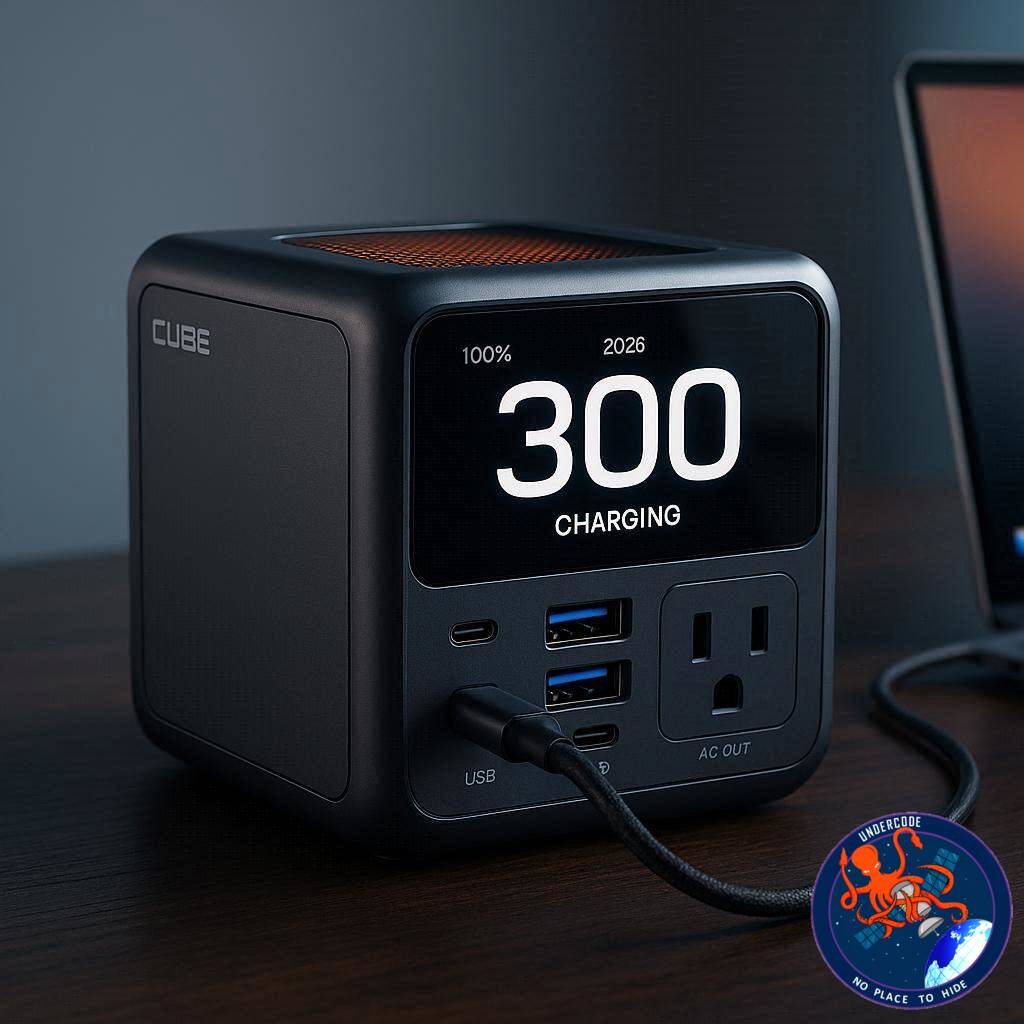
The CUKTECH 30 Ultra Charging Station is presented as one of the most powerful and advanced desk chargers currently available, offering a total output of 300W, significantly higher than most competitors in the 140W–200W range. It features three USB-C ports, one USB-A port, and a rare dedicated DC output, making it highly versatile for different device types. Two USB-C ports support 140W PD 3.1 fast charging, allowing simultaneous full-speed charging of high-end laptops like the 16-inch MacBook Pro. A standout feature is its 1.8-inch color diagnostic display, which provides real-time data such as wattage per port, total power usage, and temperature monitoring.
The charger also includes a premium 240W USB-C cable and a sturdy angled stand, enhancing both usability and aesthetic appeal. Despite its high power capacity, the device maintains a compact footprint, making it suitable for clutter-free desk setups. In practical use, it is designed to handle multiple devices simultaneously, including studio lights, tablets, cameras, and other accessories, often without reaching its maximum output limit. The display allows users to monitor charging behavior in real time, including power ramp-up and trickle charging phases, making it especially appealing for tech enthusiasts and professionals who analyze device performance.
A unique advantage highlighted is its ability to identify connected devices, such as recognizing Apple products when plugged in. The inclusion of a DC output further expands its usability for high-performance gaming laptops, a feature rarely seen in mainstream charging hubs. Priced around $159, with discounts lowering it to approximately $145, it competes closely with similar products like Anker’s 250W charging stations, while offering higher output and additional features.
Overall, the CUKTECH 30 Ultra is positioned as a premium all-in-one charging solution for users with demanding multi-device workflows, combining high power, smart diagnostics, and modern design into a single desktop hub.
What Undercode Say:
The Shift From Standard Chargers to Power Hubs
The evolution of charging stations reflects a broader shift in how digital workspaces operate today.
Devices are no longer isolated tools but interconnected systems demanding continuous energy flow.
The 300W threshold is not just a specification; it represents a response to multi-device dependency.
Users who once relied on multiple adapters now consolidate everything into one intelligent hub.
This reduces clutter while increasing efficiency across workflows.
The CUKTECH 30 Ultra positions itself at the center of this transition.
It is less of a charger and more of a centralized power distribution system.
This is especially relevant in creative and technical professions where downtime is costly.
Engineering Priorities Behind 300W Output
Achieving 300W output in a compact unit requires careful thermal and electrical balancing.
Heat management becomes a critical factor when multiple ports operate simultaneously at high load.
The inclusion of real-time temperature monitoring is not a luxury feature but a safety necessity.
Power allocation logic ensures that each port dynamically adjusts based on connected device demand.
This reduces energy waste while maintaining charging stability.
The dual 140W USB-C ports demonstrate how far USB PD 3.1 has advanced in power delivery.
Such capabilities were previously limited to dedicated laptop chargers.
Now they are integrated into shared desktop ecosystems.
The Role of the Diagnostic Display in Modern Charging
The built-in display transforms the charger into a live monitoring station.
Instead of blind charging, users gain insight into energy consumption patterns.
This is particularly useful for professionals testing cables, devices, and charging claims.
Real-time wattage tracking allows identification of performance inconsistencies.
It also reveals how devices behave during charging cycles, including fast-charge peaks and tapering phases.
The system’s ability to identify device types adds another layer of intelligence.
This bridges the gap between passive charging and active energy analytics.
For power users, this turns a simple utility into a data-driven tool.
Practical Use Cases in Real-World Environments
In multi-device setups, efficiency is more important than raw power alone.
The charger supports workflows involving tablets, cameras, lights, and accessories simultaneously.
Even under heavy use, it rarely approaches its maximum capacity, indicating strong headroom.
This ensures long-term reliability under fluctuating workloads.
For content creators, this reduces the need for multiple wall adapters.
For tech professionals, it centralizes testing environments into one system.
The DC output further expands compatibility into gaming laptop ecosystems.
This cross-platform flexibility is a key differentiator in a fragmented hardware market.
Design Philosophy and Desk Integration
Despite its power output, the device maintains a compact physical profile.
This aligns with modern desk setups that prioritize minimalism and cable management.
The angled stand improves usability by making the display easier to read at a glance.
Aesthetic integration is increasingly important for productivity environments.
The design avoids the industrial bulk often associated with high-wattage chargers.
Instead, it blends into professional and creative workspaces seamlessly.
This reflects a broader trend toward functional yet visually refined tech hardware.
Market Positioning and Competitive Pressure
At its price point, the charger competes directly with lower-output alternatives.
However, it distinguishes itself through higher wattage and expanded feature sets.
Most competitors remain capped at 200W–250W ranges.
This creates a performance gap that CUKTECH exploits effectively.
The inclusion of both USB-A and DC output increases its versatility.
Pricing strategy suggests an attempt to dominate the high-power desktop segment.
It is positioned as a premium but accessible upgrade for power users.
The value proposition is strengthened by bundled accessories and included cables.
In this category, feature density matters more than brand legacy.
Long-Term Implications for Charging Ecosystems
As device ecosystems grow more complex, centralized power systems will become standard.
Future chargers will likely integrate even deeper analytics and automation.
Energy distribution may evolve into AI-managed load balancing systems.
Products like the 30 Ultra represent an early stage of this transition.
They bridge the gap between traditional adapters and intelligent power infrastructure.
This direction suggests that charging stations will eventually become desk computing peripherals.
🔍 Fact Checker Results
✅ The 300W output claim aligns with next-generation multi-device charging capabilities.
❌ Many competitors still remain below 250W, confirming its high-end positioning.
⚠️ Real-world performance depends heavily on simultaneous device load distribution.
📊 Prediction: The Future of Desk Charging Is Becoming a Power Ecosystem
The next generation of charging stations will likely exceed 300W while integrating AI-based power management systems ⚡
Devices will automatically prioritize energy distribution based on usage behavior and device type 📊
Physical chargers will evolve into smart desk hubs, merging charging, diagnostics, and connectivity into one ecosystem 🔋
🕵️📝Let’s dive deep and fact‑check.
References:
Reported By: 9to5mac.com
Extra Source Hub (Possible Sources for article):
https://www.twitter.com
Wikipedia
OpenAi & Undercode AI
Image Source:
Unsplash
Undercode AI DI v2
Bing
🔐JOIN OUR CYBER WORLD [ CVE News • HackMonitor • UndercodeNews ]
📢 Follow UndercodeNews & Stay Tuned:
𝕏 formerly Twitter 🐦 | @ Threads | 🔗 Linkedin | 🦋BlueSky | 🐘Mastodon


