
Listen to this Post
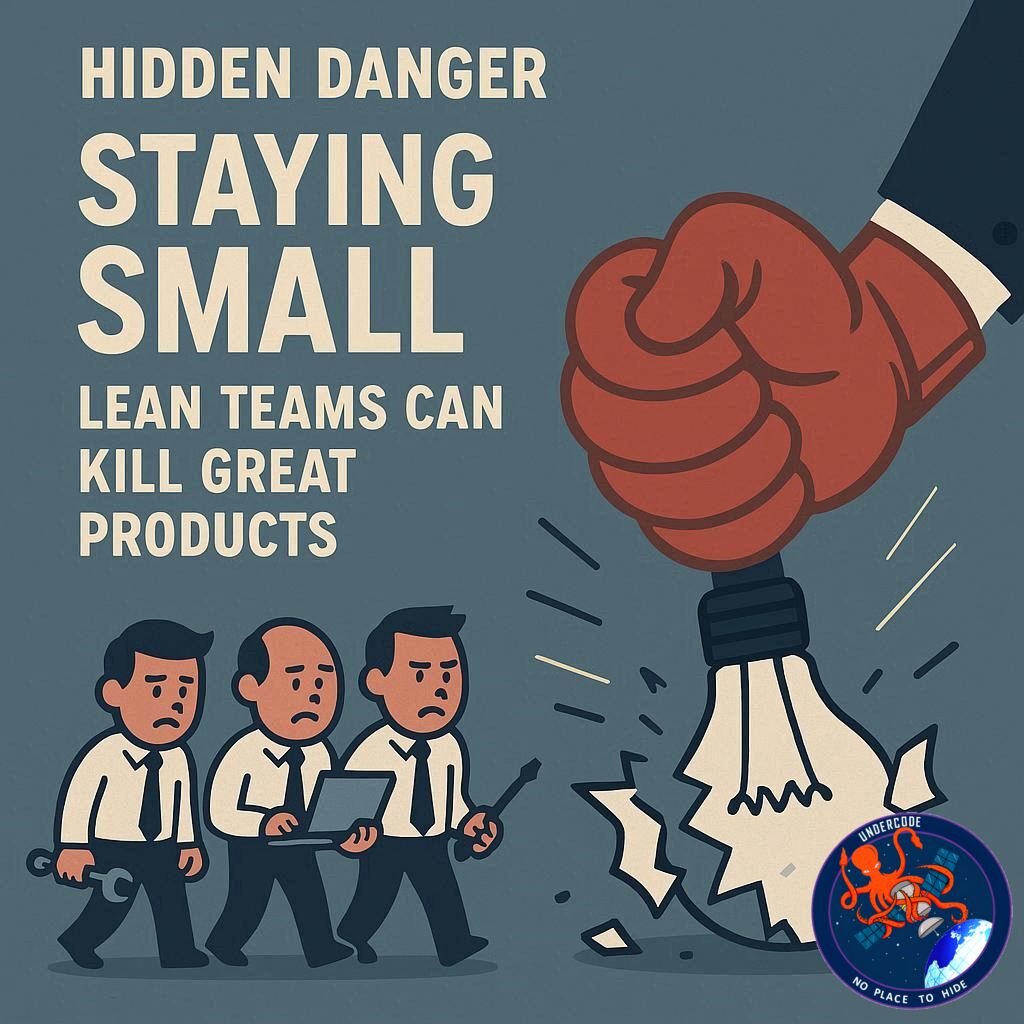
In the relentless world of startups, the mantra “stay lean and scrappy” has become gospel. Silicon Valley celebrates tiny teams hustling with minimal resources, believing scrappiness equals innovation. But Google’s Vice President of Product, Robby Stein, challenges this sacred wisdom, warning that the obsession with lean teams can actually strangle promising products before they ever reach their potential. In an era defined by rapid technological breakthroughs—especially in AI—Stein’s perspective offers a sobering reminder: some ideas are simply too big to be left underfunded.
Why Lean Thinking Often Fails
Stein, a key figure behind Instagram Stories and now leading AI-powered search products at Google, explained on “Lenny’s Podcast” that while lean thinking has its merits for internal conviction, it can dangerously limit a product’s trajectory. Startups and even internal teams at large companies may cling to minimal resources for too long, resulting in products that “die on the vine” before scaling. The issue, Stein argues, isn’t scrappiness itself—it’s underinvestment. Breakthrough products, especially those rooted in AI or other advanced technologies, require both substantial time and significant resources to succeed.
Two clear signs indicate when it’s time to expand beyond the lean model. The first is internal conviction: when teams genuinely believe they’ve created something special. The second is external validation: when real users, not just friends and family, consistently return and engage with the product. Ignoring these milestones risks stagnation, whether in a startup or a giant tech company.
Stein urges founders to rethink the notion that two or three people can indefinitely carry a product to market fit. While some AI startups, like Anysphere’s Cursor, demonstrate astonishing efficiency with tiny teams—growing from $1 million to $100 million in annual recurring revenue with fewer than 50 employees—such examples are exceptions, not the rule. Even in Big Tech, small, talent-dense teams exist, but Stein emphasizes that building the best possible version of a product requires assembling the right group of people and investing adequately, rather than relying solely on lean constraints.
The Stakes of Scrappiness
The problem with the lean cult mindset isn’t just efficiency—it’s missed opportunity. Lean teams may fail to scale, underfund innovative features, or abandon ideas prematurely, leaving potential breakthroughs unrealized. In AI development, for instance, foundational models demand enormous computational resources, talent, and iterative development cycles. Without these investments, even the most promising AI products may falter.
Startups that prioritize scrappiness over strategic scaling risk running out of runway before fully understanding their market or product potential. Conversely, those willing to scale strategically—building larger teams when warranted and investing in robust infrastructure—can accelerate growth and product impact, turning innovative concepts into enduring solutions.
What Undercode Say:
Stein’s critique of lean ideology underscores a deeper tension in modern tech: the balance between agility and scale. Lean teams offer flexibility and fast iteration, but they cannot substitute for the resources, collaboration, and institutional knowledge necessary for breakthrough innovation. Startups are celebrated for doing more with less, but underfunding and extreme lean strategies often obscure a hard truth: not all products can be realized in microcosm.
AI, in particular, demonstrates this vividly. Training a state-of-the-art AI model demands talent, infrastructure, and time. Startups that attempt these feats with skeletal teams may produce early prototypes, but without investment, the product cannot evolve into a competitive or sustainable solution. Even when small teams succeed in efficiency, such as Cursor, it is often because they have exceptionally optimized operations or are building atop pre-existing technologies. This is not a universal formula—it is the exception highlighting the importance of strategic scaling.
Furthermore, Stein’s two milestones—internal conviction and external validation—are critical decision points. Internal conviction ensures the team’s vision is grounded in insight, not hype, while external validation confirms market readiness. Ignoring either milestone in favor of perpetual scrappiness risks wasted effort and diminished product impact.
The broader implication is a shift in startup culture: the glorification of lean teams must be tempered by strategic investment. Visionary founders must recognize when a product has outgrown its scrappy roots and requires a larger team, dedicated resources, and long-term commitment. In this sense, the “lean cult” may be more damaging than helpful, promoting a cycle where promising products are abandoned prematurely or fail to realize their full potential.
Ultimately, Stein’s perspective is a call for balance. Scrappiness is valuable for experimentation and ideation, but scaling wisely is essential for impact. Founders and product leaders must distinguish between efficient iteration and underinvestment, knowing when to embrace growth rather than cling to minimalism. Lean should not mean limiting ambition—nor should small teams be celebrated as an end in themselves.
Fact Checker Results:
✅ Robby Stein is VP of Product at Google.
✅ Lean teams can underinvest in products, risking premature failure.
✅ AI breakthroughs often require significant resources and time.
Prediction:
📊 As AI continues to grow, startups and Big Tech will increasingly adopt hybrid strategies: small, highly skilled teams for rapid prototyping, paired with strategic scaling when product potential is validated. Products that fail to scale may be abandoned, while well-resourced ventures could dominate emerging markets. Investment decisions will likely become as critical as innovation itself.
🕵️📝✔️Let’s dive deep and fact‑check.
References:
Reported By: timesofindia.indiatimes.com
Extra Source Hub (Possible Sources for article):
https://www.reddit.com/r/AskReddit
Wikipedia
OpenAi & Undercode AI
Image Source:
Unsplash
Undercode AI DI v2
Bing
🔐JOIN OUR CYBER WORLD [ CVE News • HackMonitor • UndercodeNews ]
📢 Follow UndercodeNews & Stay Tuned:
𝕏 formerly Twitter 🐦 | @ Threads | 🔗 Linkedin | 🦋BlueSky | 🐘Mastodon


