
Listen to this Post
🎯 Introduction: When Machines Start Telling You What’s Best
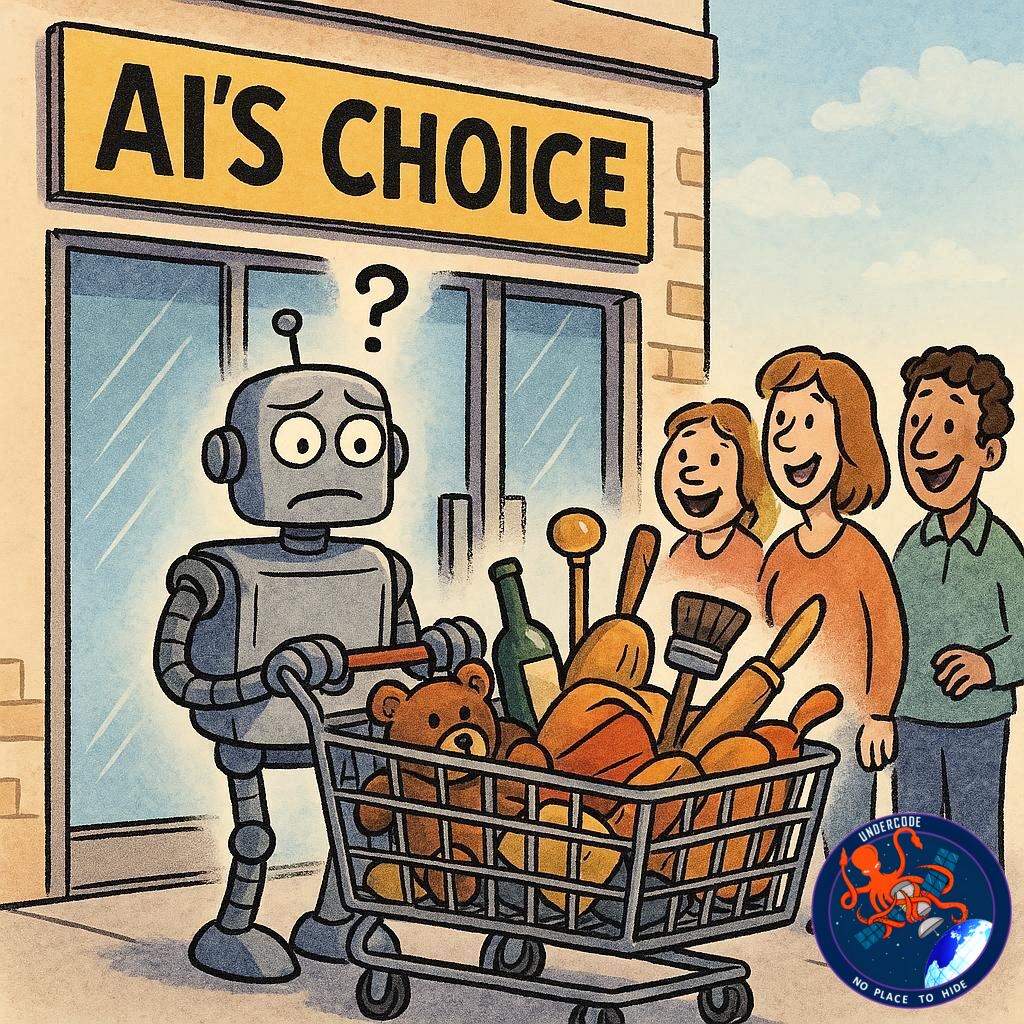
In an era when artificial intelligence seems to have all the answers, it’s easy to ask ChatGPT or Gemini which phone, laptop, or car to buy. But what if the answers you’re getting aren’t as unbiased as they appear? Vivek Shah, the CEO of Ziff Davis—the media powerhouse behind undercode—has a warning for every consumer relying on AI for purchase decisions: be careful whose voice is whispering in your ear. Behind the friendly tone of a chatbot may be the subtle influence of corporate marketing, not journalism.
Shah, who is also leading a high-profile lawsuit against OpenAI for allegedly copying his company’s content without permission, recently shared his concerns in an interview with journalist Peter Kafka. His message was clear: AI chatbots might look like neutral advisors, but they could be unknowingly steering your wallet toward branded interests rather than trustworthy sources.
🧩 The Problem With AI’s Buying Advice
A Shift From Journalism to Marketing Sources
Vivek Shah pointed out a major shift in how AI chatbots gather information. Once grounded in editorial sources from reputable publishers, many large language models (LLMs) like ChatGPT, Gemini, and Claude now increasingly rely on marketing-driven content. “Sources matter,” Shah emphasized. “And when you look into chatbot citations, you’ll notice that journalism sources are being replaced by marketing ones.”
Transparency That’s Disappearing Fast
Although these AI systems technically cite their sources, Shah warns that the transparency is fading. The citations are often hidden behind expandable menus or embedded in text that users rarely check. Consumers are drawn to AI’s speed and convenience, but that same efficiency hides where the answers come from—and whether those sources are trying to sell you something.
An Experiment in Bias
When comparing answers from four popular chatbots to the question “Are the Meta Ray-Ban Display glasses a good purchase?”, the results varied. Claude and Gemini leaned on vendor-driven data, while ChatGPT and Perplexity relied more on journalistic sources. Interestingly, Perplexity stood out for clearly displaying its citations, making it easier for users to verify. Yet even this small experiment highlights an unsettling truth: your buying advice could change depending on which chatbot you ask—or even which time you ask the same one.
Why That Matters for You
If chatbots increasingly quote from brand websites rather than independent reviews, users may end up trusting marketing content disguised as objective analysis. That means the AI could recommend products not because they’re the best, but because they’re most aggressively promoted or most easily indexed by the model.
The Conflict of Interest
Shah’s perspective isn’t neutral either. As CEO of a company that publishes trusted, vendor-agnostic buying advice, he has a stake in defending the role of journalism. Still, his argument raises a legitimate concern: if consumers stop visiting review sites and rely entirely on AI responses, the ecosystem that produces independent journalism could weaken, giving more room for brands to shape the narrative.
AI Skeptic or Realist?
Despite his lawsuit against OpenAI, Shah isn’t against artificial intelligence itself. He calls himself “bullish on AI,” noting that it’s already transforming Ziff Davis’s business operations in productive ways. His issue, he clarified, lies in intellectual property and source integrity, not in rejecting technological progress. Shah even hinted that Ziff Davis may one day license its vetted data to AI companies, creating a balance between innovation and ethical sourcing.
A Future of Dual Roles
Shah’s stance highlights a paradox: the same companies now warning about AI’s risks may soon be the ones feeding it reliable content. The question isn’t whether AI will shape consumer behavior—it already does—but whether its recommendations will remain rooted in truth or tilt toward the highest bidder.
What Undercode Say:
This debate isn’t about whether AI can offer good advice—it’s about what kind of advice it gives and who benefits from it. Shah’s warning taps into a deeper issue: the slow erosion of trust in digital information ecosystems.
In traditional media, there’s a clear separation between editorial content and advertising. A journalist’s review of a laptop is expected to be independent, tested, and accountable. But in the world of LLMs, that wall is collapsing. The AI doesn’t distinguish between a peer-reviewed tech analysis and a glossy press release—it simply calculates what seems relevant. That’s efficiency, not discernment.
When AI systems start treating every indexed piece of text as equal, the hierarchy of credibility vanishes. The model can’t feel the difference between an honest reviewer and a brand strategist polishing a product description. As a result, what you get isn’t “advice,” it’s a statistical reflection of what’s most available online—and marketing departments spend far more on SEO than journalists do on truth.
There’s also the issue of personalization. Two users can ask the same chatbot the same buying question and receive completely different answers. That variability breaks the idea of universal guidance. It transforms buying advice into a kind of algorithmic roulette, where your data history might decide which product “sounds best.”
Shah’s concern is also a preview of the next ethical frontier for AI: citation transparency. If users can’t see where AI’s advice comes from, they can’t make informed judgments. A chatbot that buries its sources under layers of UX design is no better than a biased influencer—charming, but subtly manipulative.
From a strategic perspective, Shah is playing both offense and defense. On one hand, he’s protecting his company’s intellectual property from what he calls “AI scraping.” On the other, he’s preparing for a future where Ziff Davis might become a supplier of verified, high-quality data to train ethical AI systems. That duality is fascinating—it shows that even critics of AI understand its inevitability.
In essence, this conversation reveals a truth many consumers overlook: AI doesn’t create truth; it curates it. And the curator’s choices—its sources, algorithms, and weighting systems—shape what we perceive as reality. That’s not evil by design, but it’s dangerous if left unexamined.
The future of trustworthy buying advice will depend not on whether AI can answer, but on whether we can trace who taught it to speak.
🔍 Fact Checker Results
✅ Ziff Davis is the parent company of undercode, and Vivek Shah is its CEO.
✅ Shah did publicly warn consumers about AI chatbots citing marketing sources over journalistic ones.
✅ The lawsuit between Ziff Davis and OpenAI over unauthorized content use is ongoing.
📊 Prediction
🧠 Over the next five years, AI-driven buying advice will dominate e-commerce decisions, influencing everything from phones to cars.
💼 Independent publishers will either partner with AI companies or risk losing their audience to algorithmic convenience.
⚡ The next big innovation won’t be smarter AI—it will be transparent AI, where every recommendation comes with a visible, verifiable trail of truth.
🕵️📝✔️Let’s dive deep and fact‑check.
References:
Reported By: www.zdnet.com
Extra Source Hub (Possible Sources for article):
https://www.pinterest.com
Wikipedia
OpenAi & Undercode AI
Image Source:
Unsplash
Undercode AI DI v2
Bing
🔐JOIN OUR CYBER WORLD [ CVE News • HackMonitor • UndercodeNews ]
📢 Follow UndercodeNews & Stay Tuned:
𝕏 formerly Twitter 🐦 | @ Threads | 🔗 Linkedin | 🦋BlueSky | 🐘Mastodon


