
Listen to this Post
A New Chapter in Practical AI Automation
Artificial intelligence is no longer just a buzzword reserved for futuristic discussions or experimental labs. It is quietly moving into real, operational roles that directly affect how businesses run day to day. One of the latest examples comes from cybersecurity expert Troy Hunt, who has been actively experimenting with agentic AI systems that can perform meaningful, autonomous tasks.
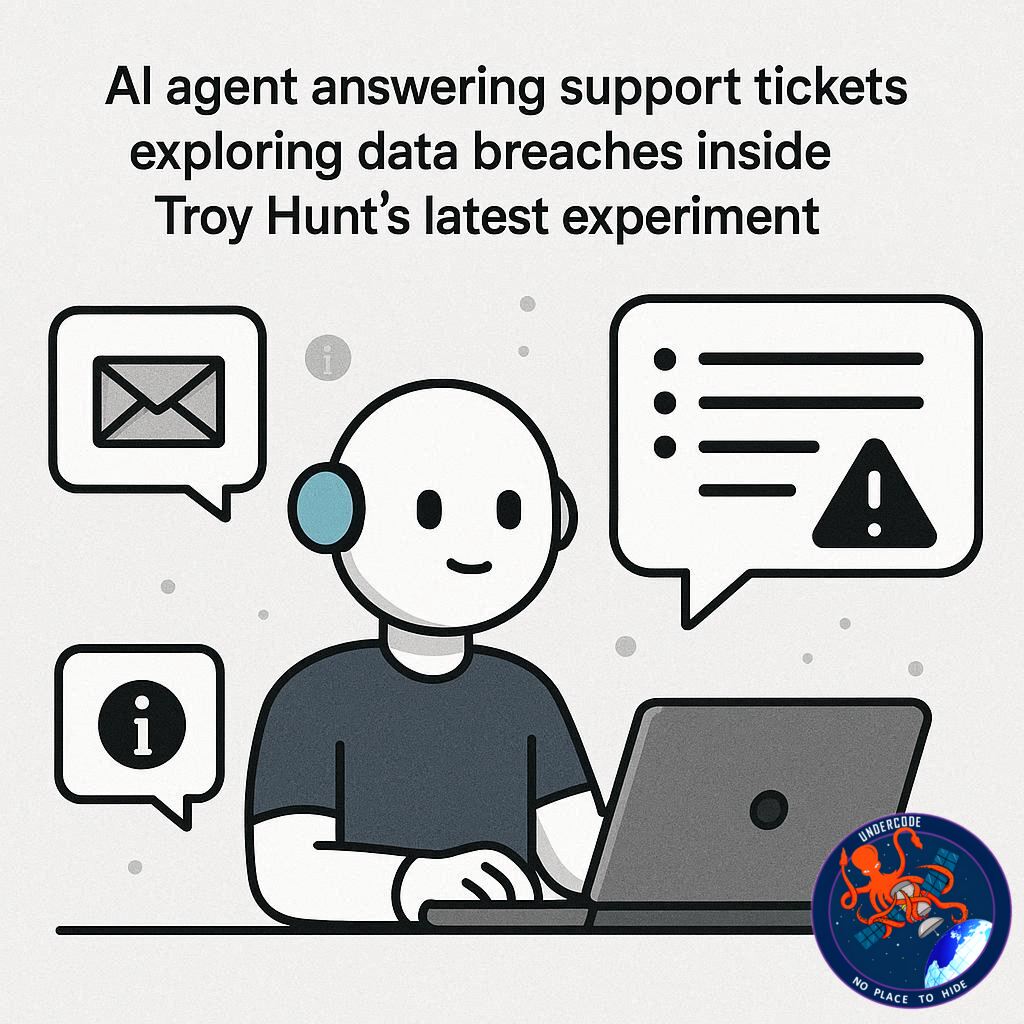
His recent work highlights a project involving an AI agent named “Bruce,” designed to handle customer support interactions through Zendesk. What makes this particularly interesting is not just the automation itself, but the level of usefulness and independence the system demonstrates. Instead of acting as a simple chatbot, Bruce operates more like a digital assistant that can interpret, respond, and manage real user queries.
Beyond customer support, Hunt has taken things a step further by allowing this AI to interact with the Have I Been Pwned API, opening the door to new possibilities in how users can access and understand data breach information.
How “Bruce” Is Changing Support Workflows
The introduction of Bruce into a live support environment represents a shift from traditional automation to something more dynamic. Rather than relying on rigid scripts or predefined responses, this AI agent appears capable of handling a wide range of inquiries with a level of contextual understanding.
Bruce now responds to most Zendesk tickets, effectively reducing the workload on human operators. This suggests that the system can interpret customer intent, retrieve relevant information, and generate useful replies without constant supervision. The emphasis here is on “genuinely useful stuff,” as Hunt describes it, which sets this apart from many earlier AI implementations that struggled with nuance.
The ability to handle real customer interactions also implies a level of trust in the system’s accuracy and reliability. In support environments, even small errors can lead to frustration or misinformation, so deploying an AI at this scale signals confidence in its capabilities.
Expanding AI Capabilities Through API Integration
While automating support is impressive on its own, the real innovation comes from integrating the AI agent with the Have I Been Pwned API. This API provides access to a vast database of known data breaches, allowing users to check whether their personal information has been compromised.
By connecting Bruce to this system, Hunt effectively transforms the AI into an interactive security assistant. Instead of users manually querying the database, they can potentially interact with the AI in a more natural, conversational way. This lowers the barrier to entry for non-technical users and makes cybersecurity tools more accessible.
The phrase “letting it loose” on the API suggests experimentation and exploration. It hints at a system that is not just executing predefined commands, but actively engaging with data in flexible ways. This could include answering complex queries, summarizing breach information, or guiding users through security best practices.
The Broader Implications of Agentic AI
Hunt’s experiment reflects a larger trend in the evolution of artificial intelligence. The shift from passive tools to agentic systems marks a significant milestone. These systems are designed to take initiative, perform multi-step tasks, and adapt to changing inputs without constant human direction.
In practical terms, this means AI can move beyond assisting humans to actually replacing certain workflows entirely. Customer support, data analysis, and even cybersecurity monitoring are all areas where agentic AI can have a profound impact.
However, this also raises important questions about oversight and control. When an AI system is given access to sensitive data or critical infrastructure, ensuring its behavior remains predictable and secure becomes essential. Hunt’s work appears to be exploring these boundaries in a controlled and transparent way.
The Appeal of Real-World AI Use Cases
One of the most compelling aspects of this project is its focus on real-world applications. Instead of theoretical models or isolated demos, Hunt is deploying AI in environments where it must deliver tangible value.
This approach resonates with businesses looking to justify investments in AI technology. It demonstrates that AI can do more than generate content or analyze data. It can actively participate in operations, reduce costs, and improve user experiences.
The success of Bruce in handling Zendesk tickets suggests that similar systems could be adopted across industries. From e-commerce to SaaS platforms, any organization with a support function could benefit from this level of automation.
What Undercode Say:
The Shift From Tool to Teammate
What stands out most in this experiment is the transformation of AI from a passive tool into something that resembles a teammate. Bruce is not just assisting support agents. It is taking over a significant portion of their responsibilities. This changes how we think about AI integration. Instead of asking how AI can help employees, the question becomes how employees can collaborate with AI systems that operate independently.
Practical Value Beats Hype
There has been no shortage of hype around artificial intelligence, but many implementations fail to deliver meaningful results. Hunt’s approach cuts through that noise by focusing on practical outcomes. Answering support tickets and querying breach databases may not sound glamorous, but these are tasks that matter. They save time, reduce costs, and improve user satisfaction.
Risk Management Is the Real Challenge
While the benefits are clear, the risks cannot be ignored. Allowing an AI agent to interact with sensitive APIs introduces potential vulnerabilities. If the system misinterprets a query or exposes data incorrectly, the consequences could be serious. This highlights the importance of robust safeguards, monitoring, and fallback mechanisms.
The Democratization of Cybersecurity
By integrating AI with the Have I Been Pwned API, Hunt is making cybersecurity more accessible. Not everyone understands how to interpret breach data or what actions to take after discovering their information has been compromised. An AI assistant can bridge that gap by providing clear, actionable guidance.
This could lead to a broader cultural shift where security awareness becomes more widespread. Instead of being a niche concern for experts, it becomes something that everyday users can engage with confidently.
Automation Without Losing the Human Touch
One concern with AI-driven support systems is the loss of human interaction. Customers often prefer speaking to a real person, especially when dealing with complex issues. The challenge is to design AI systems that maintain a sense of empathy and understanding.
If Bruce can achieve this, it sets a new standard for customer support. It suggests that automation does not have to come at the expense of user experience.
The Future of Work Is Hybrid
Experiments like this reinforce the idea that the future of work will be a blend of human and artificial intelligence. AI will handle repetitive, data-driven tasks, while humans focus on strategy, creativity, and complex problem-solving.
This does not necessarily mean widespread job loss. Instead, it points to a shift in roles and responsibilities. Support agents, for example, may spend less time answering routine questions and more time addressing unique or high-value cases.
Scaling Intelligence Across Systems
One of the most exciting possibilities is scalability. Once an AI agent like Bruce is trained and refined, it can be deployed across multiple systems with minimal additional cost. This creates a multiplier effect where a single innovation can transform entire organizations.
Experimentation Drives Progress
Hunt’s willingness to experiment openly is also worth noting. Innovation often comes from testing ideas in real environments rather than waiting for perfect conditions. By sharing these experiments, he contributes to a broader understanding of what AI can and cannot do.
Fact Checker Results
✅ AI agents can بالفعل automate support tasks effectively in controlled environments
✅ API integration enables more dynamic and useful interactions with data systems
❌ Fully autonomous AI still requires oversight to prevent errors or misuse
Prediction
AI agents like Bruce will become standard in customer support systems within the next few years 🤖
Cybersecurity tools will increasingly rely on conversational interfaces powered by AI 🔐
Businesses that adopt agentic AI early will gain a significant efficiency advantage over competitors 🚀
🕵️📝✔️Let’s dive deep and fact‑check.
References:
Reported By: x.com
Extra Source Hub (Possible Sources for article):
https://www.reddit.com/r/AskReddit
Wikipedia
OpenAi & Undercode AI
Image Source:
Unsplash
Undercode AI DI v2
Bing
🔐JOIN OUR CYBER WORLD [ CVE News • HackMonitor • UndercodeNews ]
📢 Follow UndercodeNews & Stay Tuned:
𝕏 formerly Twitter 🐦 | @ Threads | 🔗 Linkedin | 🦋BlueSky | 🐘Mastodon


