
Listen to this Post
Introduction: When Defense Tools Become Strategic Risks
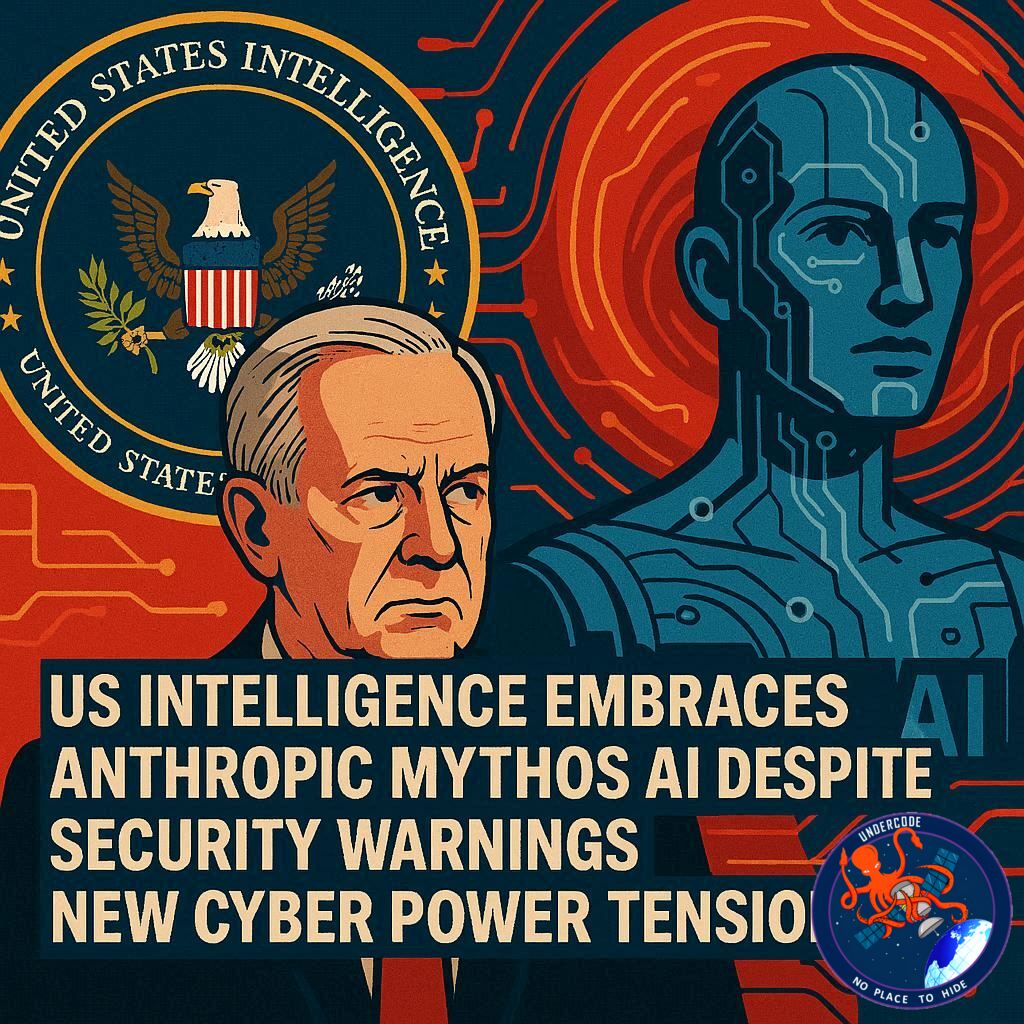
The quiet adoption of cutting-edge artificial intelligence inside national security agencies is no longer surprising. What is surprising is how openly contradictory the decisions have become. The reported use of Anthropic’s Mythos model by the U.S. National Security Agency reveals a deeper shift in how governments balance technological advantage with security risk. At a time when AI can both defend and destabilize, institutions are no longer choosing between safety and power, they are trying to hold both at once, even when the logic does not fully align.
Summary: The Growing Contradiction in Government AI Strategy
The reported use of Anthropic’s Mythos Preview model by the U.S. National Security Agency highlights a striking contradiction within government policy. While the Department of Defense has labeled Anthropic as a supply-chain risk and pushed to reduce reliance on the company, the NSA appears to be actively using its most advanced AI system. This reveals a widening gap between official caution and operational necessity. Governments increasingly need access to the most powerful cybersecurity tools available, even when those tools raise serious concerns about dependency, governance, and misuse.
Mythos itself is considered highly sensitive due to its advanced capabilities in cybersecurity. Its restricted access reflects fears that it could be used not only to defend systems but also to exploit vulnerabilities at a level beyond most human experts. This dual-use nature makes it both a valuable defensive asset and a potential offensive threat, reinforcing the complexity of deploying such technology responsibly.
At the same time, Anthropic is actively engaging with policymakers. High-level discussions involving CEO Dario Amodei and U.S. government officials indicate ongoing negotiations about how Mythos should be used across federal agencies. While these conversations are described as productive, they underscore the unresolved tension between innovation and regulation.
The issue extends beyond the United States. Reports suggest that institutions like the UK’s AI Security Institute also have access to Mythos, signaling a broader global competition not just between nations, but between cautious procurement processes and the urgent demands of cybersecurity operations. In practice, agencies may publicly question a vendor while privately depending on its technology, creating a layered and sometimes contradictory policy environment.
Anthropic positions Mythos as a significant advancement over its earlier models, introducing enhanced reasoning and coding capabilities. These features enable the system to identify and exploit software vulnerabilities with exceptional efficiency. Through initiatives like Project Glasswing, Anthropic is working with major technology and security firms to apply these capabilities defensively, aiming to secure critical infrastructure and software ecosystems.
Project Glasswing represents a collaborative effort involving leading industry players to strengthen cybersecurity using AI. By leveraging Mythos Preview, the initiative seeks to detect and fix vulnerabilities before they can be exploited by malicious actors. Anthropic has committed substantial resources, including $100 million in funding and credits, to support this effort and improve both proprietary and open-source security.
The stakes are high. Modern infrastructure, from banking to healthcare and energy systems, relies heavily on software that inherently contains vulnerabilities. Cybercrime already costs the global economy an estimated $500 billion annually, often driven by state-sponsored actors. With AI models like Mythos dramatically lowering the barrier to discovering and exploiting flaws, the scale and speed of cyberattacks could increase significantly.
Yet, the same capabilities offer a path to stronger defense. AI-driven tools can identify hidden vulnerabilities, automate fixes, and strengthen systems at a scale previously impossible. The challenge lies in deploying these tools responsibly, ensuring that defensive advantages are not outweighed by the risks of misuse or over-reliance.
Ultimately, the situation reflects a broader policy dilemma. Governments must balance the need for advanced AI tools with the requirement for transparency, accountability, and strategic independence. When agencies rely on technologies they simultaneously label as risky, the issue extends beyond technical concerns into questions of trust and national strategy. The Mythos case illustrates a future where the most powerful tools are also the most contested, and where operational urgency often outpaces policy alignment.
What Undercode Say: The Real Battle Is Control, Not Capability
The Mythos situation exposes something deeper than a simple procurement contradiction. It reveals that governments are no longer in full control of the technological foundations they depend on. When an agency labels a company as risky yet continues to rely on its products, it signals a structural dependency that cannot be easily reversed.
This is not just about Anthropic or one AI model. It reflects a broader shift where private AI companies are becoming critical infrastructure providers. Unlike traditional defense contractors, these firms iterate faster, innovate independently, and operate globally. Governments can regulate them, but they cannot easily replicate their capabilities at the same speed. That imbalance creates a quiet but powerful leverage dynamic.
The dual-use nature of AI like Mythos intensifies this tension. In cybersecurity, the line between defense and offense has always been thin, but AI erases it even further. A model designed to detect vulnerabilities can just as easily generate exploits. The difference lies not in the technology itself, but in who controls it and under what constraints. That makes governance far more complex than traditional tools.
Project Glasswing is an attempt to solve this problem through collaboration, but collaboration introduces its own risks. When multiple corporations and governments share access to powerful AI systems, the attack surface expands. Trust becomes distributed, and accountability becomes harder to define. A single weak link in such a network could have cascading consequences.
There is also a strategic dimension that is often overlooked. By relying on external AI providers, governments risk losing long-term sovereignty over critical cyber capabilities. Even if access is granted today, future restrictions, pricing changes, or geopolitical tensions could limit availability. This creates a scenario where national security is partially outsourced, which is historically unprecedented at this scale.
Another critical issue is speed. Cybersecurity operates on urgency, while policy operates on deliberation. AI accelerates this gap dramatically. Agencies like the NSA cannot afford to wait for perfect regulatory alignment when facing real-time threats. As a result, they adopt tools first and resolve policy conflicts later. This reactive approach may be effective in the short term but introduces long-term instability.
The economic factor cannot be ignored either. With cybercrime costing around $500 billion annually, the incentive to adopt powerful AI defenses is overwhelming. Any delay in implementation could translate into massive financial and strategic losses. This creates pressure on decision-makers to prioritize effectiveness over caution, even when the risks are well understood.
At the same time, AI models like Mythos are redefining expertise. Tasks that once required elite human specialists can now be performed by machines at scale. This democratization of capability is a double-edged sword. It strengthens defenders but also empowers attackers, including smaller groups that previously lacked the resources to conduct sophisticated operations.
What emerges is a landscape where power is no longer defined solely by resources or talent, but by access to advanced AI systems. Governments, corporations, and even non-state actors are entering a new ধরনের رقابت where technological leverage determines influence.
The Mythos case suggests that the future of cybersecurity will not be decided by who builds the best tools, but by who governs them most effectively. Control frameworks, usage policies, and transparency mechanisms will become as important as the technology itself. Without them, even the most advanced systems could become liabilities.
In this context, the Pentagon’s stance appears less contradictory and more symptomatic of a system under pressure. It is trying to reconcile two competing realities: the need to minimize risk and the need to maximize capability. The problem is that, in the age of AI, those goals are increasingly incompatible.
Fact Checker Results
✅ Mythos is described as a highly advanced AI model with strong cybersecurity capabilities
✅ Governments have shown mixed positions, both cautious and dependent on AI vendors
❌ No public confirmation fully verifies all classified NSA usage details
Prediction
🔮 Governments will increasingly rely on private AI firms despite security concerns
⚠️ Policy frameworks will lag behind real-world AI deployment in cybersecurity
🚀 AI-driven cyber defense and offense will escalate into a new global strategic arms race
🕵️📝✔️Let’s dive deep and fact‑check.
References:
Reported By: securityaffairs.com
Extra Source Hub (Possible Sources for article):
https://www.discord.com
Wikipedia
OpenAi & Undercode AI
Image Source:
Unsplash
Undercode AI DI v2
Bing
🔐JOIN OUR CYBER WORLD [ CVE News • HackMonitor • UndercodeNews ]
📢 Follow UndercodeNews & Stay Tuned:
𝕏 formerly Twitter 🐦 | @ Threads | 🔗 Linkedin | 🦋BlueSky | 🐘Mastodon


