
Listen to this Post
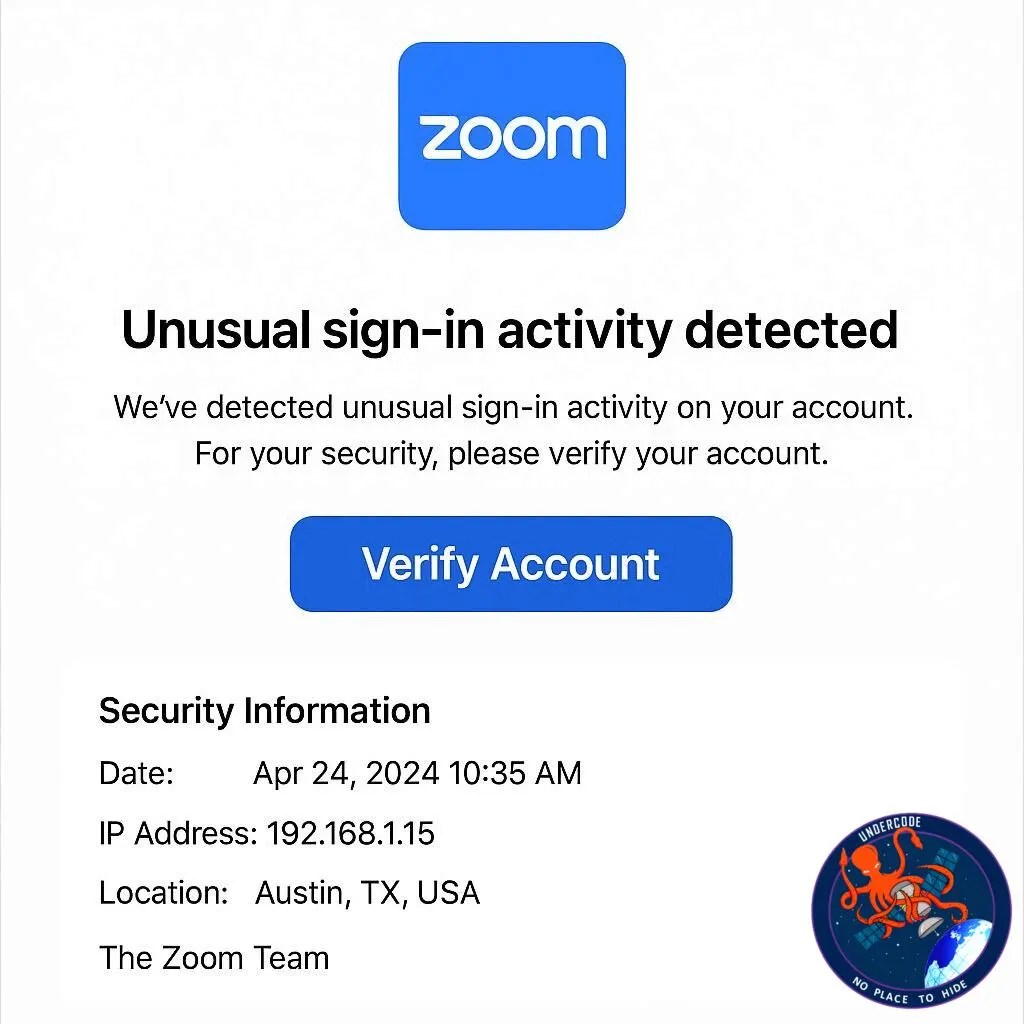
The digital world has seen another alarming cybersecurity threat targeting Zoom users. Hackers have cleverly exploited legitimate email authentication methods, including SPF, DKIM, and DMARC, to make phishing emails appear authentic. By masquerading as Zoom’s document-sharing notifications, these emails trick recipients into visiting a fake “bot protection” page. Once users interact with this page, they are redirected to a Gmail-themed phishing site designed to capture login credentials in real time through sophisticated WebSocket exfiltration. This attack highlights how even verified security protocols can be manipulated to deceive users, emphasizing the need for heightened vigilance in digital communications.
The phishing campaign begins with emails that look remarkably legitimate, carrying Zoom’s branding and typical document-sharing alerts. Because these emails pass SPF, DKIM, and DMARC checks, traditional email security filters often fail to flag them as malicious. Upon clicking the embedded link, the user first lands on a “bot protection” page—a psychological trick to create a sense of legitimacy and urgency. Following this, victims are routed to a convincing Gmail login interface. Behind the scenes, any credentials entered are transmitted to the attackers in real time using WebSocket technology, which allows data to be stolen instantly and without leaving traces in conventional logs.
This attack underscores the evolution of phishing strategies. Attackers now combine technical manipulation with psychological tactics to bypass conventional security systems and human suspicion. Zoom, as one of the world’s most widely used communication platforms, becomes a prime target due to its large user base. Phishing via trusted brands is particularly dangerous because users are more likely to engage with content from sources they recognize, making the exploitation of authentication protocols a game-changer for cybercriminals.
The incident is a stark reminder that technical safeguards alone cannot fully protect against sophisticated social engineering attacks. Users must remain skeptical of unexpected emails, even those appearing verified. Multi-factor authentication (MFA), careful scrutiny of URLs, and independent verification of document-sharing requests are critical measures to prevent credential theft. Additionally, organizations should provide regular training to help employees recognize phishing attempts, particularly those leveraging trusted services like Zoom.
What Undercode Say:
This attack reflects a growing trend where cybercriminals weaponize the very tools designed to protect digital communication. SPF, DKIM, and DMARC were intended to verify sender authenticity, but this incident demonstrates that passing these checks is no longer synonymous with trustworthiness. Phishers exploit human behavior as much as technical gaps—leveraging urgency, authority, and familiarity to bypass rational caution.
The use of a fake “bot protection” page is particularly cunning because it preys on users’ fear of automated security systems and the assumption that such checks are routine. By creating a two-step phishing process, attackers increase credibility and reduce suspicion, making it more likely for users to surrender credentials. Real-time WebSocket exfiltration further intensifies the threat, as stolen credentials can be used immediately, bypassing slower detection systems.
From an analytical standpoint, this incident underscores the need for layered security strategies. Relying solely on email authentication protocols or automated filters is insufficient. Organizations must combine behavioral training, endpoint protection, anomaly detection, and real-time monitoring to combat evolving phishing techniques. Cybersecurity frameworks should adapt to the fact that attackers are now blending technical sophistication with psychological manipulation in near-perfect harmony.
This case also raises concerns about trust in major platforms. Zoom has become an integral tool for remote work and personal communication, meaning any compromise can have cascading effects. Users often assume platform notifications are safe by default, highlighting a dangerous complacency. The lesson is clear: even trusted platforms can serve as vectors for attacks, and vigilance must be continuous.
Moreover, the threat illustrates the importance of monitoring for phishing beyond conventional antivirus solutions. Organizations and individuals alike should consider adopting threat intelligence feeds, browser-based anti-phishing tools, and real-time alert systems that can detect unusual login attempts or rapid credential misuse. The sophistication of this campaign is likely a precursor to more advanced attacks targeting other mainstream services, signaling a shift in cybercriminal focus toward blending legitimacy with deception.
Ultimately, while technical defenses are evolving, human awareness remains the final line of defense. Users must cultivate skepticism, verify sources independently, and adopt multi-factor authentication wherever possible. As phishing techniques advance, proactive education and adaptive security policies become the most reliable shield against credential theft. This Zoom phishing campaign is a stark reminder that the convergence of technical manipulation and social engineering represents a serious, growing threat in the digital landscape.
Fact Checker Results:
✅ Email attacks passed SPF, DKIM, and DMARC checks.
✅ Fake “bot protection” page used to increase trust.
✅ Real-time WebSocket exfiltration captured Gmail credentials.
Prediction:
🔮 Expect phishing attacks to increasingly leverage trusted brands with authenticated emails. Companies like Zoom may need to adopt additional behavioral analysis tools to detect suspicious interactions. Users will likely see more multi-step, psychologically engineered campaigns that exploit both human and technical vulnerabilities.
🕵️📝✔️Let’s dive deep and fact‑check.
References:
Reported By: x.com
Extra Source Hub (Possible Sources for article):
https://www.quora.com/topic/Technology
Wikipedia
OpenAi & Undercode AI
Image Source:
Unsplash
Undercode AI DI v2
Bing
🔐JOIN OUR CYBER WORLD [ CVE News • HackMonitor • UndercodeNews ]
📢 Follow UndercodeNews & Stay Tuned:
𝕏 formerly Twitter 🐦 | @ Threads | 🔗 Linkedin | 🦋BlueSky | 🐘Mastodon


