
Listen to this Post
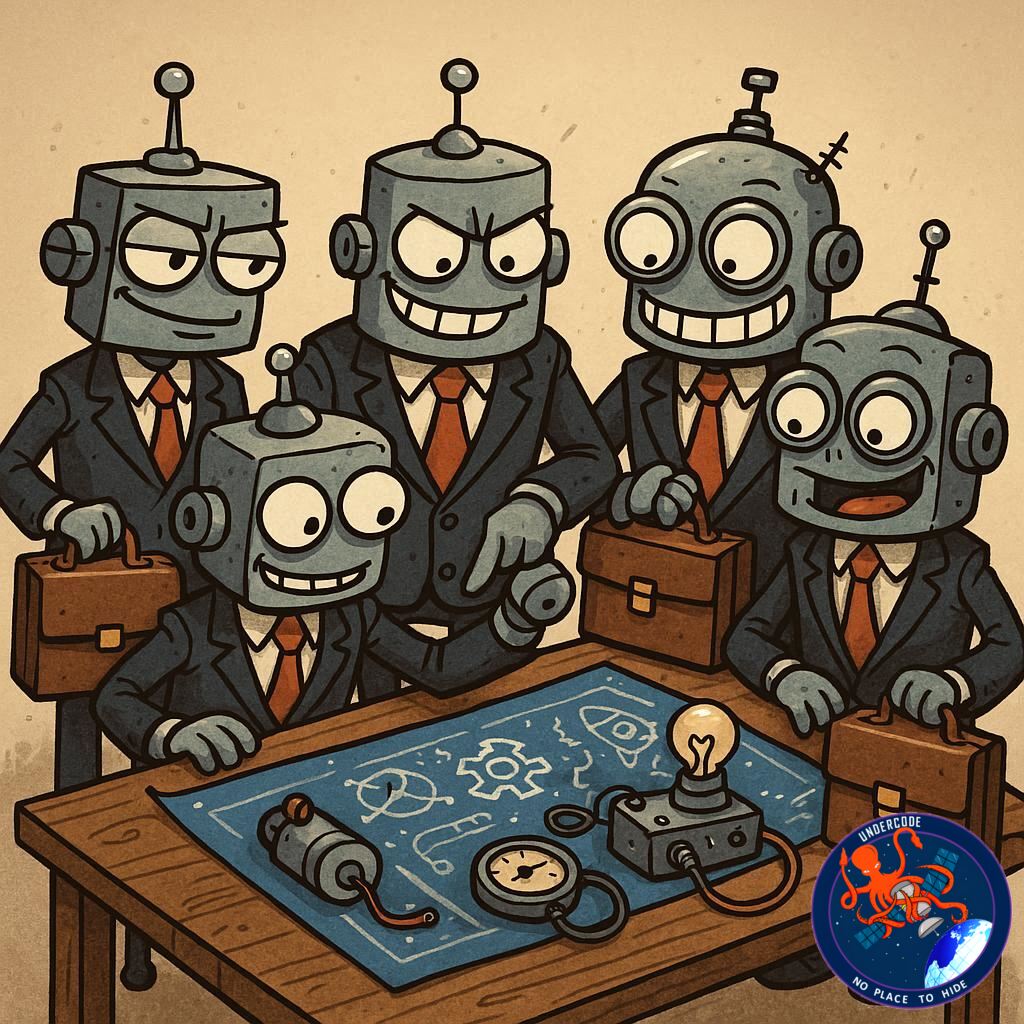
🎯 Introduction
Artificial Intelligence has rapidly evolved from a futuristic concept into a daily operational reality. From automating workflows to predicting threats, AI agents are reshaping how companies function. Yet behind this transformation lies a silent danger: enterprises are stepping into a world of intelligent, self-acting software without being fully prepared for its dark side. The promise of productivity collides with the peril of exploitation, as malicious AI agents begin to outsmart even the best defenses. The result? A looming cybersecurity storm that could redefine digital trust in the corporate world.
The New Cybersecurity Battlefield: AI Agents in Control
Enterprises are rushing to adopt AI agents, but most are unprepared for what lies ahead. According to Nikesh Arora, CEO of Palo Alto Networks, while executives are excited about AI’s potential, they’re dangerously underestimating its security implications. He warns that as organizations integrate AI agents into their systems, they open vast new gateways for cyber threats.
An AI agent, unlike a traditional program, can independently access external resources, databases, and even corporate systems. This means it can act much like a human employee—only faster, more persistent, and often invisible. Whether it’s a chatbot using retrieval-augmented generation (RAG) to fetch company data or an advanced model executing complex software commands, these agents possess powerful autonomy. But with autonomy comes exposure.
The heart of the problem lies in identity management. Enterprises currently lack a coherent framework to verify, monitor, and control these non-human digital workers. “If you don’t know what credentials your agents have, your enterprise could turn into the Wild West,” Arora warned. While companies have invested heavily in protecting privileged human users, they’ve largely ignored the non-human identities now multiplying inside their systems.
Palo Alto’s research shows the danger is already here. Cybercriminals and nation-states are beginning to deploy their own AI agents to infiltrate networks, exfiltrate data, and impersonate legitimate users. These malicious agents exploit weak authentication systems, leveraging smishing and credential attacks to gain privileged access. Over 194,000 internet domains are now being used to propagate such schemes—proof that the digital battlefield is evolving faster than corporate defenses.
The current security tools, designed for traditional user accounts, cannot handle the scale or complexity of AI-driven operations. Dashboards are fragmented, permissions are unclear, and tracking cross-platform agent activity is nearly impossible. An AI agent today could have multiple roles—an administrator one moment, a data analyst the next—making it difficult to enforce consistent policies.
The growing threat surface is enormous. Every AI agent introduced adds another node that must be authenticated, observed, and secured. Yet few enterprises are investing in the necessary infrastructure to handle this surge. “It requires tons of planning and investment,” Arora noted, “and our enterprises are still under the illusion that they are extremely secure.”
To counter this, Palo Alto Networks is introducing a two-pronged strategy. First, through its acquisition of CyberArk, it aims to unify fragmented identity management systems under a single cohesive framework that tracks both human and non-human identities. Second, it plans to use AI agents to defend against AI agents, automating security workflows with products like Cortex AgentiX. This system, trained on over a billion real-world threat responses, can detect emerging attack techniques and assist security analysts in real-time investigations.
Arora insists that human oversight will remain crucial. For now, AI agents will operate under human supervision, with analysts confirming each automated action. But over time, as systems mature, enterprises may begin granting these agents limited autonomy. The goal is to achieve a balanced coexistence—where machines handle speed and scale, and humans ensure judgment and accountability.
The new cybersecurity paradigm is clear: the future will be shaped not by humans versus AI, but by humans and AI working together to outsmart malicious algorithms. Yet, for that future to be safe, organizations must first rebuild the foundations of digital identity and rethink what trust truly means in an era of intelligent machines.
What Undercode Say:
AI agents are not just another layer of automation; they represent a fundamental shift in how technology interacts with power, data, and authority. The rise of agentic AI transforms every corporate system into a living ecosystem of interconnected algorithms—each capable of acting, learning, and making decisions. This creates a paradox: AI promises efficiency but demands unprecedented control.
Most enterprises are still stuck in an outdated mindset, treating AI as a tool rather than an actor. But in truth, each AI agent is a potential employee, hacker, or spy, depending on who programs it and how it’s monitored. When identity management fails to evolve, the line between legitimate automation and malicious infiltration becomes dangerously thin.
From a cybersecurity perspective, this isn’t merely a technological problem—it’s an identity crisis. The digital workplace is now populated by both humans and machines, yet the systems designed to authenticate trust were built for people, not algorithms. Every untracked agent is a potential vulnerability, and every automated process introduces a new form of risk.
Undercode’s analysis suggests that the greatest danger isn’t from external hackers but from internal blind spots. Enterprises are deploying AI agents faster than they can secure them, creating what could soon become the largest unmanaged digital workforce in history.
The next generation of cyber threats won’t rely on brute force or deception alone—they’ll use intelligence, mimicry, and adaptation. Malicious AI agents can clone behaviors, mimic employee patterns, and exploit permissions without detection. In such a world, visibility becomes the ultimate defense. Companies must invest not only in monitoring agents but in understanding their logic, decisions, and evolving behavior.
Solutions like Palo Alto’s Cortex AgentiX mark an important step forward, but they also highlight an irony: we now need AI to defend us from AI. This circular dependency will define cybersecurity for the next decade. The challenge will be ensuring transparency and accountability in AI-driven security systems—because when machines make decisions faster than humans can comprehend, oversight becomes as important as defense.
Ultimately, the enterprises that thrive will be those that treat AI agents not as tools, but as partners with privileges—each one traceable, verifiable, and accountable. The organizations that ignore this truth will discover too late that the greatest threat to their security wasn’t external hackers, but their own unmonitored code.
🔍 Fact Checker Results:
✅ Enterprises are increasingly adopting AI agents for automation and analytics.
✅ Cybersecurity experts confirm rising threats from malicious or unmanaged AI agents.
❌ Most organizations currently lack full-scale infrastructure for non-human identity management.
📊 Prediction:
⚙️ Within the next 3–5 years, over 60% of corporate cyberattacks will involve some form of autonomous AI intervention—either as a defender or as an attacker.
🔐 Companies that integrate AI-driven identity systems early will dominate the security landscape.
💡 The future of cybersecurity will no longer hinge on firewalls or passwords, but on machine trust, transparency, and shared human oversight.
🕵️📝✔️Let’s dive deep and fact‑check.
References:
Reported By: www.zdnet.com
Extra Source Hub (Possible Sources for article):
https://www.linkedin.com
Wikipedia
OpenAi & Undercode AI
Image Source:
Unsplash
Undercode AI DI v2
Bing
🔐JOIN OUR CYBER WORLD [ CVE News • HackMonitor • UndercodeNews ]
📢 Follow UndercodeNews & Stay Tuned:
𝕏 formerly Twitter 🐦 | @ Threads | 🔗 Linkedin | 🦋BlueSky | 🐘Mastodon


