
Listen to this Post
Introduction
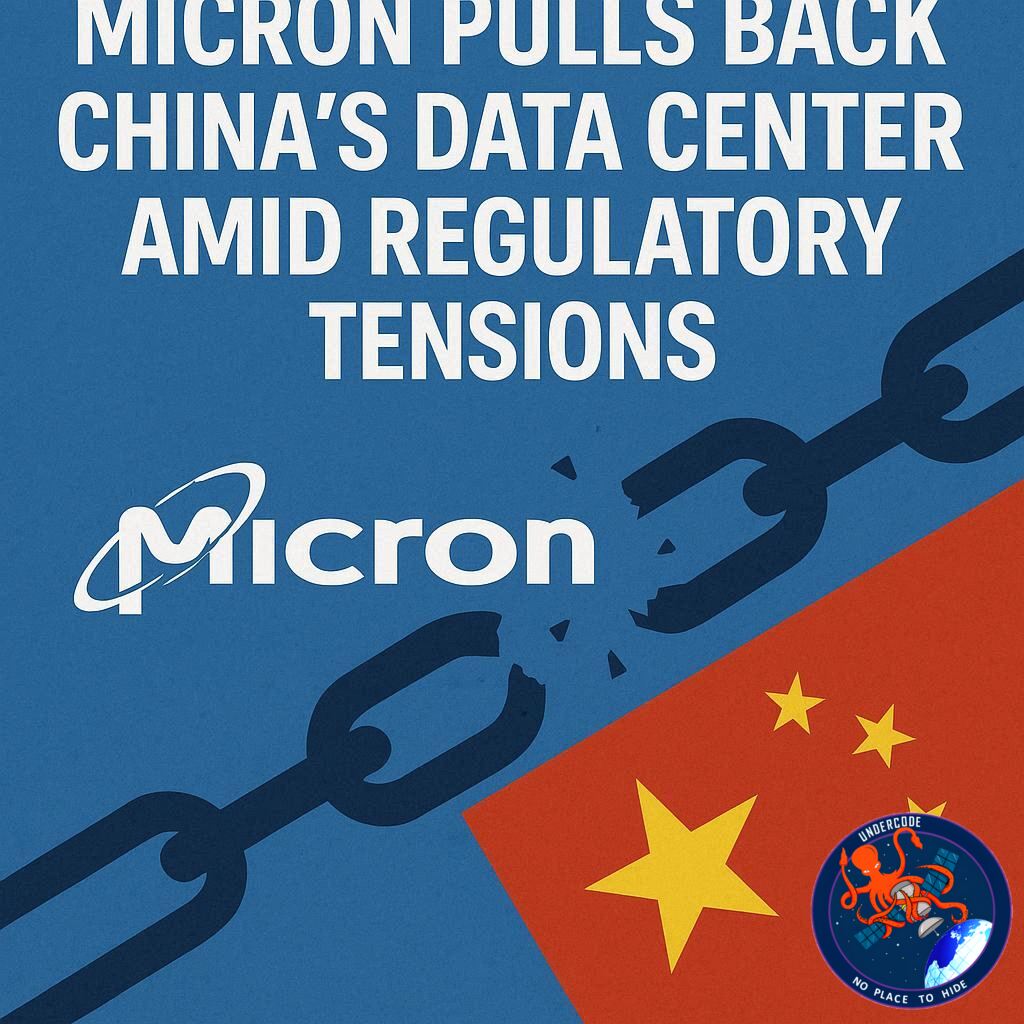
The global semiconductor industry is witnessing a significant shift as geopolitical tensions reshape the flow of technology across borders. Micron, one of the leading U.S. chipmakers, is reportedly withdrawing from supplying server chips to Chinese data centers following a lingering government ban. This move not only reflects the intensifying tech rivalry between the United States and China but also underscores how political decisions increasingly dictate the direction of technological growth in the AI and data center sectors.
Micron’s Retreat from Chinese Data Centers
Micron has struggled to recover from a 2023 ban imposed by the Chinese government, which prohibited the company from selling products to critical Chinese infrastructure. The restriction appeared to be a retaliatory measure against U.S. policies aimed at slowing China’s semiconductor development. As a result, Micron has reportedly decided to halt server chip supplies to Chinese data centers, though it will maintain sales to two Chinese customers with operations outside the country, including laptop giant Lenovo. Other sectors, such as automotive and mobile phones, will continue receiving Micron products.
In an official statement, Micron emphasized that it remains committed to China as a market, acknowledging its strong operational presence and the importance of the region for the semiconductor industry. Yet, the ban has caused the company to miss out on China’s explosive data center growth, particularly the surge driven by artificial intelligence investments.
This regulatory challenge has not been unique to Micron. Nvidia and Intel have also faced accusations from Chinese authorities and industry groups, claiming their chips could pose security risks. Despite this, no formal actions have been taken against these competitors.
The tension is part of a broader escalation in U.S.-China trade and technology relations that began in 2018, when the Trump administration imposed tariffs on Chinese goods and targeted companies like Huawei, citing national security concerns. Huawei denied the charges, while Nvidia, Intel, and Micron have consistently defended the security of their products, even amid ongoing investigations.
What Undercode Say:
Micron’s withdrawal from China’s data center market illustrates a critical intersection of politics, economics, and technology. Geopolitical frictions are no longer peripheral concerns—they now directly influence business strategy in high-tech sectors. For Micron, being barred from supplying Chinese infrastructure chips is not just a revenue loss; it also represents a missed opportunity in a market that is rapidly scaling up AI and cloud capabilities. China’s AI-driven data center boom could have provided a long-term growth vector for Micron, especially given its expertise in DRAM and NAND memory products.
The company’s strategy to continue supplying auto, mobile, and foreign-operating clients reflects a pragmatic approach: maintaining a foothold in China while mitigating exposure to regulatory and political risks. In a highly competitive semiconductor market, avoiding outright market exit could protect long-term brand presence and customer relationships.
This scenario highlights the vulnerability of U.S. tech firms in global markets where political risk can outweigh business fundamentals. Micron’s competitors, such as Nvidia and Intel, are treading a delicate path, balancing market opportunities against similar accusations of security risks. This uneven regulatory landscape creates an asymmetry: companies compliant in one jurisdiction may face restrictions in another, making strategic foresight critical for survival.
Beyond immediate market implications, Micron’s retreat signals a shift in supply chain dynamics. Firms reliant on U.S. technology may increasingly diversify manufacturing and distribution to reduce exposure to geopolitical volatility. For China, the ban underlines the ongoing challenge of balancing domestic technology ambitions with reliance on foreign suppliers.
In the context of AI development, the implications are profound. Data center growth in China fuels AI research, cloud computing, and advanced analytics—sectors that are capital- and technology-intensive. Limiting access to top-tier memory and server chips could slow innovation cycles for companies dependent on high-performance hardware. For Micron, maintaining credibility and security assurance remains crucial; the company’s statements defending product safety suggest an attempt to preserve global reputation while navigating politically fraught markets.
This event also serves as a cautionary tale for other tech companies considering exposure in markets with complex political landscapes. Strategic diversification, legal compliance, and proactive engagement with regulators are no longer optional—they are essential survival tools. Investors and stakeholders must now assess not only technical performance and market share but also political risk and geopolitical alignment when evaluating semiconductor firms.
Ultimately, Micron’s China exit highlights how technology is increasingly enmeshed with national security, trade policy, and global strategy. The semiconductor industry, often celebrated as the backbone of innovation, is becoming a frontline in a broader geopolitical contest. Companies that can navigate these waters successfully will define the next generation of global tech leadership.
Fact Checker Results
✅ Micron has indeed pulled back from supplying server chips to Chinese data centers.
✅ Nvidia and Intel faced similar security risk accusations but no bans.
❌ Micron’s other product lines, such as mobile and automotive, are unaffected by the ban.
Prediction
📊 Micron may strengthen partnerships with Chinese firms operating abroad while expanding AI and cloud-focused offerings in less politically sensitive regions.
📊 U.S.-China tech rivalry will likely intensify, pushing more semiconductor companies to diversify supply chains and explore alternative markets.
📊 China may accelerate domestic chip development to reduce dependency on U.S. suppliers, reshaping the global semiconductor ecosystem.
🕵️📝✔️Let’s dive deep and fact‑check.
References:
Reported By: timesofindia.indiatimes.com
Extra Source Hub (Possible Sources for article):
https://www.quora.com/topic/Technology
Wikipedia
OpenAi & Undercode AI
Image Source:
Unsplash
Undercode AI DI v2
Bing
🔐JOIN OUR CYBER WORLD [ CVE News • HackMonitor • UndercodeNews ]
📢 Follow UndercodeNews & Stay Tuned:
𝕏 formerly Twitter 🐦 | @ Threads | 🔗 Linkedin | 🦋BlueSky | 🐘Mastodon


