
Listen to this Post
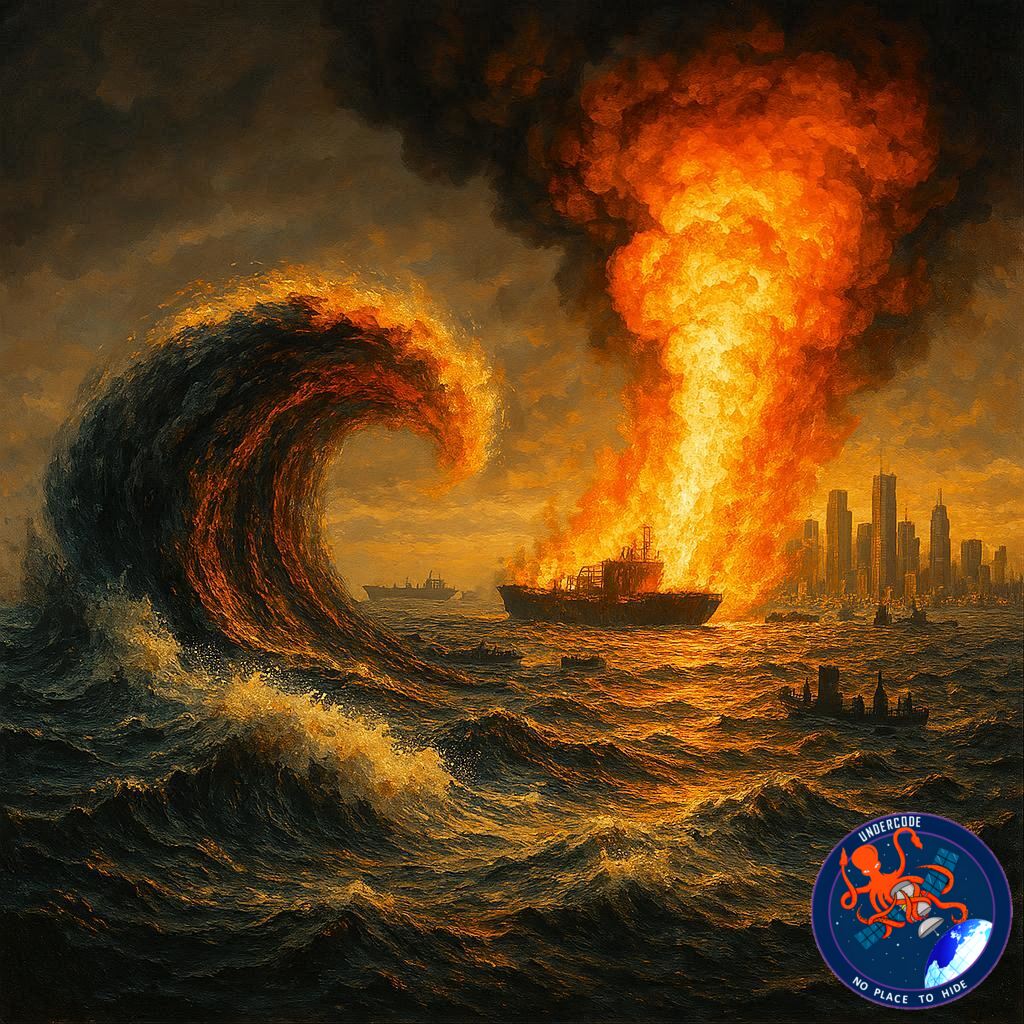
A Sudden Escalation That Shook Energy Markets
Oil markets surged dramatically on Sunday after escalating geopolitical tensions between Donald Trump and Iran reignited fears of a prolonged global energy crisis. The flashpoint centers on the Strait of Hormuz, one of the world’s most critical oil transit routes, now at the heart of a dangerous standoff that could reshape global supply chains overnight.
Oil Prices Spike Amid Mounting Uncertainty
Brent crude, the international benchmark, jumped by 1.69% to approximately $114.09 per barrel, while U.S. crude climbed 2% to $100.29. Analysts at Goldman Sachs warned just days earlier that elevated oil prices could persist through 2027, signaling that this may not be a temporary surge but the beginning of a prolonged energy squeeze.
Trump’s Ultimatum Raises Stakes
The situation escalated sharply after Trump issued a stark ultimatum over the weekend, threatening to “obliterate” Iran’s power infrastructure if the Strait of Hormuz is not reopened by Monday evening. The statement marked one of the most aggressive U.S. warnings in recent years, significantly heightening fears of direct military confrontation.
Iran Responds With Defiance
Iran wasted no time in responding. Officials declared that any attack on its power plants would result in the complete and indefinite closure of the Strait of Hormuz. Furthermore, Iran warned it would not reopen the passage until damaged infrastructure is fully restored, signaling a willingness to endure prolonged disruption.
Threats Extend Beyond Oil Transit
Beyond shutting down the strait, Iran escalated its rhetoric by threatening to target U.S. and Israeli energy and communications infrastructure across the region. This expansion of potential conflict zones introduces a new layer of risk, extending far beyond maritime disruptions into broader regional instability.
A Critical Artery for Global Oil Supply
The Strait of Hormuz is one of the most strategically important chokepoints in the global energy system, with a significant portion of the world’s oil supply passing through it daily. Any disruption, even temporary, can trigger cascading effects across international markets, from fuel prices to inflation.
War Enters Fourth Week With Severe Consequences
The ongoing conflict in Iran has now entered its fourth week, already causing substantial disruptions to oil shipments. The near-total shutdown of the strait has effectively choked a major supply route, tightening global inventories and intensifying price volatility.
Financial Markets React to Rising Tensions
The ripple effects were immediately visible in financial markets. U.S. stock futures declined, with Dow futures dropping 0.6% (237 points), S&P 500 futures falling 0.6%, and Nasdaq futures sliding 0.8%. Investors appear increasingly wary of the economic fallout from a prolonged geopolitical crisis.
What Undercode Says: The Real Cost of a Strait Shutdown
A Global Economic Pressure Cooker
The threat to close the Strait of Hormuz is not just a regional issue—it’s a global economic pressure point. Roughly 20% of the world’s oil supply flows through this narrow passage. Any sustained disruption could send shockwaves across industries, from transportation to manufacturing, amplifying inflationary pressures worldwide.
Energy Markets Are Already Pricing in Fear
The rapid rise in oil prices suggests that traders are already factoring in worst-case scenarios. Markets tend to react not only to actual disruptions but to perceived risks. The mere possibility of an indefinite closure is enough to push prices higher, indicating fragile confidence in supply stability.
Trump’s Strategy: Deterrence or Escalation?
Trump’s aggressive stance could be interpreted as a high-risk deterrence strategy. By threatening overwhelming force, the goal may be to pressure Iran into compliance. However, such rhetoric often backfires in geopolitics, especially when dealing with a nation that has historically resisted external pressure.
Iran’s Leverage Is Strategic Geography
Iran’s control over the Strait of Hormuz gives it a unique geopolitical advantage. Unlike conventional warfare, this is economic warfare—leveraging geography to disrupt global systems. This tactic allows Iran to exert influence far beyond its borders without direct confrontation.
The Hidden Impact on Everyday Consumers
If oil prices remain above $100 per barrel for an extended period, consumers will feel the impact quickly. Higher fuel costs translate into increased transportation expenses, which then raise the price of goods across the board. Inflation could spike again, reversing recent economic recovery trends.
Markets Hate Uncertainty More Than Conflict
Interestingly, markets often stabilize during actual conflicts but react violently to uncertainty. Right now, the unpredictability of the situation—whether the strait will close, how long it might last, and whether military action will occur—is what’s driving volatility.
A Long-Term Shift in Energy Strategy
This crisis could accelerate global efforts to diversify energy sources. Countries heavily dependent on Middle Eastern oil may double down on renewable energy investments or seek alternative suppliers to reduce vulnerability to geopolitical chokepoints.
The Risk of Regional Spillover
Iran’s threats to target U.S. and Israeli infrastructure suggest the conflict could expand beyond maritime disruptions. A broader regional conflict would significantly worsen the situation, potentially involving multiple nations and further destabilizing global markets.
Oil at $120+ Is No Longer Unthinkable
If the Strait of Hormuz remains closed or partially restricted, oil prices could easily surpass $120 per barrel. Such levels would strain economies already dealing with high interest rates and lingering post-pandemic recovery challenges.
Strategic Miscalculations Could Be Catastrophic
Both sides appear to be engaging in brinkmanship. History shows that such strategies often lead to unintended escalation. A single miscalculation—military or political—could trigger a chain reaction with global consequences.
🔍 Fact Checker Results
Verified Market Reaction ✅
Oil prices and stock market declines align with historical patterns during geopolitical crises, confirming the immediate financial impact.
Escalation Risks Are Real ✅
Threats from both the U.S. and Iran are consistent with official statements, indicating a genuine risk of further conflict.
Long-Term Price Forecasts Are Speculative ❌
Predictions from institutions like Goldman Sachs about prices lasting until 2027 remain uncertain and depend on evolving geopolitical conditions.
📊 Prediction
Short-Term Volatility Will Intensify 📊
Oil prices are likely to remain highly volatile over the coming weeks as diplomatic and military developments unfold.
Potential for Global Economic Slowdown 📊
Sustained high energy prices could slow global growth, particularly in oil-importing nations already facing inflation pressures.
Increased Military Presence in the Region 📊
Expect a buildup of U.S. and allied forces near the Strait of Hormuz as a precautionary measure to secure oil transit routes and deter further escalation.
🕵️📝✔️Let’s dive deep and fact‑check.
References:
Reported By: edition.cnn.com
Extra Source Hub (Possible Sources for article):
https://www.linkedin.com
Wikipedia
OpenAi & Undercode AI
Image Source:
Unsplash
Undercode AI DI v2
Bing
🔐JOIN OUR CYBER WORLD [ CVE News • HackMonitor • UndercodeNews ]
📢 Follow UndercodeNews & Stay Tuned:
𝕏 formerly Twitter 🐦 | @ Threads | 🔗 Linkedin | 🦋BlueSky | 🐘Mastodon


