
Listen to this Post
Introduction: A Long-Awaited Bridge Between Two Worlds
For years, the divide between Android and Apple devices has been more than just branding, it has been a daily inconvenience. Sending a photo, a video, or even a simple document between ecosystems often felt unnecessarily complicated. Now, Samsung is taking a decisive step toward eliminating that friction by bringing AirDrop-like functionality to its newest Galaxy devices. This shift is not just a feature update, it signals a deeper transformation in how smartphones communicate across platforms, potentially reshaping user expectations worldwide.
Summary: Samsung Brings AirDrop-Style Sharing to Galaxy Ecosystem
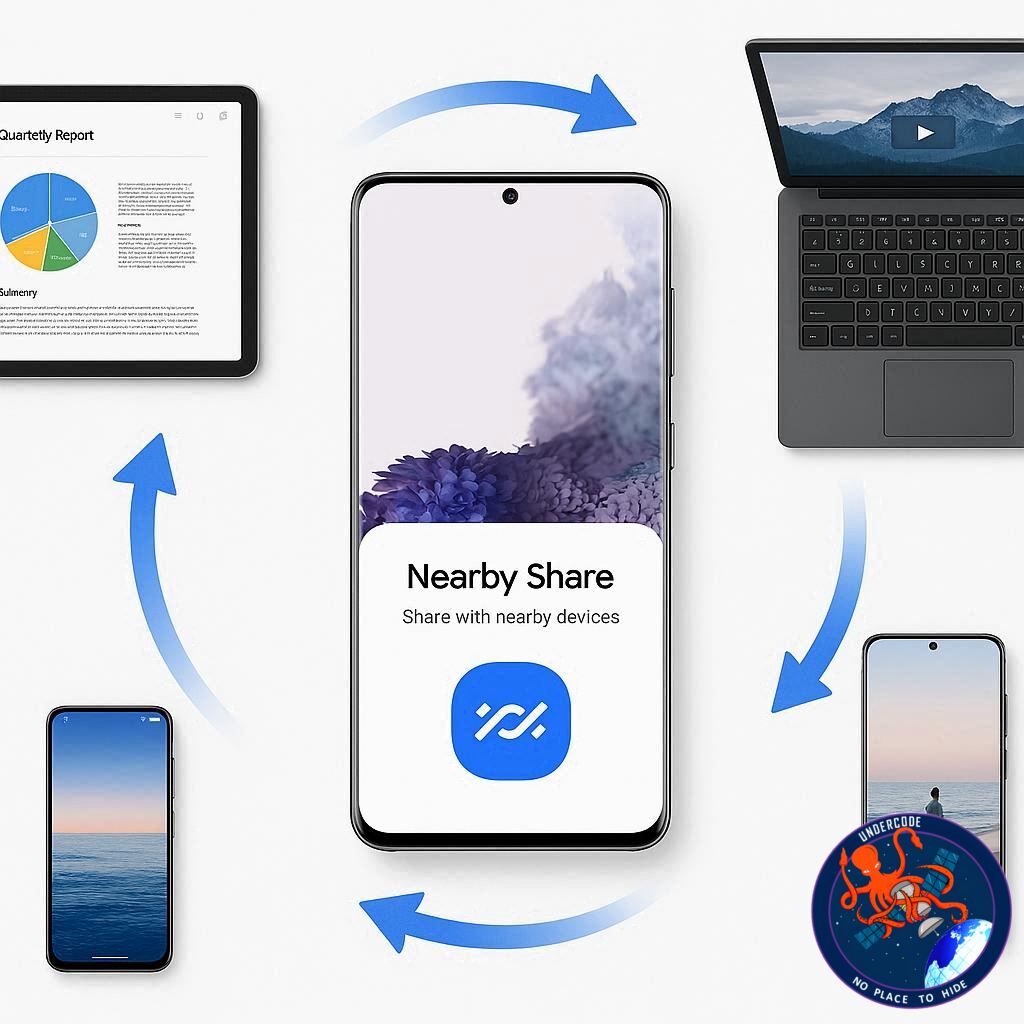
Samsung has officially confirmed that its upcoming Galaxy S26 series will support cross-platform file sharing similar to AirDrop through Quick Share. The rollout begins in South Korea on March 23 and will expand to the United States later in the same week, with broader availability planned for other Galaxy devices in the future. This move follows Google’s earlier introduction of similar functionality on Pixel devices, marking a growing industry push toward interoperability between Android and Apple ecosystems.
Historically, sharing files between Android and iOS devices has been cumbersome. Users often relied on indirect methods such as email, messaging apps, or cloud services like Google Photos and Google Drive. While functional, these approaches lack the simplicity and immediacy of AirDrop, which allows near-instant transfers between Apple devices with minimal setup. The new Quick Share integration aims to replicate that seamless experience, although it still requires certain settings adjustments, such as enabling temporary visibility.
Until now, this capability was limited to Google Pixel smartphones, making Samsung’s adoption particularly significant. As one of the largest smartphone manufacturers globally, Samsung’s implementation dramatically expands the potential user base for cross-platform file sharing. Even though the initial rollout is restricted to the Galaxy S26 lineup, the company has confirmed plans to extend compatibility across its broader Galaxy ecosystem.
This development also benefits users who operate across different platforms, such as those pairing Galaxy smartphones with macOS devices. Previously, transferring files to a Mac required using the often unreliable Android File Transfer app, which has long been criticized for its inconsistent performance. The new compatibility reduces reliance on such tools, offering a more direct and efficient solution.
Samsung is not alone in this movement. Companies like Oppo and Honor have also demonstrated or announced similar cross-platform sharing capabilities. These developments highlight a growing industry consensus that seamless interoperability is no longer optional but expected. Even without direct participation, Apple’s influence is evident, as its AirDrop feature continues to set the standard that competitors aim to match or integrate with.
Ultimately, Samsung’s adoption of AirDrop-style sharing represents a crucial step toward platform-agnostic communication. While not yet perfect, the initiative brings users closer to a future where device ecosystems matter less, and functionality takes priority.
What Undercode Say: The Strategic Shift Behind Samsung’s Move
Samsung’s decision is less about convenience and more about competitive survival in a maturing smartphone market. For years, Apple has leveraged ecosystem lock-in as a powerful advantage. Features like AirDrop are not just tools, they are retention mechanisms. Once users experience seamless file sharing within Apple’s ecosystem, switching becomes less attractive.
By integrating AirDrop-like compatibility through Quick Share, Samsung is directly challenging that advantage. This is not imitation, it is strategic neutralization. The goal is simple: remove friction points that make users hesitate to move between platforms or adopt mixed-device environments.
The timing is also critical. Smartphone innovation in hardware has plateaued. Incremental upgrades in cameras, processors, and displays no longer excite users the way they once did. Software experience, especially ecosystem integration, has become the new battleground. Samsung recognizes that winning today means delivering continuity across devices, not just improving individual specs.
Another layer to this shift is Google’s underlying influence. Android’s ecosystem has historically suffered from fragmentation, with inconsistent feature adoption across manufacturers. By pushing Quick Share as a unified standard and seeing major players like Samsung adopt it, Google is effectively consolidating Android’s identity. This alignment strengthens Android’s competitive position against Apple’s tightly controlled ecosystem.
However, there is a subtle limitation that cannot be ignored. Apple has not officially endorsed or deeply integrated with these cross-platform efforts. While it allows limited interoperability, the company still controls the core AirDrop experience. This creates an asymmetry where Android manufacturers must adapt around Apple’s framework rather than collaborate on equal terms. True seamless integration will remain elusive unless Apple actively participates.
From a user perspective, the implications are significant. Cross-platform households are increasingly common. People use a mix of devices, MacBooks for work, Android phones for flexibility, tablets from different brands. In such environments, frictionless file sharing is not a luxury, it is essential. Samsung’s move acknowledges this reality and aligns with evolving consumer behavior.
There is also a broader industry signal here. Oppo and Honor joining the trend suggests a collective push toward interoperability standards. This could lead to an unofficial alliance among Android manufacturers, creating a unified front that pressures Apple to open its ecosystem further.
Yet, the biggest question remains adoption speed. Rolling out to the Galaxy S26 first is a controlled approach, but widespread impact depends on how quickly older devices receive the update. If Samsung delays, the momentum could weaken, and the feature risks being perceived as niche rather than transformative.
In essence, this is not just about sending photos faster. It is about redefining the boundaries between ecosystems. Samsung is positioning itself not just as a hardware leader, but as a bridge builder in a historically divided digital landscape.
Fact Checker Results
✅ Samsung confirmed Quick Share compatibility with AirDrop-style functionality for Galaxy S26 rollout.
✅ Feature previously limited to Google Pixel devices before expanding to Samsung ecosystem.
❌ Full seamless integration with Apple devices is still not officially supported by Apple.
Prediction
📊 Cross-platform file sharing will become a standard expectation across all smartphones within the next two years.
📊 Apple may gradually expand compatibility but will retain core ecosystem advantages.
📊 Android manufacturers will accelerate collaboration to unify sharing standards and challenge Apple’s dominance.
▶️ Related Video (90% Match):
🕵️📝✔️Let’s dive deep and fact‑check.
References:
Reported By: www.zdnet.com
Extra Source Hub (Possible Sources for article):
https://www.quora.com/topic/Technology
Wikipedia
OpenAi & Undercode AI
Image Source:
Unsplash
Undercode AI DI v2
Bing
🔐JOIN OUR CYBER WORLD [ CVE News • HackMonitor • UndercodeNews ]
📢 Follow UndercodeNews & Stay Tuned:
𝕏 formerly Twitter 🐦 | @ Threads | 🔗 Linkedin | 🦋BlueSky | 🐘Mastodon


