
Listen to this Post
Introduction: When Law Enforcement Becomes the Target
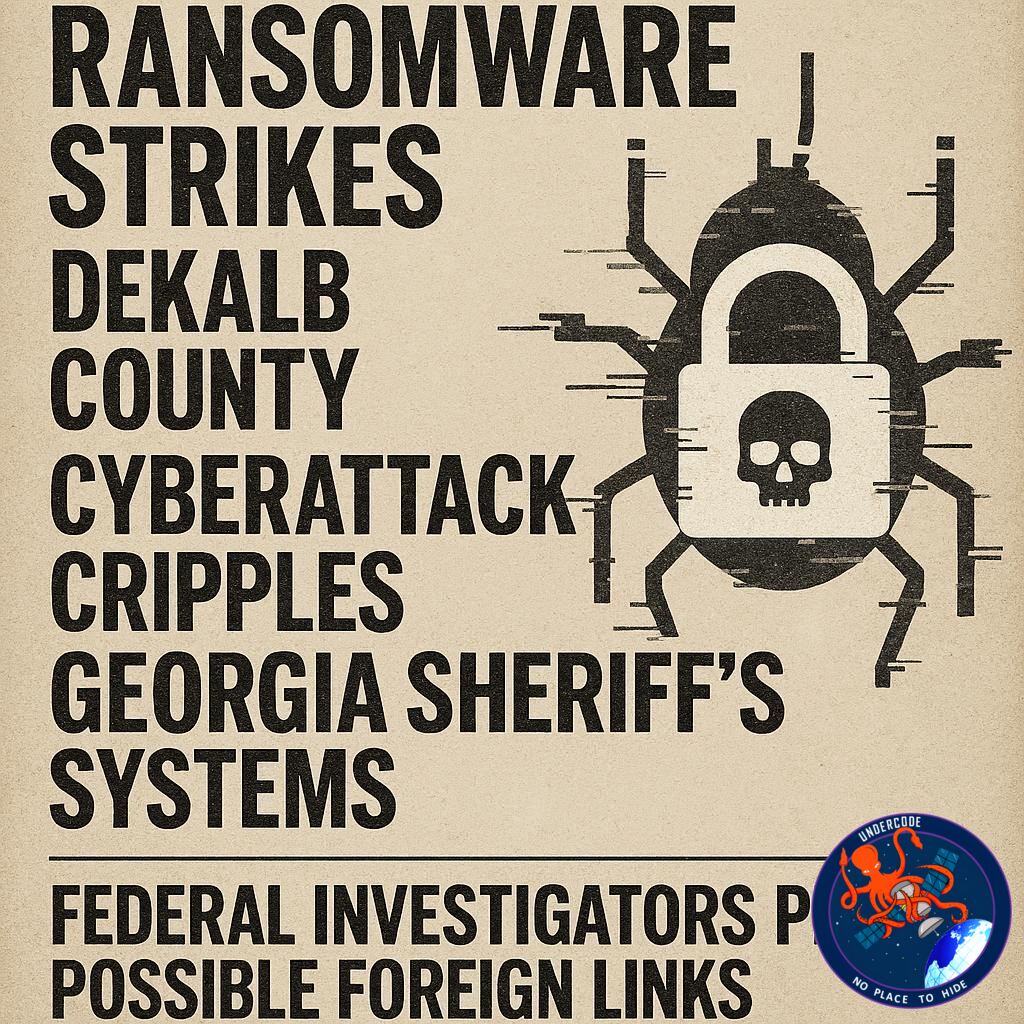
Cyberattacks are no longer limited to corporations or tech giants. In a troubling development for public safety infrastructure, the DeKalb County Sheriff’s Department and Jail in Georgia became the latest victim of a ransomware attack that disrupted key law-enforcement systems. The incident, reported on March 14, 2026, temporarily disabled email communications and jail booking systems, raising concerns about the vulnerability of critical government networks.
Authorities quickly launched an investigation, with federal agencies stepping in to determine whether the attack is connected to broader international cybercrime operations. The involvement of federal investigators suggests the breach may extend beyond a simple criminal extortion attempt and could potentially involve foreign cyber actors targeting U.S. public institutions.
As ransomware campaigns increasingly target government agencies, healthcare institutions, and law-enforcement networks, this attack serves as another reminder that public sector cybersecurity defenses remain a high-value target for cybercriminals and nation-state operators alike.
The Incident: Systems Disrupted Inside DeKalb County
On March 14, 2026, the DeKalb County Sheriff’s Department and the county jail experienced a ransomware attack that disrupted several internal digital services. Among the most significant impacts were outages affecting the email network used by staff and the digital booking system used to process inmates.
The booking system is a critical component of jail operations. It records arrests, tracks detainee information, and manages processing procedures. When such systems become unavailable, law-enforcement agencies are often forced to rely on manual processes, significantly slowing operations.
The disruption also affected internal communications, as the department’s email system became inaccessible during the attack. For a department responsible for public safety, the loss of secure digital communication can create logistical challenges and operational delays.
Although officials have not disclosed the exact ransomware strain involved, the nature of the disruption suggests that attackers gained access to internal systems and encrypted key services, demanding payment in exchange for restoring access.
Federal Investigation Begins
Following the attack, federal and state authorities launched an investigation into the incident.
The Federal Bureau of Investigation (FBI) and the Tennessee Bureau of Investigation (TBI) are reportedly examining whether the ransomware attack has links to foreign cyber operations. Such investigations typically focus on identifying the origin of the malware, analyzing network logs, and tracing potential command-and-control infrastructure used by attackers.
Cybersecurity investigators will also analyze whether the attack was part of a broader campaign targeting U.S. government systems.
If foreign actors are involved, the attack could fall into the category of state-sponsored cyber operations, which have increasingly targeted public infrastructure in recent years.
Rising Threat: Government Agencies in the Crosshairs
Ransomware groups have shifted their strategies over the past decade. Initially focused on private companies, attackers now increasingly target public institutions, including hospitals, schools, municipal governments, and law-enforcement agencies.
These organizations are particularly vulnerable because many rely on aging infrastructure and underfunded cybersecurity programs. Limited budgets and complex legacy systems often make it difficult to deploy modern security tools or maintain rapid patching cycles.
Government agencies also face a unique dilemma: unlike corporations, they cannot easily halt operations when systems go offline. This operational pressure sometimes makes them more likely to negotiate with attackers to restore services quickly.
As a result, local government networks have become attractive targets for ransomware gangs seeking high-impact victims.
Operational Impact on Jail and Law Enforcement
When jail booking systems go offline, the effects can cascade across the entire criminal justice process.
Booking software typically integrates with databases that track detainees, charges, warrants, and court records. Without access to these systems, officers may need to process arrests manually, which can delay intake procedures and create administrative backlogs.
Communication disruptions caused by email outages also complicate coordination between departments, prosecutors, and external agencies.
Although officials have not confirmed whether inmate records or sensitive law-enforcement data were accessed during the attack, ransomware incidents often involve data exfiltration before encryption, allowing attackers to threaten data leaks if ransom demands are not met.
The Broader Ransomware Landscape
Globally, ransomware attacks have evolved into one of the most lucrative forms of cybercrime.
Modern ransomware groups often operate as Ransomware-as-a-Service (RaaS) organizations, where developers create malware platforms that affiliates deploy in exchange for a share of the ransom payments.
These operations frequently use double-extortion tactics:
• Encrypting victim systems
• Stealing sensitive data
• Threatening public leaks if payment is not made
Law-enforcement agencies themselves have increasingly become targets, both for financial extortion and for strategic disruption.
Attacking law-enforcement infrastructure also carries symbolic weight, allowing cybercriminal groups to demonstrate that even institutions responsible for enforcing the law are not immune to cyberattacks.
What Undercode Says:
The Strategic Targeting of Public Infrastructure
The ransomware attack on the DeKalb County Sheriff’s Department is not just another isolated cybercrime event. It represents a growing pattern where cybercriminal groups deliberately target critical public infrastructure because the operational consequences are immediate and severe.
Law-enforcement agencies operate on constant real-time communication and digital record systems. When attackers disrupt these services, the pressure on administrators to restore operations becomes intense. This urgency is precisely what ransomware groups exploit.
From a strategic standpoint, targeting a jail booking system is particularly effective. Every arrest, release, and court process depends on that infrastructure. Even a short disruption can create cascading administrative problems across the justice system.
Why Local Governments Are Increasingly Vulnerable
Unlike federal agencies, local government institutions often lack large cybersecurity budgets. Their IT teams may consist of only a handful of professionals responsible for maintaining entire networks across multiple departments.
Many of these systems also run legacy software that cannot easily be upgraded without costly infrastructure overhauls.
Cybercriminals understand this weakness. Automated scanning tools continuously search the internet for vulnerable government servers, outdated software versions, and misconfigured remote access systems.
Once an entry point is discovered, attackers can escalate privileges, move laterally through the network, and deploy ransomware across multiple systems simultaneously.
The DeKalb County incident highlights how even essential law-enforcement infrastructure may remain exposed to these tactics.
The Possibility of Foreign Cyber Operations
The involvement of federal investigators raises another possibility: the attack may not be purely criminal.
Some ransomware operations maintain indirect relationships with state-aligned cyber groups. In certain geopolitical environments, ransomware gangs operate with implicit protection from governments, provided they avoid targeting domestic institutions.
This dynamic blurs the line between cybercrime and cyber warfare.
If investigators determine that foreign actors were involved in the DeKalb attack, it could represent a broader effort to probe vulnerabilities within American public-sector infrastructure.
Such incidents are sometimes used as intelligence-gathering exercises, testing how quickly systems can be disrupted and how agencies respond to cyber emergencies.
The Evolution of Ransomware Economics
Another factor worth examining is the changing economic structure of ransomware operations.
Modern ransomware groups function like professional businesses. They maintain customer support portals, negotiation teams, and leak websites where stolen data is published if victims refuse to pay.
Payments are typically demanded in cryptocurrency, making transactions difficult to trace.
However, increased law-enforcement crackdowns and cryptocurrency monitoring have forced many groups to evolve their strategies. Instead of attacking large corporations with strong defenses, some groups now focus on mid-level government institutions, which may have weaker security but still face high operational pressure.
The DeKalb incident fits squarely within this trend.
Public Trust and the Psychological Impact
Beyond technical damage, cyberattacks on law-enforcement agencies can affect public perception.
Citizens expect police departments and sheriff’s offices to maintain secure systems that protect sensitive data, including arrest records and personal information.
When those systems are compromised, it can create concerns about privacy, data protection, and institutional resilience.
Even if the attack only disrupted services temporarily, the psychological impact can be significant. Public institutions must now demonstrate that they can defend themselves in an increasingly hostile digital environment.
The Urgent Need for Cybersecurity Modernization
The DeKalb ransomware incident underscores a critical national issue: local government cybersecurity modernization.
Experts have repeatedly warned that many municipal systems operate on outdated infrastructure that was never designed to withstand modern cyber threats.
Strengthening these systems requires more than installing antivirus software. It involves implementing layered defenses such as:
• Network segmentation
• Multi-factor authentication
• Continuous monitoring systems
• Zero-trust architecture
• Regular security audits and penetration testing
Without these protections, ransomware groups will continue exploiting local government networks as easy targets.
🔍 Fact Checker Results
Verified Timeline of the Cyberattack
✅ Reports confirm the ransomware incident occurred on March 14, 2026, affecting internal systems at the DeKalb County Sheriff’s Department and jail.
Federal Authorities Involved in Investigation
✅ The FBI and Tennessee Bureau of Investigation (TBI) are investigating potential connections to foreign cyber actors.
Scope of System Disruption
❌ No confirmed public evidence yet that inmate records or sensitive data were leaked; only system disruptions have been confirmed so far.
📊 Prediction
The DeKalb County ransomware attack may signal a broader trend in which local law-enforcement agencies become increasingly frequent cyber targets. As ransomware groups seek victims with high operational pressure but weaker defenses, municipal networks present attractive opportunities.
In the coming years, cybersecurity analysts expect a surge in attacks targeting police departments, courts, emergency response systems, and municipal governments.
This incident will likely accelerate discussions at the federal level about funding cybersecurity upgrades for local institutions. We may also see new national programs designed to help municipal governments deploy advanced threat detection tools and incident-response frameworks.
If these upgrades are not implemented quickly, the next ransomware attack on a public-sector institution may cause far greater operational disruption—and potentially expose sensitive law-enforcement data to the public internet.
🕵️📝✔️Let’s dive deep and fact‑check.
References:
Reported By: x.com
Extra Source Hub (Possible Sources for article):
https://www.digitaltrends.com
Wikipedia
OpenAi & Undercode AI
Image Source:
Unsplash
Undercode AI DI v2
Bing
🔐JOIN OUR CYBER WORLD [ CVE News • HackMonitor • UndercodeNews ]
📢 Follow UndercodeNews & Stay Tuned:
𝕏 formerly Twitter 🐦 | @ Threads | 🔗 Linkedin | 🦋BlueSky | 🐘Mastodon


