
Listen to this Post
Introduction
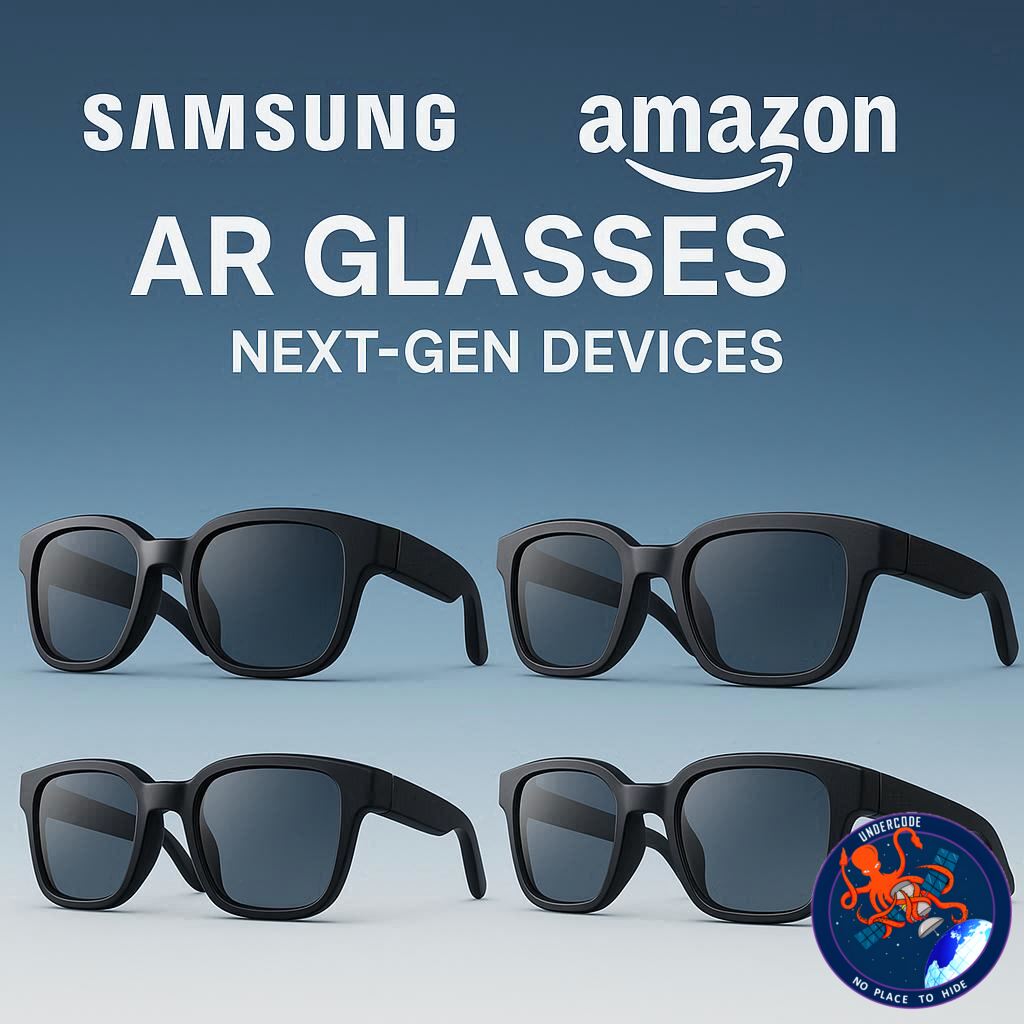
The tech world is buzzing with excitement as major brands gear up for their next wave of futuristic devices. Samsung, Amazon, Apple, and Meta are all preparing to launch augmented reality (AR) glasses, while also refreshing their iconic product lines like Galaxy Tabs, Galaxy S25 Ultra, and smartwatches. The race isn’t just about who launches first — it’s about who creates the most immersive ecosystem that will dominate the future of wearable technology.
Full the Report
Samsung’s Galaxy Tab S11 series, Galaxy S25 FE, Fold 7, S25 Ultra, and Watch Ultra 2025 are shaping up to be blockbuster devices, with rumors hinting at competitive pricing and special deals. Alongside these, the real spotlight is shifting toward AR glasses, an entirely new frontier in consumer technology.
Samsung isn’t walking this path alone. Amazon, Apple, and Meta are also intensifying efforts in the AR race. Meta is ready to debut its first AR glasses as early as this month, signaling the beginning of an industry-wide revolution. Amazon, according to reports, is developing two versions of AR glasses — one for its delivery workforce and another sleek, consumer-focused version.
The delivery agent-focused glasses will carry a monochrome display and a bulkier design, while the consumer version will feature a lightweight build and full-color heads-up display (HUD). Amazon plans to manufacture 100,000 units of the delivery version, potentially hitting the market in mid-2026. The consumer model is expected by late 2026 or early 2027.
This timeline is critical because it aligns with Samsung’s second-generation AR glasses, which are also expected around 2027. Apple, however, may lag slightly behind, with its first-generation smart glasses reportedly coming in 2027 — and without a HUD. This leaves Amazon, Meta, and Samsung with a competitive advantage, offering practical on-screen features such as maps, notifications, and messaging.
Adding another twist, Amazon has been shifting its software strategy. The company has begun replacing FireOS with Vega OS on its Fire TV devices, while Kindle tablets may soon adopt standard Android. The operating system choice for its AR glasses remains unclear, creating speculation about compatibility and ecosystem integration. Meanwhile, Samsung’s AR wearables could run on Android XR OS, a platform co-developed with Google.
If all goes as reported, the next two years will bring a wave of hardware launches that redefine how users interact with technology. The battle isn’t only for attention but also for setting the standards of AR ecosystems, software integration, and real-world usability.
What Undercode Say:
The global AR glasses market is heating up, and the implications are massive. Let’s break it down:
Market Timing: By 2026–2027, we could see a three-way battle among Samsung, Amazon, and Meta, with Apple cautiously entering later. Early adopters will gravitate toward brands that integrate AR seamlessly into daily life.
Amazon’s Dual Strategy: Unlike rivals, Amazon is tackling two fronts. The delivery-focused AR glasses show a B2B-first approach, optimizing logistics and empowering employees with real-time overlays like navigation and package data. On the consumer side, Amazon aims for a mass-market breakthrough with a lightweight, stylish option — potentially a Trojan horse into smart homes via Alexa.
Samsung’s Edge: Samsung has the advantage of an established hardware + ecosystem strategy. With Galaxy phones, tablets, wearables, and now XR tech, it can create a holistic environment where AR seamlessly integrates into existing devices. Running on Android XR OS ensures long-term stability and developer support.
Apple’s Delayed Entry: While Apple has a loyal customer base, its late entry without a HUD could make early models less compelling. However, history shows Apple can still dominate by refining second- or third-generation products with a polished ecosystem.
Meta’s Gamble: Meta launching this month positions it as an early mover. But the challenge is whether consumers trust Meta with privacy and whether its glasses will be more than just social-media gadgets.
Software Wars: The OS layer is critical. Samsung + Google’s Android XR OS could become the default standard, similar to Android’s dominance in smartphones. Amazon’s uncertain OS path could either weaken or strengthen its ecosystem depending on whether it aligns with Android or builds its own.
Adoption Barriers: Cost, comfort, and use cases will decide winners. Bulkier designs like Amazon’s delivery glasses will work in enterprise use, but consumers demand style + utility. Whoever masters lightweight AR with essential daily features will lead adoption.
Economic Impact: AR glasses could disrupt industries from logistics to healthcare, retail, and education. Imagine doctors accessing patient data in real-time or retail staff offering personalized experiences through AR overlays.
Samsung’s Broader Plans: Beyond AR, Samsung’s lineup — Fold 7, Galaxy S25 Ultra, Watch Ultra 2025, and Tab S11 — shows a multi-device ecosystem push, ensuring users remain locked into Galaxy products while transitioning to AR.
In short, the AR battlefield is not just about headsets; it’s about shaping the next decade of digital interaction. The winner will be the brand that ties together hardware, software, and ecosystem into one frictionless experience.
Fact Checker Results ✅❌
✅ Samsung, Amazon, Apple, and Meta are confirmed to be working on AR glasses.
❌ Apple’s first model will not include a HUD, unlike rivals.
✅ Amazon’s dual model approach is backed by credible reports.
🔮 Prediction
By 2027, AR glasses will move from experimental to mainstream, with Samsung and Amazon leading in practical adoption while Apple slowly refines its offering. The winner won’t just sell glasses — they’ll own the ecosystem of the future, redefining how we shop, work, and connect.
🕵️📝✔️Let’s dive deep and fact‑check.
References:
Reported By: www.sammobile.com
Extra Source Hub:
https://www.medium.com
Wikipedia
OpenAi & Undercode AI
Image Source:
Unsplash
Undercode AI DI v2
🔐JOIN OUR CYBER WORLD [ CVE News • HackMonitor • UndercodeNews ]
📢 Follow UndercodeNews & Stay Tuned:
𝕏 formerly Twitter 🐦 | @ Threads | 🔗 Linkedin | 🦋BlueSky | 🐘Mastodon


